If you’re planning a trip through Southern France, you’ve likely found yourself wondering: Is Carcassonne worth visiting, or is it just a crowded tourist trap? While the iconic double-walled fortress is undeniably a magnet for visitors, those who look beyond the souvenir shops will find a city steeped in Cathar history, world-class gastronomy, and hidden architectural gems. From walking the ancient ramparts of the Cité to exploring the vibrant local life in the Bastide Saint-Louis, there are enough things to do in Carcassonne to fill a truly memorable itinerary. Whether you are a photography enthusiast chasing the golden hour over the Aude River or a foodie on the hunt for the perfect cassoulet, this medieval marvel offers a unique experience that bridges the gap between ancient legend and modern French charm.
Carcassonne has been at the top of our travel bucket list for some time and we finally had the opportunity to tick it off. You are probably here because you are wondering if Carcassonne is worth visiting and we are here to tell you that it is. A visit to this fairytale city in the South of France is like stepping back in time, with its cobbled streets and centuries-old architecture. It is hard to believe that places as magical as this exist in the modern world and every time we go to France we fall in love with it a little more.
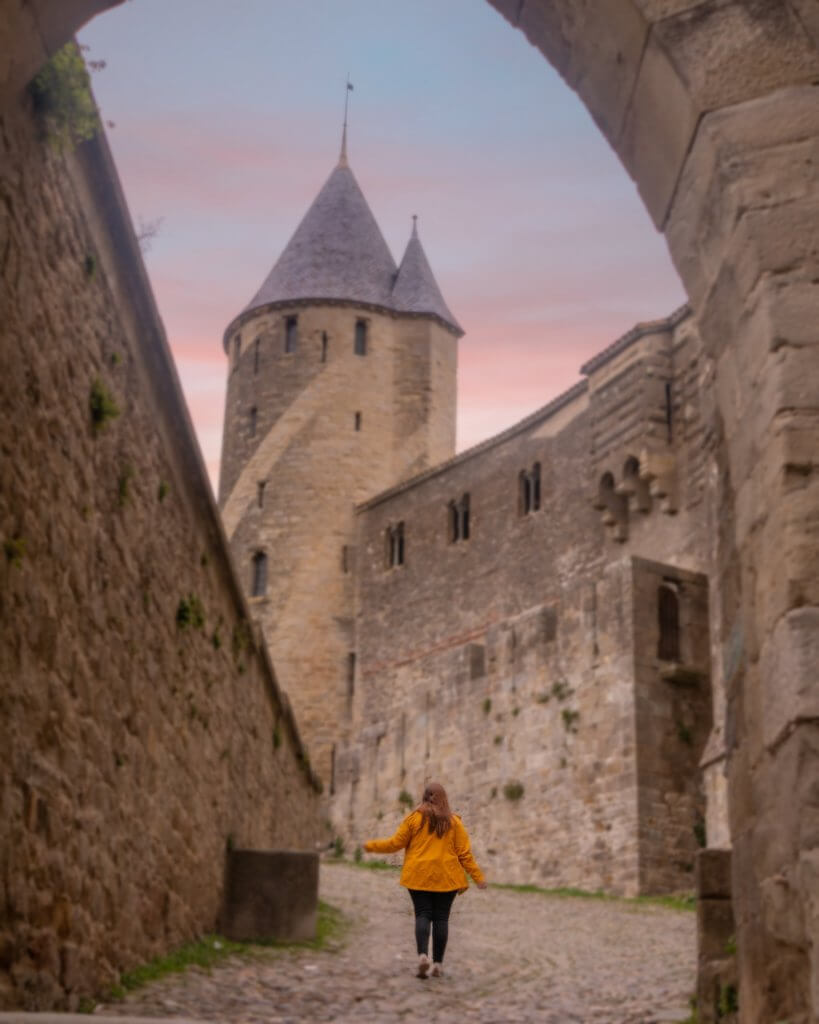
The charming castle and fortifications of the UNESCO-listed Cité de Carcassonne make it a worthwhile visit. For those who adore French châteaux and want to learn about French history while appreciating medieval architecture, this beautiful city in southern France is a great choice.
Is Carcassonne worth visiting?
Yes, Carcassonne is absolutely worth visiting. As Europe’s largest fortified medieval city and a UNESCO World Heritage site, it offers a “fairytale” skyline and a unique journey into Cathar history. While the main citadel can be busy, the combination of its 3km of double-walled ramparts, the stunning Basilica of Saint-Nazaire, and world-class local cuisine like cassoulet makes it a bucket-list destination in Southern France. Apart from just visiting the fortifications and castle of the medieval Old Town, the city has a bustling market and a large number of interesting museums to visit. Best of all the city centre is relatively small so it is easy to get around by foot and there are lots of historic sights to visit for free. La Cité has an impressive 52 turrets and 3km of ramparts to explore. This guide will show you the best things to see and do in Carcassonne and show you why Carcassonne is worth visiting.
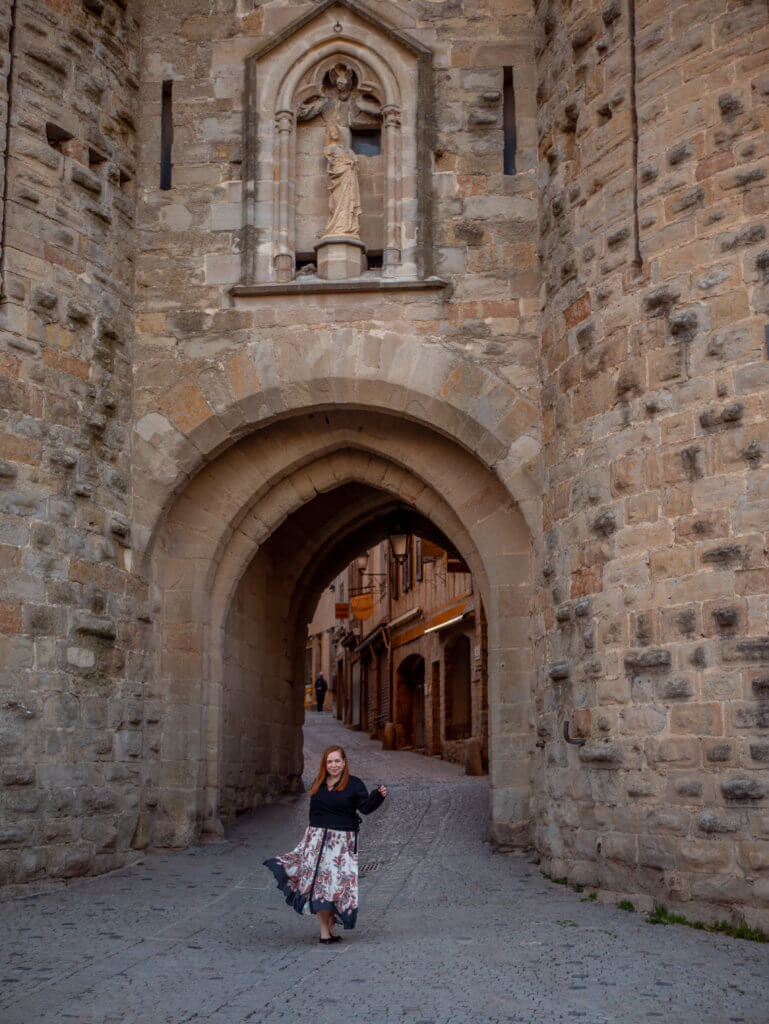
Romans laid the initial foundation for Carcassonne in about 100 BC. They constructed the fort on the hillside of the river bank to guard a vital trading route. The fortified walls are based on earlier Roman fortifications, but the architects who built them also incorporated their own architectural designs. The stronghold underwent numerous modifications and additions throughout the medieval era and still stands strong today.
Where is Carcassonne?
Carcassonne is located in the Occitanie region of Southern France, southeast of Toulouse. The city is divided in two by the meandering Aude River. On a hilltop overlooking the Aude River and the Ville Basse (Lower Town) is Cité, one of the most exceptional examples of medieval fortifications in Europe. A beautiful view of the Lower Town and Aude Valley can be enjoyed while strolling along the ramparts there. At night, the illumination of the ramparts and the castle is really magical.
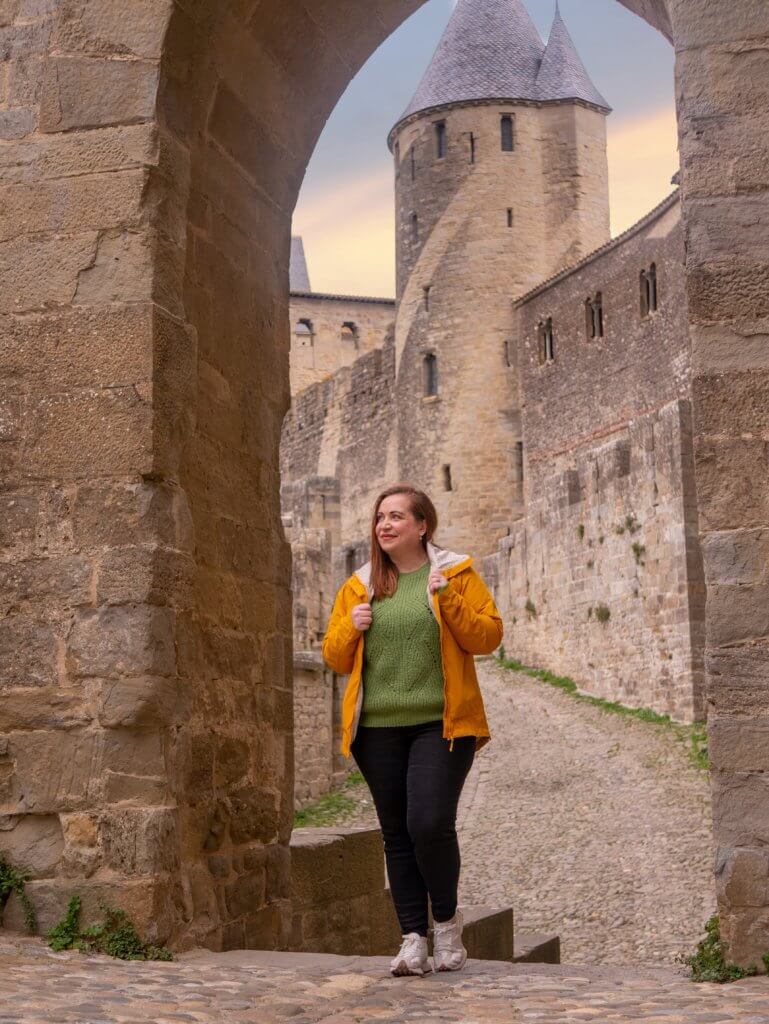
Why is Carcassonne so famous?
Carcassonne is world-renowned for its exceptionally well-preserved medieval fortifications, featuring 52 massive towers and two concentric rings of walls. It is also famous for the extensive 19th-century restoration work led by Viollet-le-Duc, which saved the city from ruin and heavily influenced modern principles of historical conservation.
How to get from the airport to Carcassonne?
The Carcassonne Airport (CCF) is located just 3km west of the town centre. You have two main options:
• Shuttle Bus: A dedicated airport shuttle (Navette Aéroport) departs roughly 45 minutes after each flight arrival. It stops at the train station (SNCF), the Bastide Saint-Louis, and the medieval Cité.
• Taxi: The fastest option, a taxi takes about 6 minutes and typically costs between €11 and €18.
Are you ready to visit Carcassonne?
We believe that travel is about the stories you bring home, not the stress of planning them. That’s why we only partner with booking platforms like Booking.com, Viator, and GetYourGuide, the same ones we use to book our own family adventures. When you book through the links on our site, we may earn a small commission at no extra cost to you. This support allows us to keep wandering, keep testing, and continue sharing honest, ad-free guides with you. We value your trust above all else and only recommend services that we know will treat your journey with the same care we do.
- Book your flight here at Kiwi.com
- Book your Carcassonne accommodation at Booking.com
- Book your tours at GetYourGuide.com
- Book travel insurance
- Hire a car in Carcassonne
- Book your airport transfer
We never set off on an adventure without good travel insurance, and after years of travelling we’ve found Heymondo to be the one we trust most. When Ronan had a health scare on a trip a few years back, we realised just how important reliable cover really is. Heymondo makes the whole process simple, from getting a quick quote to accessing their 24/7 medical chat when you’re abroad. We wouldn’t recommend them if we didn’t use them ourselves, and they’ve given us complete peace of mind on trips big and small. You can get your own cover here with Heymondo and travel knowing you’re protected. The good news is that you will get 5% discount just for using our link.
Can you do Carcassonne in a day?
Yes, you can easily experience the highlights of Carcassonne in a single day. Many visitors take a day trip from Toulouse, which is only an hour away by train or car. A one-day visit typically focuses on walking the ramparts, visiting the Château Comtal, and exploring the narrow streets of the Cité. In all honesty you can see most of what needs to be seen in Carcassonne in half a day, especially if you just want to see medieval Carcassonne. However, while you can see Carcassonne in a day trip we recommend spending at least 1-2 days here to really soak up the magic of this fairytale city.
Is Carcassonne worth a day trip? (If you only have 2–4 Hours)
Even a short 2–4 hour visit is rewarding. If you are tight on time, prioritize walking the Lices (the space between the two walls) and visiting the Basilica of Saint-Nazaire. This gives you a powerful overview of the fortress’s scale and architecture without needing a full-day commitment. If you are short on time consider taking this tour to discover the Magic of Carcassonne on a Half-Day Tour from Toulouse.
Carcassonne Cité vs. Bastide Saint-Louis: What’s the difference?
Carcassonne is effectively two distinct towns separated by the Aude River:
• La Cité: The famous, UNESCO-listed medieval fortress on the hill. It is home to the castle, the ramparts, and the historical center.
• Bastide Saint-Louis: Also known as the “Lower Town” or “Ville Basse,” this is the lively, 13th-century commercial heart of the modern city. It features a grid layout, local shops, restaurants, and the Fine Arts Museum.
How to avoid the crowds in Carcassonne
Carcassonne can attract over 3 million visitors a year, leading to mid-day congestion. To avoid the crowds:
• Visit Early or Late: Day-trippers typically arrive between 10:00 am and 4:00 pm. Being there before 9:00 am or after 5:00 pm provides a much more peaceful experience.
• Stay Overnight: Sleeping inside or near the walls allows you to enjoy the city once the gates have quieted down.
• Explore the Outer Walls: The outer ramparts are often much less crowded than the inner ring and offer equally stunning views.
Best time of day to visit for photography
• Morning Light: Hits the northern ramparts, creating a soft glow perfect for capturing the stonework without shadows.
• Golden Hour: The hour before sunset turns the stone walls a deep orange and gold.
• Night Illumination: The city is spectacular when lit up at night; however, be aware that many lights are often turned off around midnight.
Is Carcassonne a walkable city?
Yes, Carcassonne is very easy to navigate on foot. It is a short and pleasant walk from the Bastide Saint-Louis to the Cité across the Pont Vieux (Old Bridge). However, be prepared for steep paths and uneven cobblestones once you enter the medieval fortress.
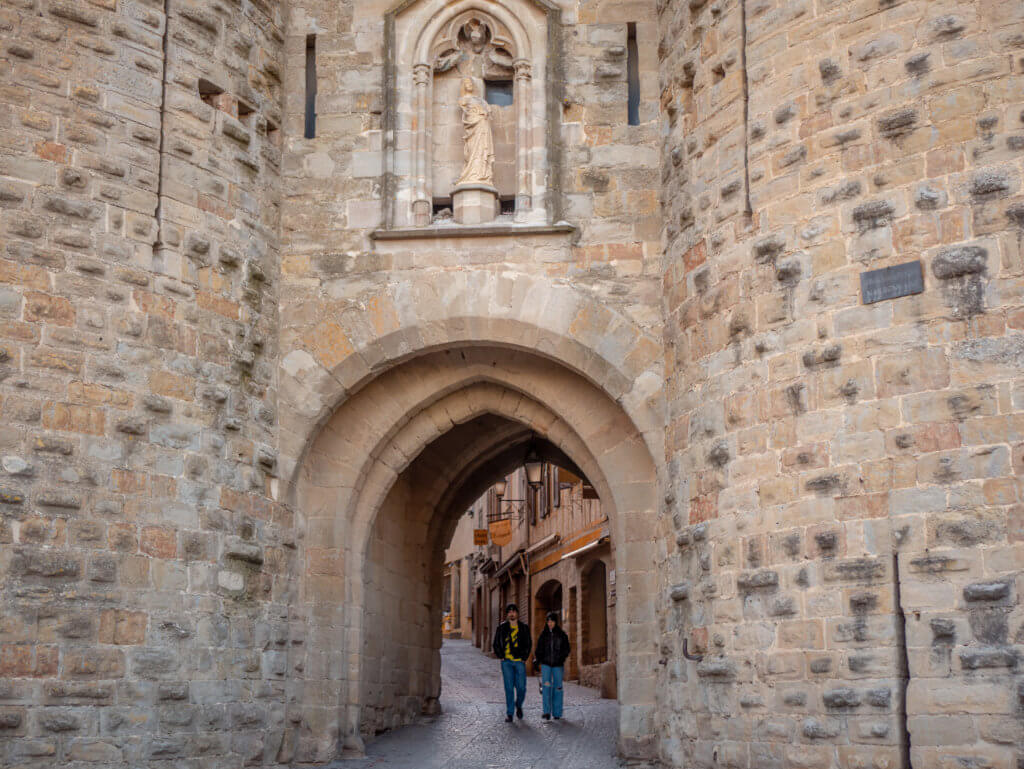
Carcassonne weather
When planning a visit to this medieval marvel, understanding the seasonal shifts in both the climate and visitor numbers is essential for an enjoyable experience. Carcassonne features a Mediterranean climate, characterized by hot, dry summers and mild, cool winters.
Best Time to Visit
The “golden window” for visiting Carcassonne is during the shoulder seasons of late April to May and September to October.
• Spring (April – May): Offers comfortable temperatures and vibrant greenery. It is particularly scenic as the surrounding countryside turns into a “carpet of wildflowers”. Average temperatures 10°C to 20°C.
• Autumn (September – October): September remains warm and sunny but lacks the overwhelming summer throngs, making it one of the best months for a holiday. Average temperatures 14°C to 25°C.
• Avoid the Summer Rush: July and August are the hottest months, with temperatures often soaring to 30°C (86°F) or higher. During this time, the citadel can feel like a “theme park” due to the volume of visitors. Average temperatures 25°C to 30°C+.
Weather Highlights for Travellers to Carcassonne
• Sunshine: Carcassonne is located in one of France’s sunniest regions, enjoying over 300 days of sunshine annually. August is typically the sunniest month, offering up to 10 hours of daily sunshine.
• Rainfall: The wettest month is typically January or November. Rain in this region often falls in short, sharp bursts—particularly spring showers in April—that pass quickly.
• The “Country of the Winds”: Locally known as the “country of the winds,” Carcassonne frequently experiences breezes from the north, south, and west, which help cool the city during hot summer afternoons.
• Winter Magic: If you don’t mind the cold, December is a fantastic time to visit to see the city come alive with Christmas markets, an ice rink, and festive lights.
What do I pack for Carcassonne?
To help you prepare for their medieval adventure, here is a comprehensive packing checklist tailored to Carcassonne’s four seasons.
The Golden Rule: Start with Your Shoes
Regardless of the season, the single most important item is sturdy, broken-in footwear. Carcassonne’s Cité is paved with uneven cobblestones and has steep paths; supportive walking shoes or cushioned sneakers are essential. Avoid flip-flops or high heels, as they are impractical for the fortress terrain.
Seasonal Packing Checklists
Spring (March – May)
Weather can be unpredictable, with sunny spells quickly turning into cool showers.
• Layers: Long-sleeved shirts, light sweaters, and cardigans.
• Outerwear: A waterproof light jacket or trench coat is an absolute must.
• Accessories: A stylish scarf (perfect for French style and chilly evenings) and a compact umbrella.
Summer (June – August)
Expect high temperatures and intense Mediterranean sun.
• Fabrics: Breathable cotton and linen are best to keep cool.
• Essentials: A sun hat, high-factor SPF, and sunglasses.
• Evening Wear: A light shawl or jacket for cooler nights by the Aude River.
Autumn (September – October)
Mild days transition into chilly evenings; the “onion” method (layering) is key.
• Clothing: Medium-weight sweaters, dark jeans, and tailored coats.
• Footwear: Stylish ankle boots or loafers that can handle damp cobblestones.
• Special Item: A slightly smarter outfit if you plan to visit a local vineyard during the grape harvest.
Winter (November – February)
Carcassonne can get quite cold and windy, especially on the exposed ramparts.
• Insulation: Thermal base layers, wool sweaters, and a heavy waterproof coat.
• Warmth: A woolly hat, gloves, and a thick scarf.
• Footwear: Waterproof boots with non-slip soles for icy or wet stone surfaces.
Universal Essentials for Every Trip
• Crossbody Bag: Safer for navigating crowded areas and keeps your hands free.
• Universal Adapter: France uses Type C and E plugs.
• Reusable Water Bottle: Stay hydrated while climbing to the Cité.
• Modesty Scarf: Useful for covering shoulders when visiting the Basilica of Saint-Nazaire.
Is there anything to do in Carcassonne?
Beyond the famous castle, there is plenty to explore:
• Château Comtal & Ramparts: Tour the 12th-century Count’s Castle and walk the 3km defensive perimeter.
• Canal du Midi: Rent a boat or walk along the towpaths of this second UNESCO-listed site. Yes Carcassonne is unique because it holds two UNESCO citations (The Cité and the Canal du Midi).
• Lac de la Cavayère: A nearby lake perfect for nature walks and seasonal activities.
• Cultural Museums: Visit the Museum of the Inquisition in the Cité or the Fine Arts Museum in the Bastide.
Top things to do in Carcassonne
As we previously mentioned the city of Carcassonne is divided into two parts. The Ville Basse or Lower Town located outside the city’s defences and the Cité or Upper Town. Although most tourists come to see the medieval citadel, the lower and more modern part of the city is not without its charms.
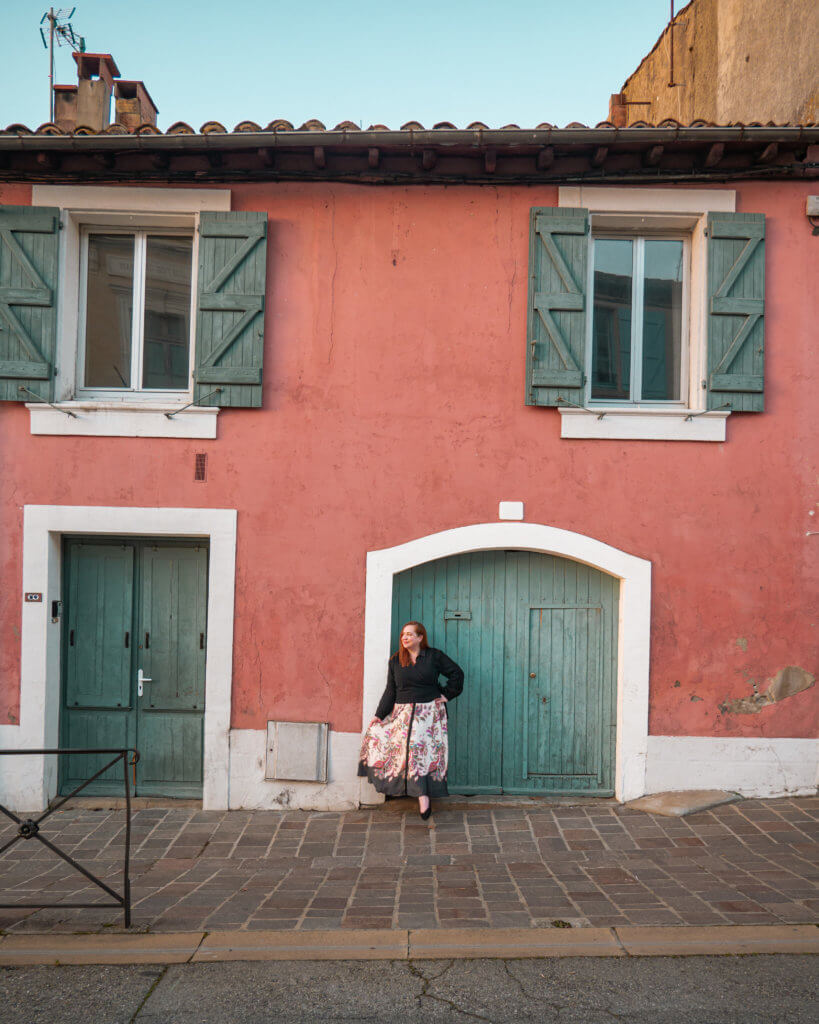
Cross the medieval drawbridge at Narbonne Gate
The Cité of Carcassonne has two main gates: The Narbonne Gate (Porte Narbonnaise) on its eastern side and the Aude Gate (Porte Aude) below the castle on its western side. In fact, the inner medieval old town of Carcassonne can be accessed by 4 gates which are located on each of the 4 cardinal compass points.
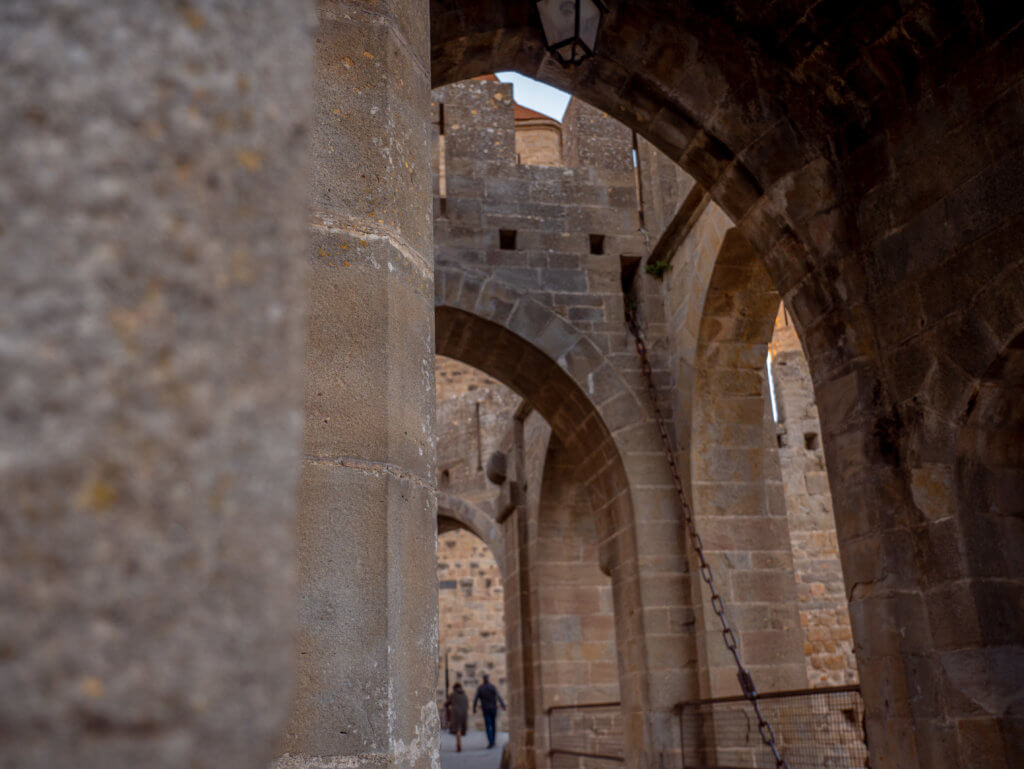
At the Narbonne Gate you can cross the medieval drawbridge into the city which instantly transports you back in time. If you are travelling with kids they are going to love using their imaginations and getting to play knights for the day. They may even love playing this kid friendly guided city tour that unlocks stories about the city as you explore or why not take a private tour with a knight! If you don’t like guided tours, or you are on a budget, then we recommend this self guided scavenger hunt where you can solve puzzles and discover the main attractions of the city. Take the time to admire the fairytale turrets of the city walls before crossing into the city.
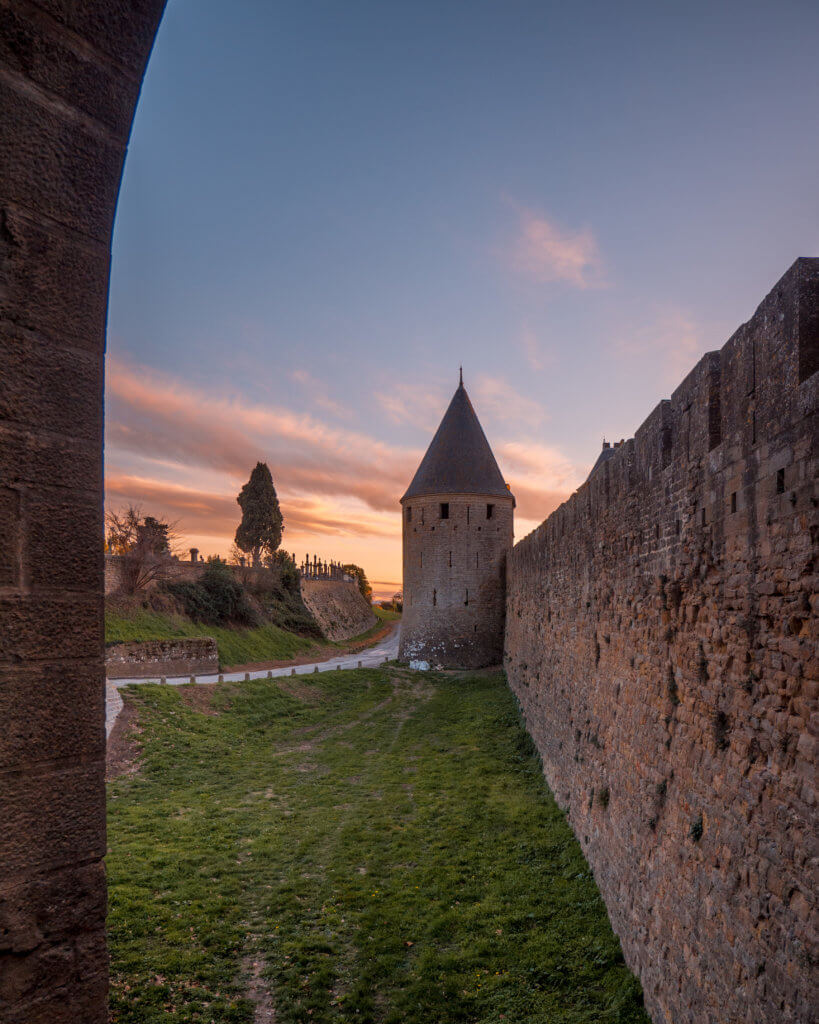
Explore Medieval Cité de Carcassonne
One wonderful aspect of Carcassonne is that you can freely enter the fortified Old Town and stroll around this architectural marvel at your own pace. However, it is important to be aware that the Château Comtal serves as the entrance to the ramparts of Carcassonne, and that there is an admission charge.
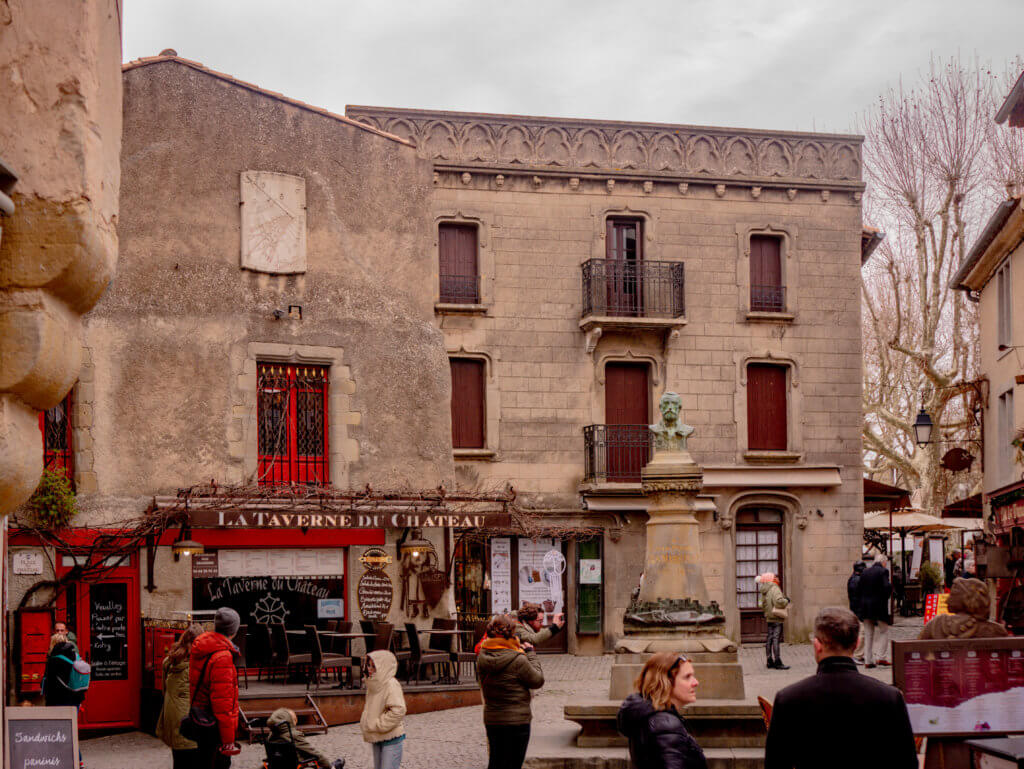
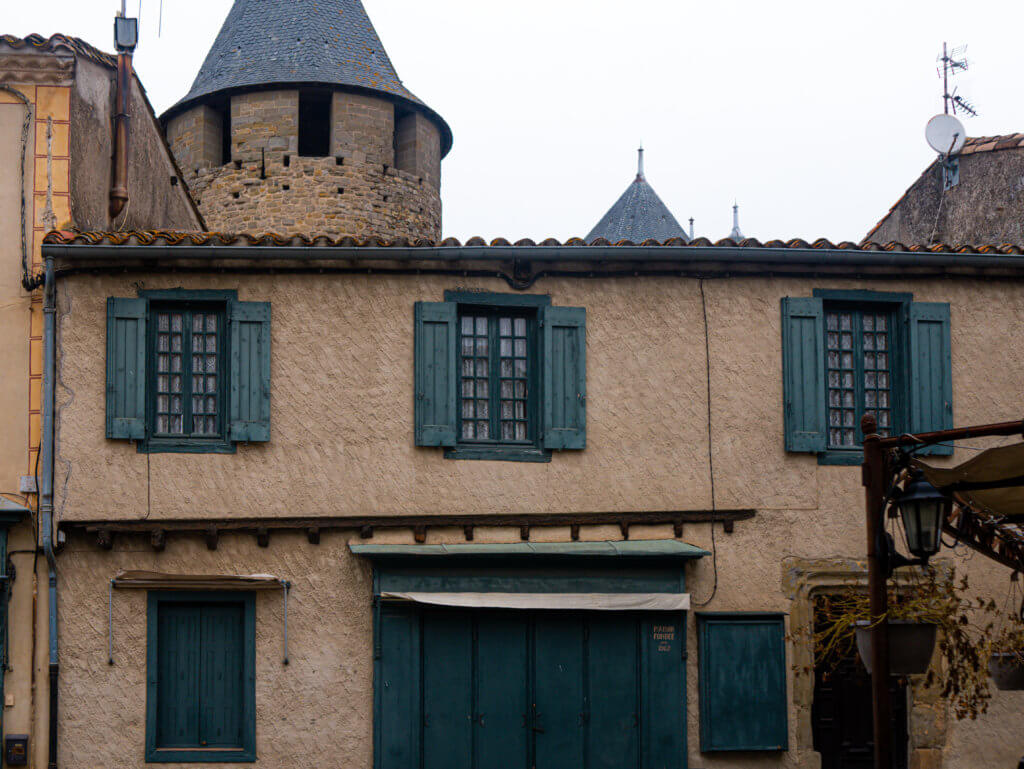
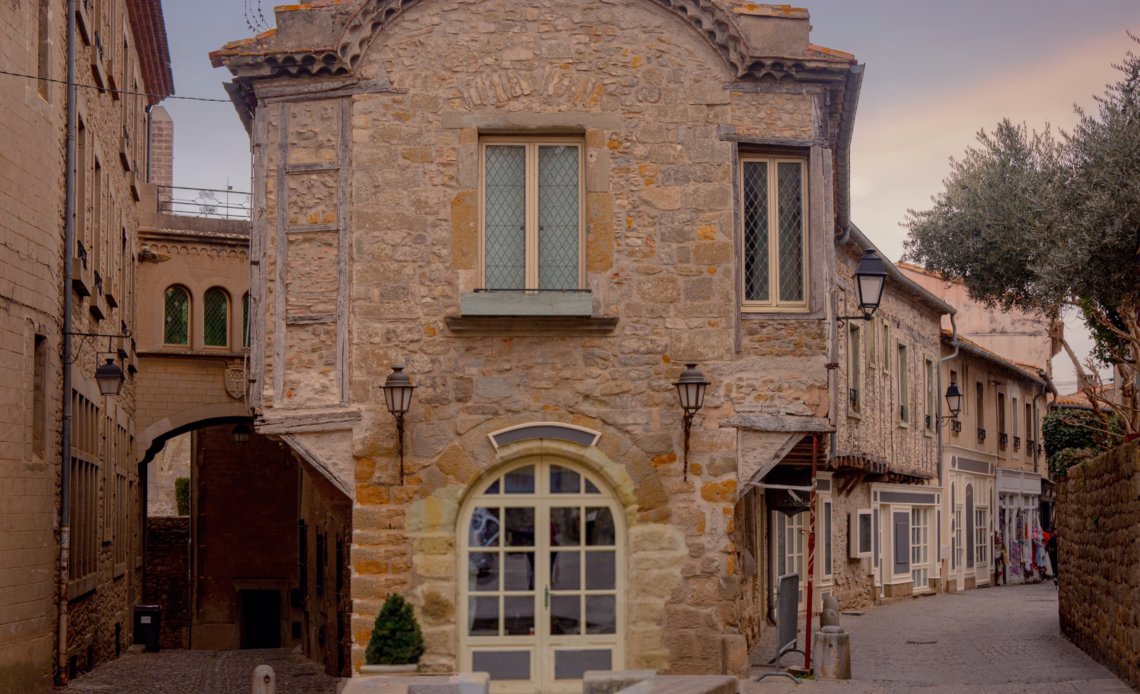
Walking through the medieval streets of the Cité is like travelling back in time. The majority of the structures have been conserved, and the charming cobblestone streets still exist. There are numerous quaint shops, cafes, and eateries to enjoy. There are also many gift shops selling medieval souvenirs, the majority of which are stocked with daggers and silver plastic helmets.
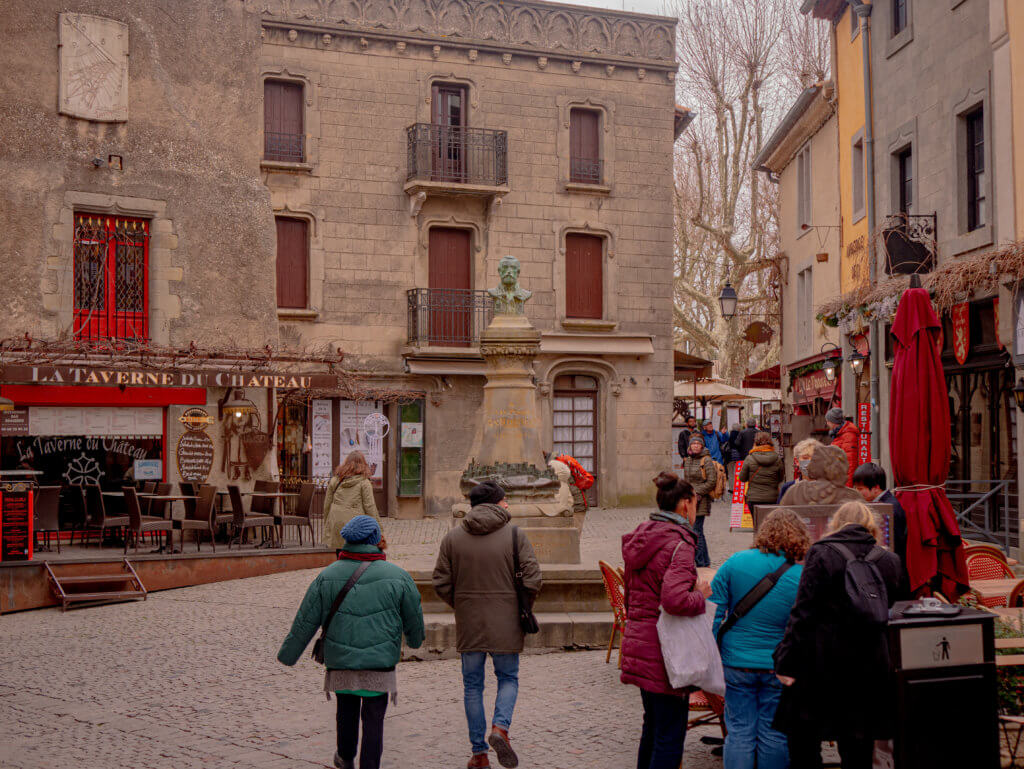
You can also enjoy a 2-hour private walking tour of the magnificent fortified town of Carcassonne, where you get to enjoy a local tasting and local insights of the city. Stroll down medieval streets and explore the superb castle, city ramparts and romantic buildings with your own private guided tour. Or if you are tight for time this 60 min guided walking tour is perfect to learn all the key facts of the city and delve into local life in Carcassonne. From Château Comtal to Pont Vieux, you will discover the city’s most defining landmarks and get insider tips on the best cafes, restaurants, and lively bars in Carcassonne to ensure you get the most out of your stay.
Comtal Castle
One of the most important buildings in Cité de Carcassonne is the fairy-tale looking castle nestled against the protective ramparts of the city walls. It is called Château Comtal (Count’s Castle), a 12th-century castle that overlooks the lower town to the west. It is the heart of the defence system of the city of Carcassonne.
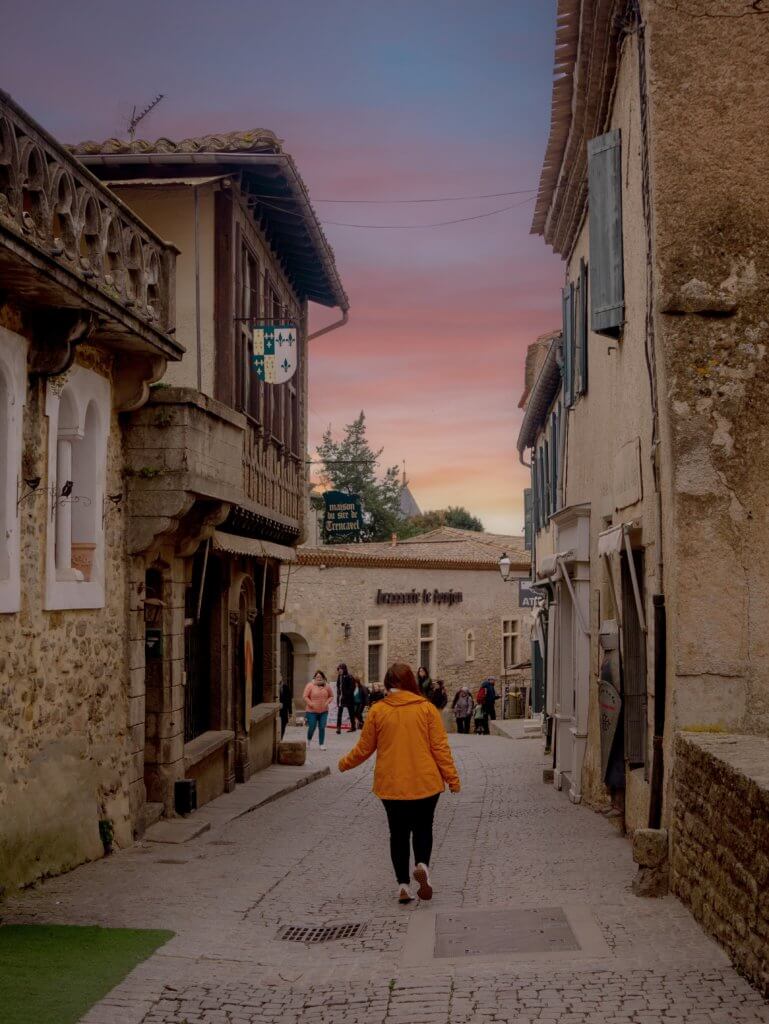
Visiting the castle is one of the best things to do in Carcassonne to discover the history of the city. Here you can learn about its restoration by architect Viollet-le-Duc, understand its interior and exterior defense system, visit the keep, admire its Roman frescoes and its treasures of Roman architecture. You will also learn about the legend of Dame Carcas, the Cité’s archaeological collections, investigate over 2,500 years of history, watch a presentation film and enjoy a completely renovated shop in one of the most beautiful rooms in the château.
The admission fee to enter the castle includes:
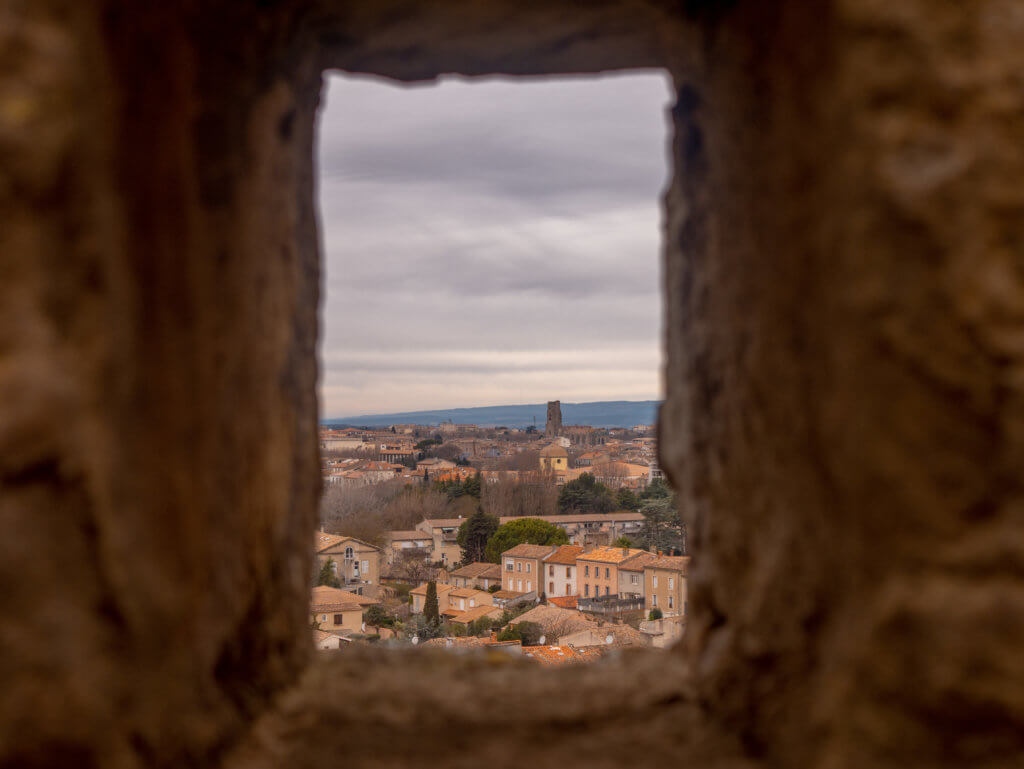
- Privileged access to the upper part of the ramparts where you can enjoy 360-degree panoramic views of the surrounding area. From the castle you have a beautiful panorama of the Pyrenees and the Bastide Saint-Louis (Lower Town).
- The rampart walk and access to the hoards.
- A visit to the dungeon (donjon).
- Access to rooms in the castle and interior courtyards.
- A short film on the history of the city.
- A visit to the Musée Lapidaire which is full of sculptures.
To avoid disappointment, don’t forget to book your ticket to the castle in advance! Queues build up quickly in the summer months so make sure to buy your tickets to skip the line.
Visit Musée de L’École
Unexpectedly, there is a school museum tucked away in the centre of Carcassonne. Explore the five rooms, which are filled with teaching aids and resources from the 1880s to the 1960s. It is a fascinating place to visit if you’re curious about what French schools were like during that time. There is a small entrance fee to visit.
Museum of the Inquistion
This is one of the darkest periods of the city of Carcassonne. In February 1231, Gregory IX published the constitution Excommunicamus, which prescribed life imprisonment for repentant heretics and the death penalty for obstinate ones. The Museum of the Inquisition is located in a large 17th century building. You will be able to see several instruments of torture from the 12th century to the French Revolution.
Visit the Basilica of Saint Nazarius and Celsus
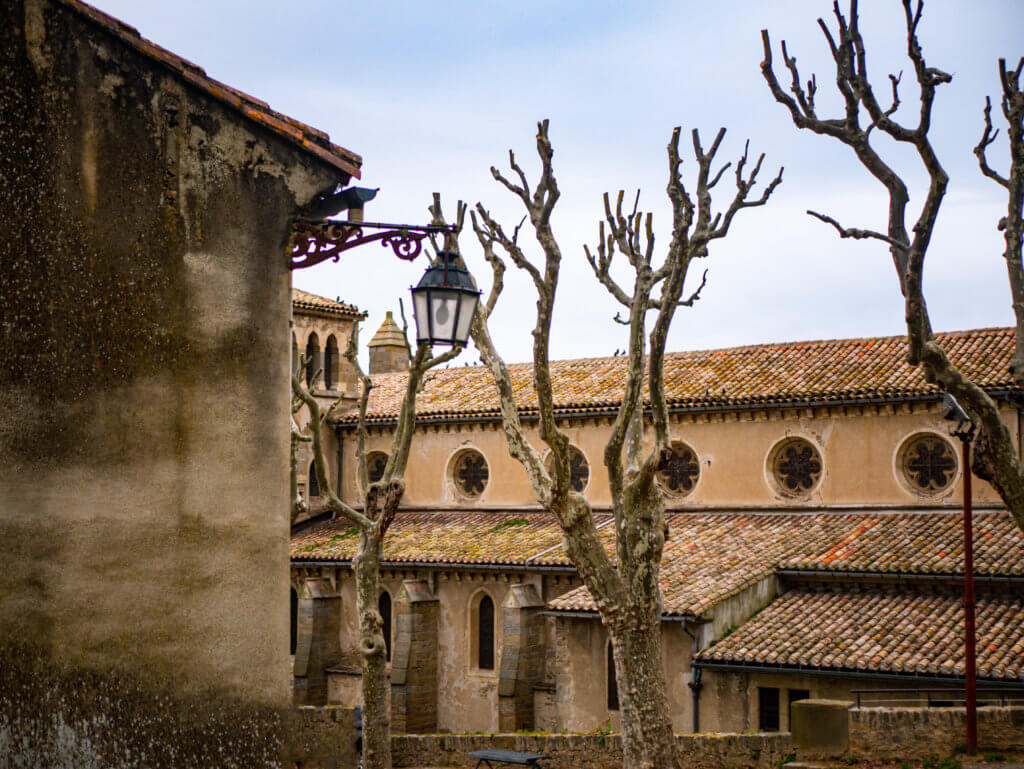
The Basilica of Saint Nazarius and Celsus is a stunning Roman Catholic minor basilica in the heart of medieval Carcassonne. It is built in the Gothic-Romanesque style and it is certainly worth a visit during your time in the city. The original church is thought to have been constructed in the 6th century during the reign of Theodoric the Great, ruler of the Visigoths.
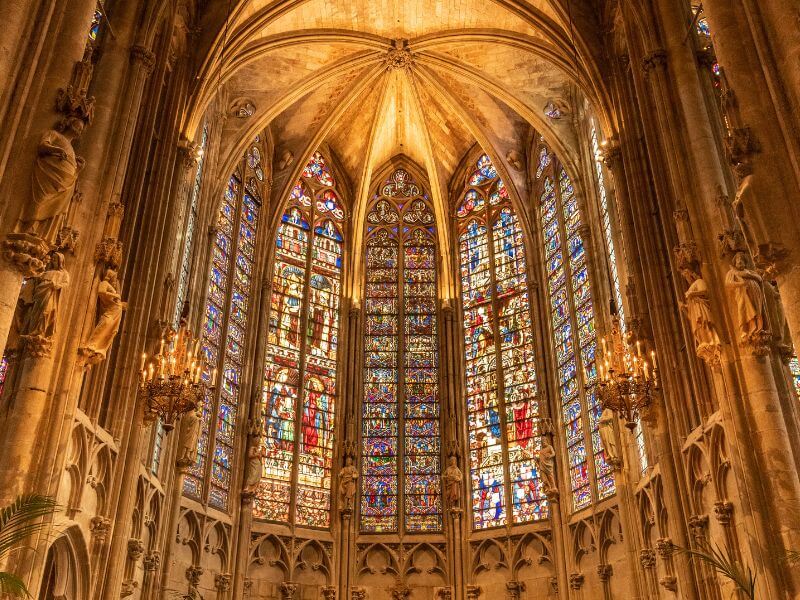
The Church of Saints Nazarius and Celsus obtained the status of historical monument in 1840. Around this time, the architect Eugène Viollet-le-Duc renovated the church along with the remainder of the citadel. In 1898, the church was elevated to a minor basilica. A vibrant rose window adorns the facade of this elegant basilica. The central stained glass window of the choir from 1280 is one of the oldest ones in the south of France.
Walk across Pont Vieux
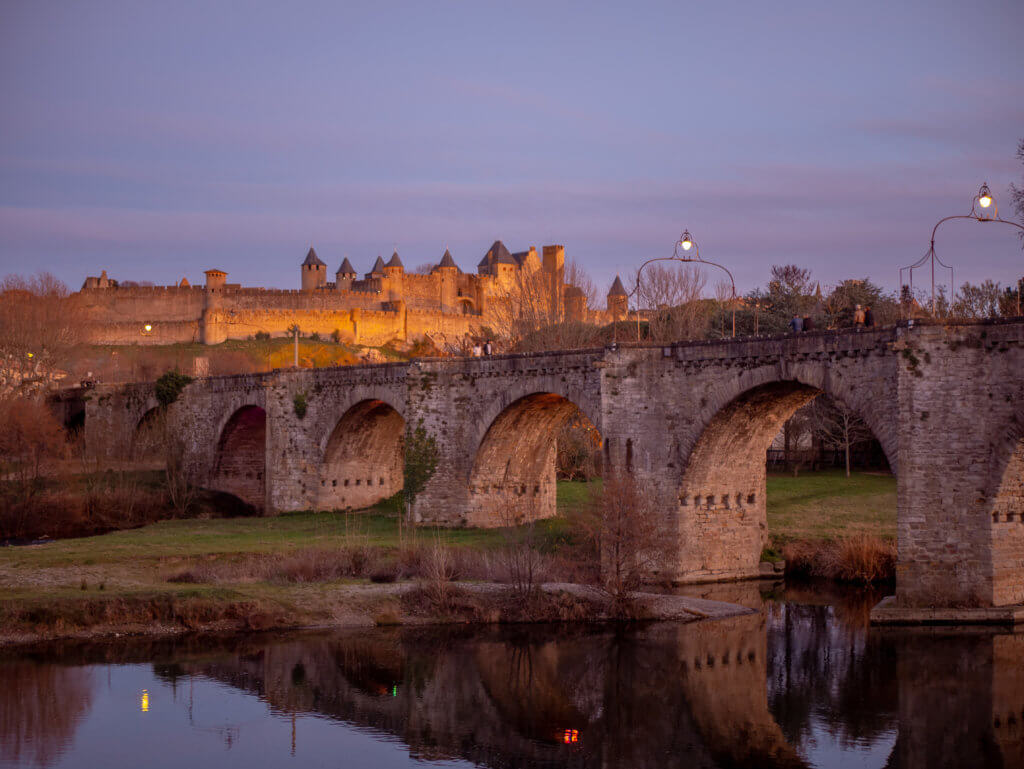
This very old bridge stretches a whooping 200m across the River Aude and beyond its banks. Steeped in over 2000 years of history this beautiful stone bridge links the Cité to the lower town and offers one of the best views of the citadel. Exclusively reserved for pedestrians, it allows quick access to the Medieval City. The arches are illuminated different colours at night and if you get the chance to walk the bridge at sunset it really is a magical experience.
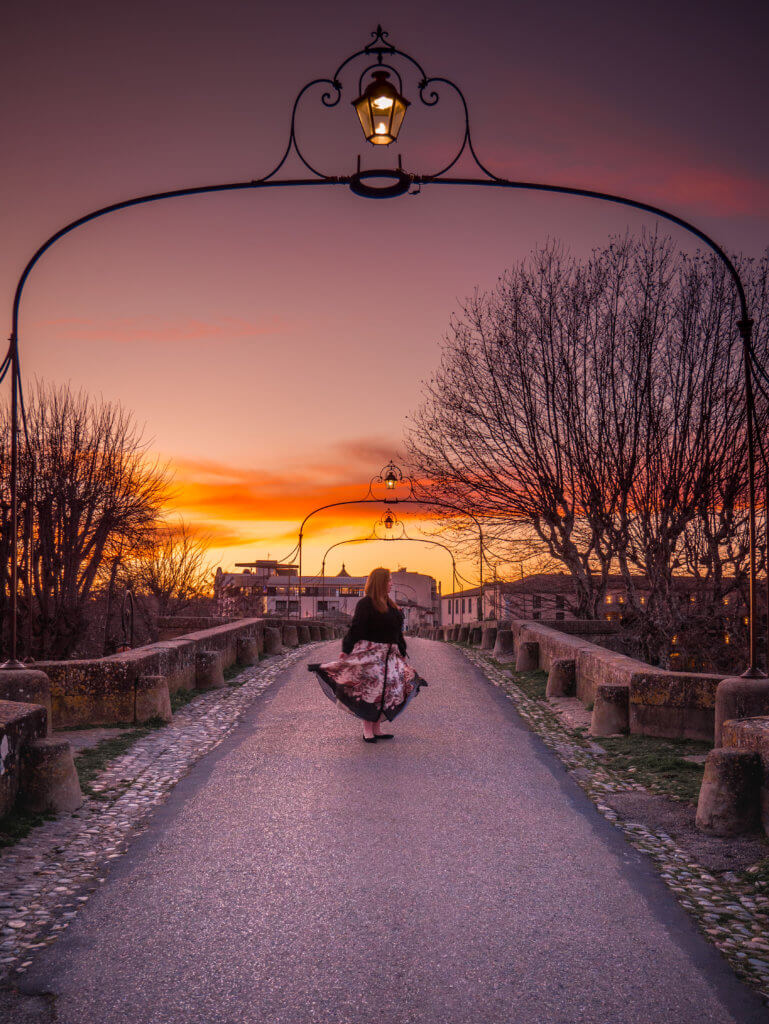
The chapel of Notre-Dame de la Santé, located at the bridge’s entry, is the last remaining piece of the city’s first hospital. Although the interior has been altered and the exterior restored, it is still a beautiful example of 15th century architecture.
Bastide Saint Louis
Today, the Lower Town and more modern part of Carcassonne is known as Bastide Saint Louis. Believe it or not, Bastide Saint Louis even had its own walls like Cité de Carcassonne but they have since been replaced by bustling boulevards. The only remaining portion of this wall is the Porte des Jacobins gate, which is located close to Carcassonne Cathedral.
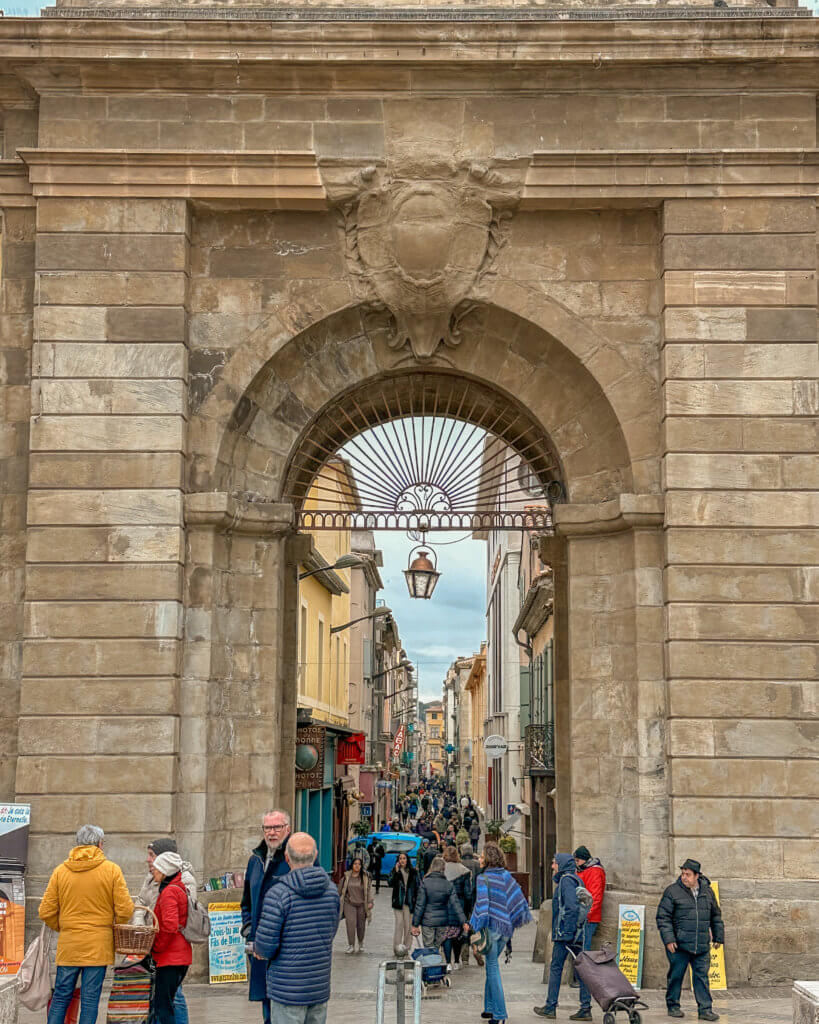
Though less well known than the medieval citadel of Carcassonne, La Bastide Saint Louis offers many historic sights away from the the tourist trap of the La Cité. Built in the 13th century by Saint Louis, from whom it takes its name, it is a charming, walkable district of narrow, twisting cobbled streets built on a grid around the main square, Place Carnot. Grab a table in the square beside the neptune fountain, order a coffee and just people watch.
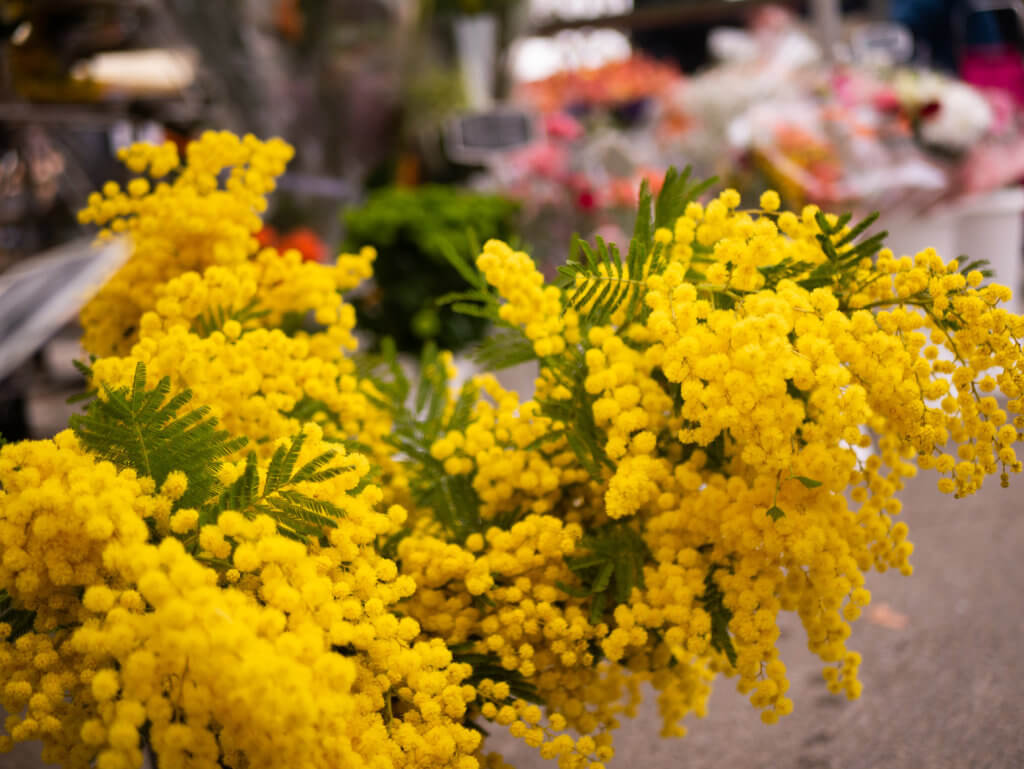
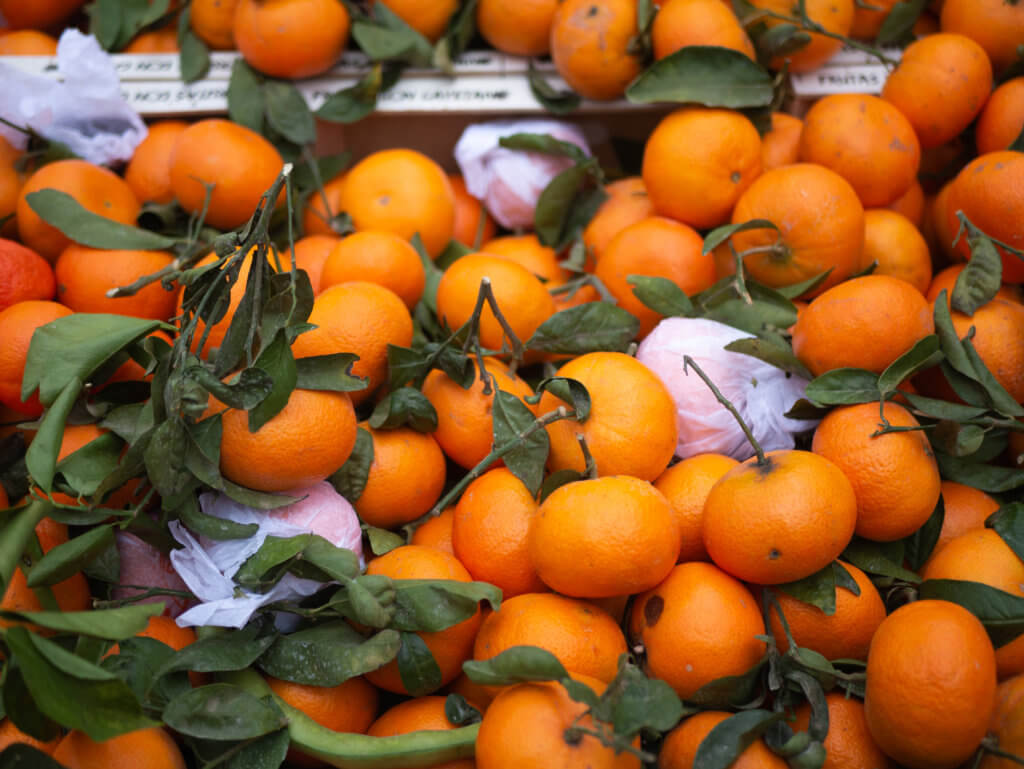
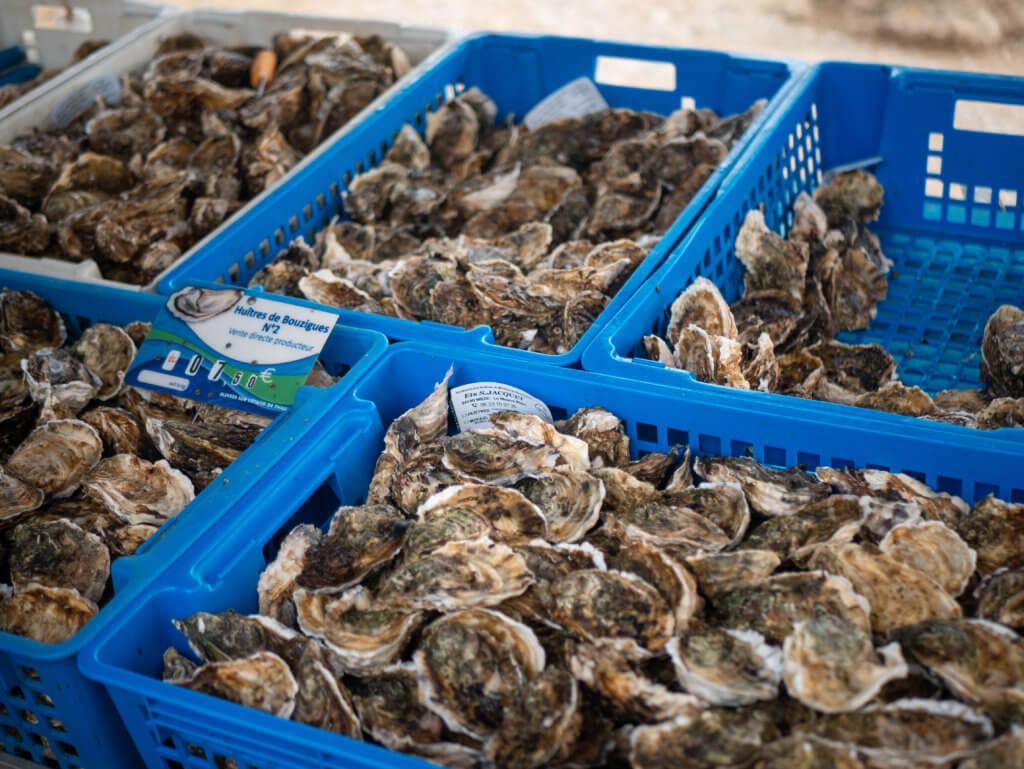
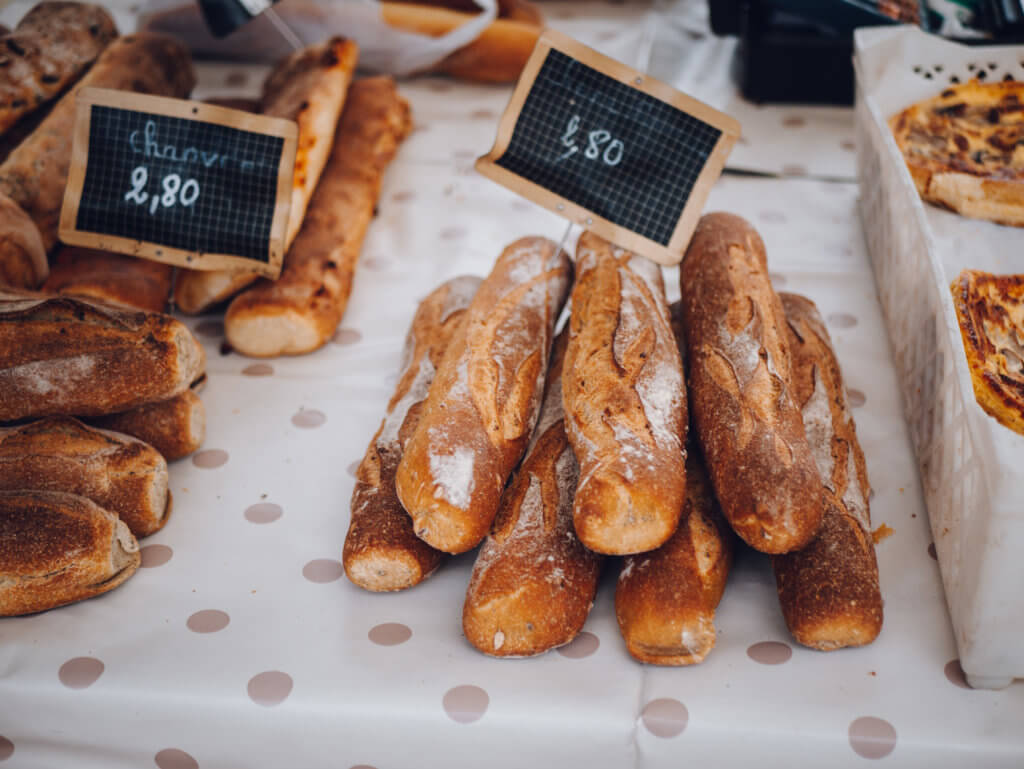
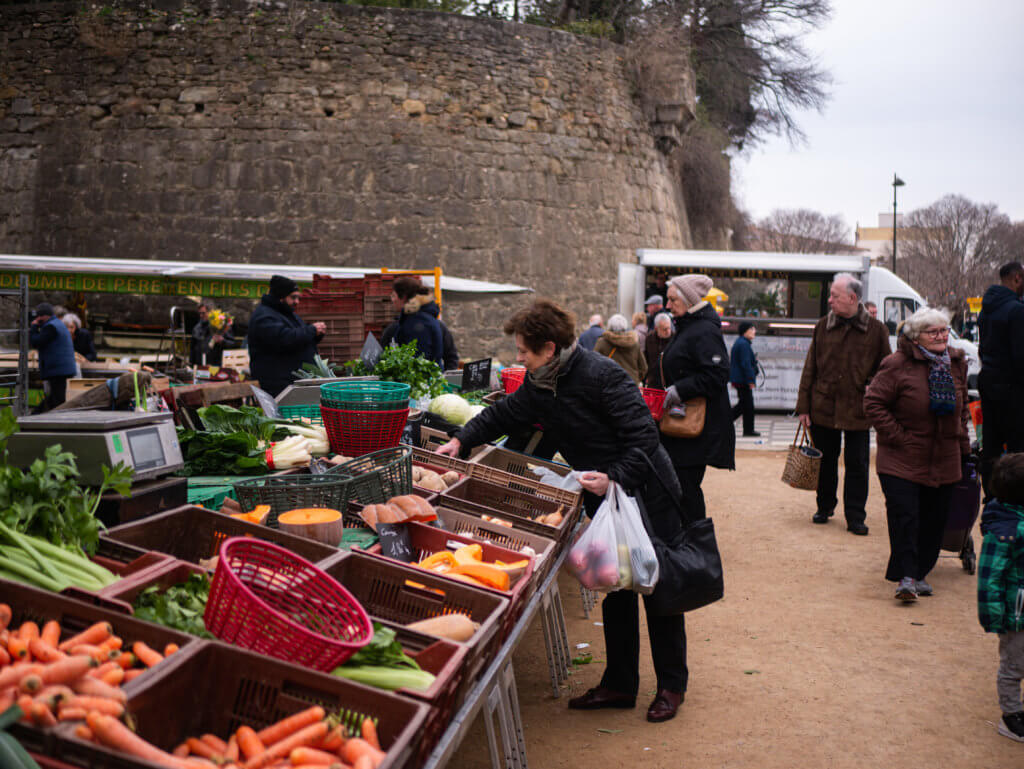
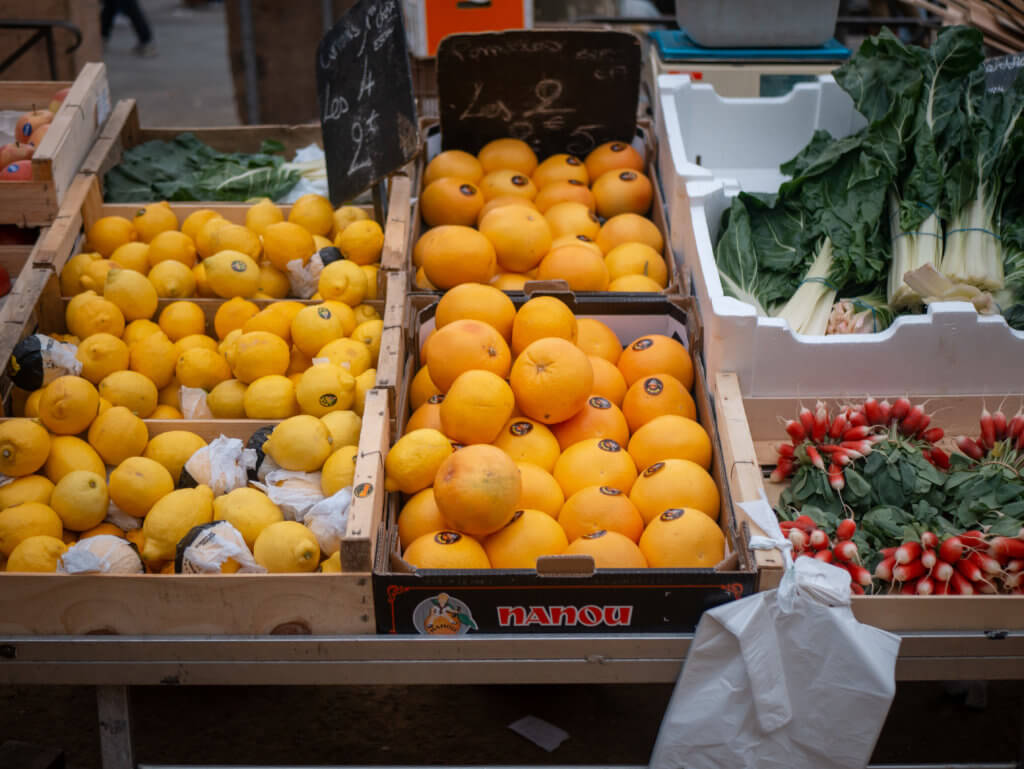
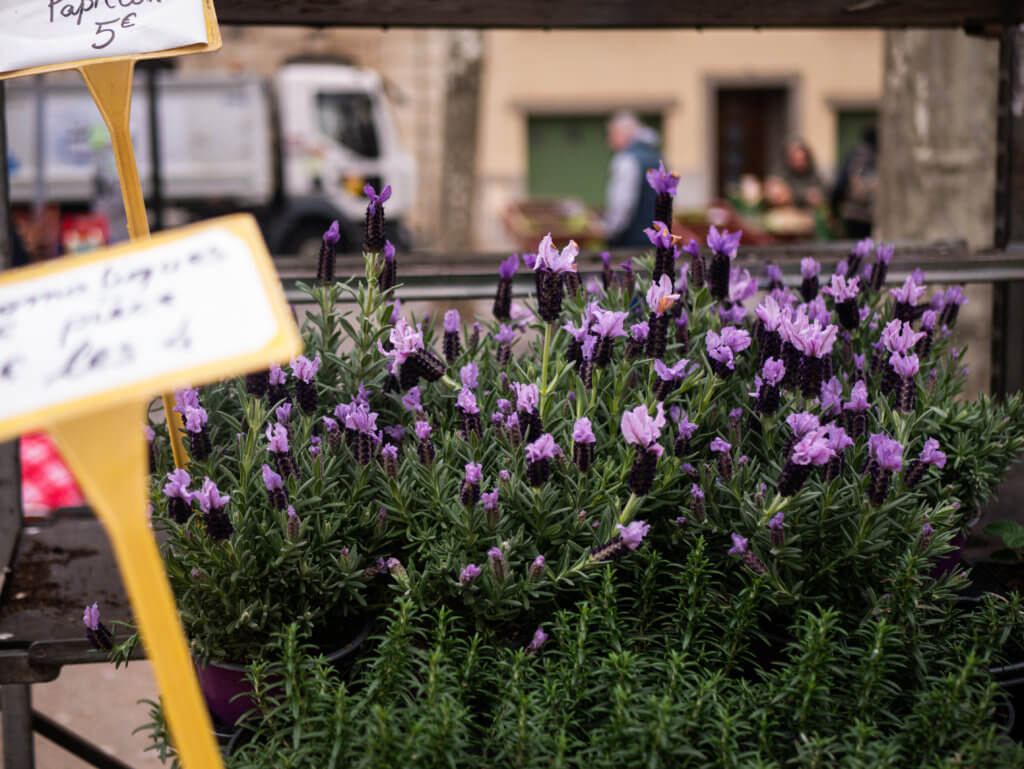
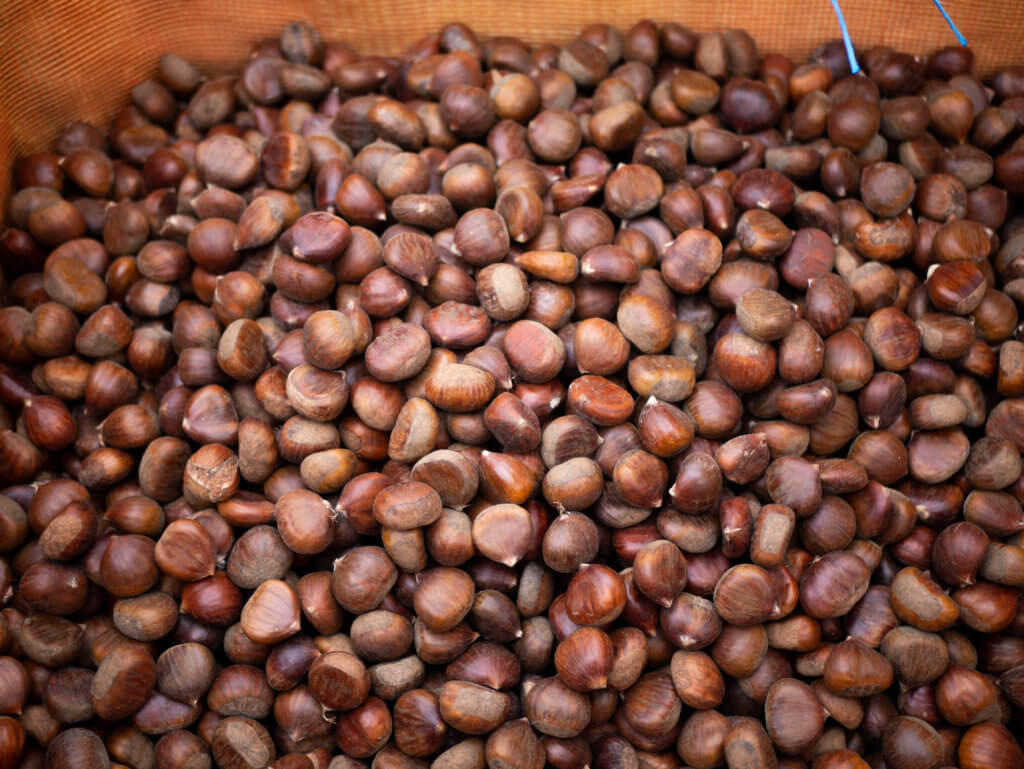
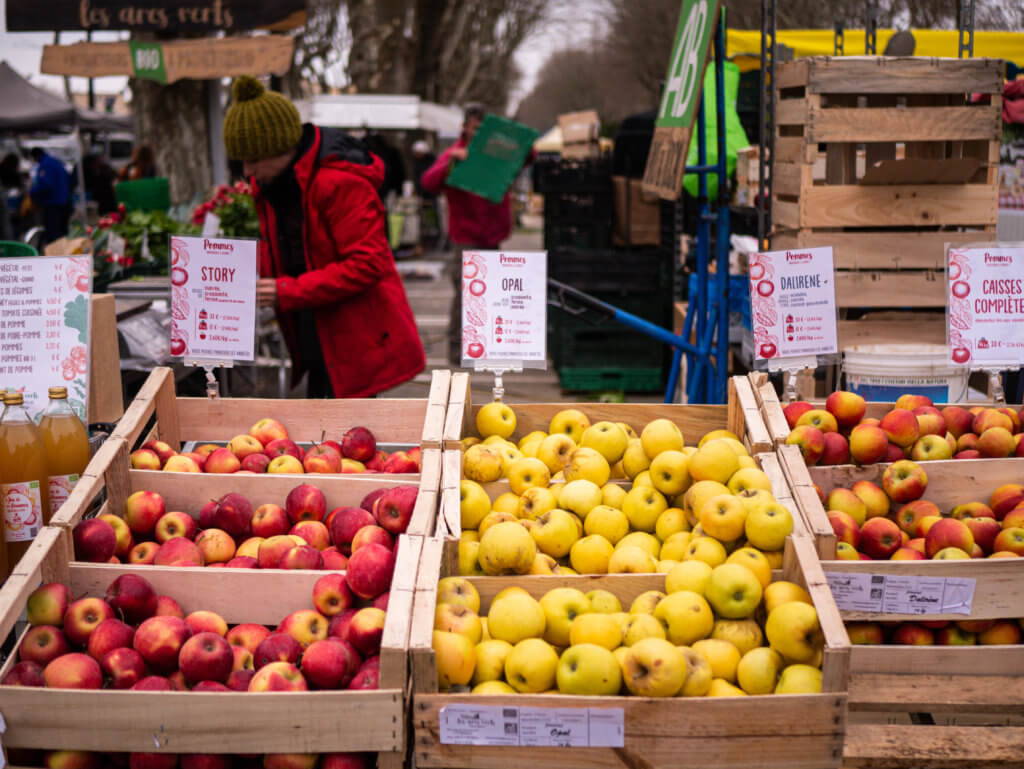
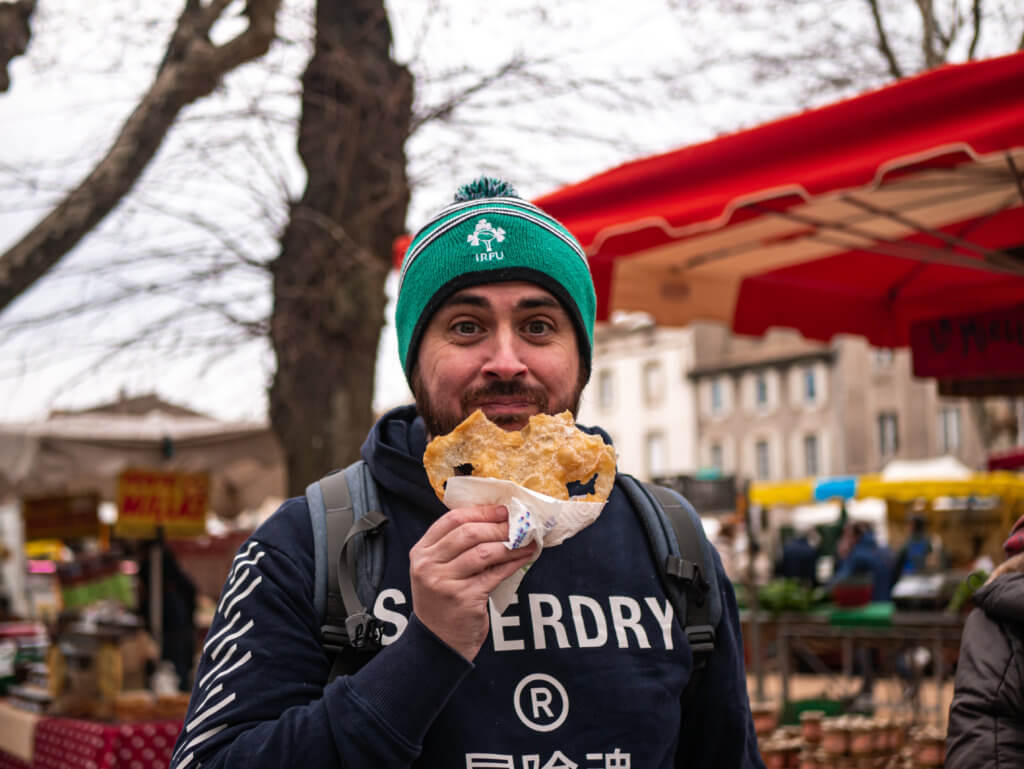
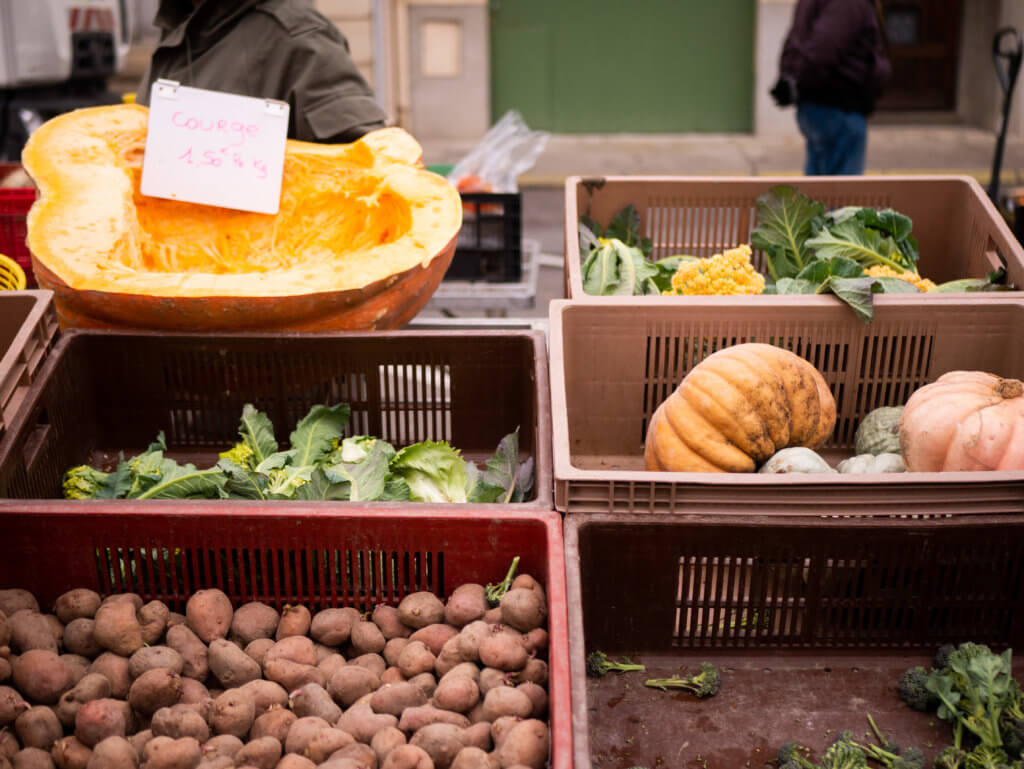
Every Saturday, Place Carnot is transformed into a bustling market selling local and organic produce. We highly recommend visiting to soak up the atmosphere and witness Occitan life happening in the heart of Bastide Saint Louis.
Parking at Carcassonne
Conveniently, there is a car park just outside the city walls close to the entrance of the Cité de Carcassonne which has plenty of spaces. However, be aware that there is a charge for parking your car.
Before heading into the Old City of Carcassonne, make sure you pick up a free map from the small Tourist Office which is located near the main entrance at Narbonne Gate (La Porte Narbonnaise).
The Double UNESCO Wonder: Why Carcassonne is an Architectural Masterpiece
Carcassonne holds a rare distinction that very few cities in the world can claim: it is home to two separate UNESCO World Heritage sites. While most travelers visit solely for the medieval fortress, the city is also a primary gateway to the Canal du Midi, a 17th-century engineering marvel that revolutionized European travel. This “double citation” makes Carcassonne a heavy hitter for history buffs and nature lovers alike, offering two completely different ways to experience the heritage of Southern France.
The Canal du Midi: A Masterpiece in Motion
Constructed during the reign of Louis XIV, the Canal du Midi is a 360km network of navigable waterways connecting the Mediterranean to the Atlantic. It was designed by the visionary Pierre-Paul Riquet, who overcame immense geographical challenges to create a waterway that is now considered a “work of art” in civil engineering. Today, the section running through Carcassonne is the most serene part of the city, lined with centuries-old plane trees and historic oval locks.
This famous French canal links Toulouse and Sète and was originally used to transport goods and people. The Canal du Midi winds itself through the vineyards to the centre of the town of Carcassonne. You can take a bike ride along the old towpaths, enjoy a walk or hire a boat and enjoy the scenery.
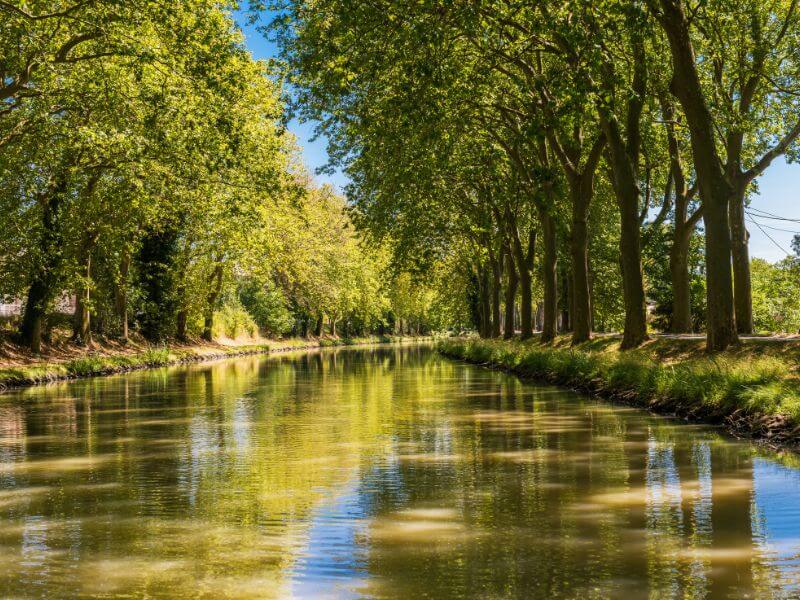
A Hidden Gem: See the Castle from the Water
While the views from the ramparts are famous, one of the most highly recommended “hidden gem” experiences is seeing the fortress from the canal itself.
• Boat Tours at Dusk: Taking a guided boat tour or renting a small electric boat at sunset offers a perspective few tourists see. As the “Golden Hour” sets in, the silhouette of the 52 towers of the Cité reflects perfectly on the still water of the canal (a dream for photographers).
• Walking the Towpaths: If you prefer to stay on dry land, the ancient towpaths (originally used by horses to pull barges) have been converted into beautiful, flat walking and cycling trails. A short 15-minute walk from the Port de Carcassonne toward the Pont Vieux provides sweeping, cinematic views of the medieval walls rising above the Aude valley.
Practical Tips for the Canal
• Location: The Port de Carcassonne is located in the Bastide Saint-Louis (the lower town), just across from the main train station (SNCF).
• Boat Hire: You can rent license-free boats for an hour, a day, or even a week-long cruise through companies like Le Boat or Nicols.
• Timing: For the best experience, visit the canal in the early morning for mist-covered waters or at dusk for the illuminated castle views.
Canal du Midi Walking Route
To capture the perfect sunset over the fortress and experience both UNESCO sites in one go, follow this curated walking route. It takes you from the modern transit hub of the Bastide to the ancient Cité via the tranquil banks of the Canal du Midi.
The “UNESCO Sunset” Route: Canal to Castle
• Total Distance: ~2.5 km (1.5 miles)
• Time: 45–60 minutes (including photo stops)
• Difficulty: Easy/Flat (until the final short climb to the Cité)
1. The Starting Point: Port de Carcassonne
Exit the Carcassonne SNCF Train Station and cross the bridge directly in front of you. You are now at the Port de Carcassonne on the Canal du Midi. Before heading toward the castle, walk 5 minutes along the towpath to the right to see the historic Epanchoir de Foucaud (a beautiful spillway) to get your first “Canal UNESCO” stamp.
2. Through the Heart of the Bastide
Retrace your steps to the port and head down Rue Georges Clemenceau. This is the main pedestrian artery of the “Lower Town.” It leads you straight to Place Carnot, the perfect spot to grab a quick café au lait or a pastry from a local boulangerie before the sun begins to dip.
3. The “Postcard” Crossing: Pont Vieux
Continue south through the Bastide until you reach the Aude River. Cross the Pont Vieux (Old Bridge). This 14th-century pedestrian-only bridge is arguably the best spot in the entire city for sunset photography.
Pro Tip: Stop halfway across the bridge. From here, the medieval Cité rises dramatically above the river, catching the orange glow of the setting sun on its 52 towers.
4. The Hidden View: Square Maria et Pierre Sire
Immediately after crossing the Pont Vieux, don’t go straight up the main road. Instead, veer right into the Square Maria et Pierre Sire gardens. This quiet park offers a low-angle, framed view of the castle walls through the trees, a favourite for professional photographers looking to avoid the standard tourist shots.
5. The Golden Hour Arrival: Porte d’Aude
Follow the winding Rue Barbacane past the Saint-Gimer church. Instead of entering the main “tourist gate” (Porte Narbonnaise), take the steeper, cobbled climb up to the Porte d’Aude.
Why this gate? The Porte d’Aude faces west. Arriving here at sunset means you are walking directly into the golden light. As you reach the top, you’ll have a panoramic view of the Bastide and the Canal du Midi glowing below you, with the massive walls of the Cité at your back.
Day Trips from Carcassonne
For travellers who want to venture beyond the castle walls, the Minervois wine region offers a landscape that feels like a blend of Tuscany and the rugged French scrubland (garrigue).
This day trip takes you through sun-drenched vineyards and medieval villages where the history of the Canal du Midi is deeply intertwined with the “wine revolution” of the 17th century.
The Minervois Wine Day Trip: A Soul-Stirring Itinerary
Morning: The “Red Marble” Village
Drive 30 minutes north of Carcassonne to Caunes-Minervois. This stunning medieval village is world-famous for its rare red marble, used to build the Palace of Versailles.
• The Experience: Start with a stroll through cobbled lanes to the 8th-century Benedictine Abbey.
• The Tasting: Visit Château La Villatade (just 15 minutes from Carcassonne) for an authentic introduction to the region’s robust reds and elegant rosés.
Lunch: A Gastronomic Halt
For lunch, head into the heart of the “Cru” appellation.
• The Foodie Choice: Eat at La Bastide de Fauzan, which offers panoramic views of the rolling vineyards and the Black Mountains. Pair your meal with a glass of local Syrah or Grenache.
Afternoon: The Gorge-Side Fortress of Minerve
Finish your day in Minerve, officially voted one of the “Most Beautiful Villages in France”. Perched on a limestone rock surrounded by deep river gorges, it was a major stronghold during the Cathar crusades.
• The Hidden Gem: Visit Château de Paraza, a magnificent estate where you can taste wines in a cellar that borders the Canal du Midi.
Practical Tips for Your Wine Journey
• How to Get There: While a car is the easiest way to explore remote corners, a direct bus (Line A) runs from Carcassonne to Caunes-Minervois for just €1.
• Wine Style: Minervois is famous for its “vintage by the wind”—the Cers and Marin winds create an elegant, rounded profile in the wines that you won’t find on the coast.
• Don’t Forget: Many wineries require a pre-booked appointment for a full tour, though many “Caveaux” (tasting rooms) allow walk-ins for quick tastings.
Top Recommended Day Trips from Carcassonne
Beyond the fortress walls, the Aude department is a treasure trove of Cathar history, rolling vineyards, and medieval villages. If you have an extra day, these trips are highly recommended to get a true taste of Southern France:
• The Four Castles of Lastours: Just 20 minutes north of Carcassonne, these four ruined fortresses sit perched on a rocky ridge overlooking a deep valley. It is one of the most dramatic archaeological sites in France and offers incredible hiking opportunities.
• Mirepoix: A short 45-minute drive southwest brings you to this stunning medieval bastide town. It is famous for its 13th-century central square, Place des Couverts, which is surrounded by colourful half-timbered houses supported by intricate wooden carvings.
• Lagrasse: Officially named one of the “Most Beautiful Villages in France,” Lagrasse is home to a magnificent 8th-century Benedictine abbey and a picturesque medieval bridge spanning the Orbieu River.
• The Giant Chasm of Cabrespine: If you need a break from history, head underground to one of the largest caves in the world. Its massive “glass balcony” allows you to walk 200 meters above the cave floor for a dizzying, unique perspective.
Recommended Tours from Carcassone
- Languedoc: Tour and Tasting at Domaine de Baronarques: Dive into centuries of winemaking tradition with a tour of the Domaine de Baronaques. Acquired by Baroness Philippine de Rothschild in 1998, the vineyard has been in existence since the 17th century, when it was under the possession of the Abbey de Saint-Polycarpe. After arrival at the vineyard, you’ll tour the vat-house and barrel-room where wines are fermented and aged, and see the 19th-century French Château, nestled into a tree-covered hill. After the tour, you will have the opportunity to taste the 3 wines produced at the Domaine de Baronaques: Grand Vin Rouge, La Capitalle de Baronarques, and Grand Vin Blanc.
- Mirepoix, Castles of Montségur & Camon guided tour: first stop is Mirepoix, a beautiful medieval village dating from the 10th century. The large central square is flanked by a magnificent covered arcade, created by half timbered houses supported on wooden pillars.
Then drive to the Château de Montségur, where the last stake of the Crusade against the Cathars occurred in the 13th century. Enjoy a relaxing lunch, before hiking 1hr 45mins so bring hiking shoes and note that this is quite a strenuous hike.
Next stop is for a relaxing walk in Camon, picturesque medieval village, classified amongst the most beauftiful villages of France, it is also known for its hundreds of rose trees that perfume and decorate the streets. Camon was founded around a Benedictine abbey in the Xth century. - The Episcopal City of Albi: The ideal visit with family or friends to immerse yourself in the medieval era of the 13th century and discover the jewel of this UNESCO listed site. Enjoy the gardens of the Palais de la Berbie, the former bishop’s palace overlooking the Tarn and the Pont-vieux, to the Saint-Salvi cloister, passing through the medieval districts of Castelviel.
- Languedoc Vineyard Tours: Indulge in the incredible flavors of the French wine region of Carcassonne with this guided vineyard tour. The fresh menu will delight your senses. Potential dishes include smoked salmon, puglia orecchiette and the tart tatin dessert served with homemade ice-cream, all paired with amazing wine matches. Explore regional vineyards while riding in a private vehicle.
- Cucugnan, Quéribus & Peyrepertuse castles: The ruined castles and fortresses around Carcassonne are a journey through time, taking you to sites up to a thousand years old. On this private tour, visit the 11th century stronghold of the Kings of Aragon, learn about the Cathar crusades during the 13th century, and hike through a dramatic landscape of vineyards, hilltop châteaux and rocky crags.
- Day Tour to Mirepoix, Montségur, Camon: Discover small, medieval villages at the base of the Pyrenees in southwestern France on this full-day tour from Carcassonne. Alongside a private guide, explore the 10th-century village of Mirepoix before heading to Montsegur, which was the last stronghold of the Cathars during the Crusades. Finally, enjoy a leisurely stroll through Camon, one of the most beautiful villages in France.
- Day Tour to Lagrasse village and Fontfroide Abbey: Discover the medieval history of France as you explore two abbeys in the south. With a private guide, head to the village of Lagrasse, which sits at the base of the Pyrenees, and enjoy a walk through the village. See the abbey, walk along the narrow streets, and admire its beautiful bridges. Then, visit the Fontfroide Abbey, founded in 1093 by Benedictine monks, where you take an audio tour of the property.
- Day Tour to Toulouse and the Canal du Midi: Visit two of southern France’s top destinations, all in one day, and enjoy a personalized and flexible sightseeing experience. Following morning pickup from your accommodation, travel via air-conditioned vehicle to Toulouse, where you’ll go for a walking tour of its historical highlights. After free time for shopping and lunch, head to the charming village of Castelnaudary to see the UNESCO-listed Canal du Midi.
Expand Your French Journey
Carcassonne is the perfect anchor for a wider exploration of France’s diverse regions. If your travels take you west, don’t miss our guide on how to spend 2 days in Bordeaux or our curated list of where to stay in Bordeaux city to find the perfect boutique base in wine country. For those heading toward the glittering French Riviera, we’ve rounded up the best things to see and do in Saint Paul de Vence, one of the most artistic hilltop villages in the world. And if you’re planning a winter escape, there is nothing more magical than experiencing Christmas in Colmar, where the half-timbered streets of Alsace transform into a real-life gingerbread village.
What to eat in Carcassonne
To truly understand why Carcassonne is worth visiting, you have to taste its history. In the South of France, food isn’t just fuel; it’s a cultural cornerstone, and in this region, Cassoulet is king.
The Cassoulet Connection: A Taste of Languedoc History
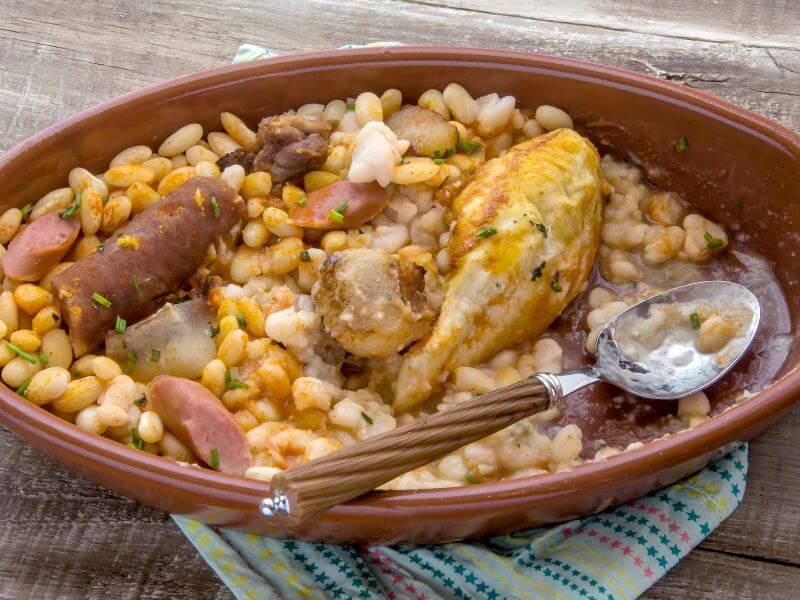
You cannot have a definitive Carcassonne guide without a deep dive into traditional Languedoc cassoulet. While three cities, Castelnaudary, Toulouse, and Carcassonne, famously feud over who makes the “true” version, the Carcassonne recipe has a distinct personality. Known as the “Son” of the cassoulet family, the Carcassonne version is a rich, slow-cooked stew of white beans (traditionally the Lauragais lingot bean) and a heavy hit of meats. What makes it unique to this city is the addition of mutton and, when in season, red partridge, which provides a deeper, gamier flavor than the pork-heavy versions found elsewhere.
The Anatomy of a Perfect Cassoulet:
• The Crust: A true cassoulet is baked in a clay pot (a cassole) until a deep golden crust forms. Legend says this crust should be broken and stirred back in seven times before serving.
• The Meats: Expect succulent pieces of duck confit, salty Toulouse sausage, and tender chunks of pork or lamb.
• The Beans: The beans should be creamy and “melting” on the inside but still hold their shape.
Where to eat the best Cassoulet in Carcassonne
• Brasserie Le Donjon: Located right in the heart of the Cité, this is the go-to spot for a classic, atmospheric meal. Their cassoulet is legendary for its superb value and authentic preparation.
• La Table de Franck Putelat: For luxury seekers, this two-Michelin-star restaurant at the foot of the ramparts offers a “bistronomic” take on the classic. Chef Putelat reworks regional hits with incredible finesse, often featuring a refined version of cassoulet with squab or pigeon.
• Auberge des Lices: A local favorite inside the walls that serves a hearty, traditional pot that feels like a “warm hug for the soul”.
The Ultimate Carcassonne Foodie Guide
While cassoulet steals the spotlight, the local “foodie” scene offers much more than just heavy stews.
1. Local Specialties You Must Try
• Duck Everything: Being in the Southwest, duck is on every menu. Look for Magret de Canard (duck breast) or Salade de Gésiers (duck gizzard salad).
• Languedoc Snails: Unlike the buttery Parisian version, these “petit gris” snails are cooked at a low temperature with ham, walnuts, and garlic.
• The Sweet Side: Don’t miss La Tourgnol, a flat brioche flavoured with aniseed, or Les Écus de la Cité, chocolates shaped like the coins once used in the medieval fortress.
2. Markets and Delicatessens
For an authentic experience, head to the Bastide Saint-Louis (the lower town) on Saturday morning for the local market in Place Carnot.
• Epicerie des Producteurs: A great spot to buy local honey, truffles from the Montagne Noire, and tinned duck confit to take home.
• L’Atelier de la Truffe: As the name suggests, this is a haven for truffle lovers located right in the Cité.
3. The Perfect Pairing: Languedoc Wines
A dish as rich as cassoulet requires a wine with “shoulders.” Pair your meal with a full-bodied red from the local AOC Cabardès or Minervois regions. These wines blend Atlantic grapes (Merlot, Cabernet) with Mediterranean varieties (Syrah, Grenache) to create a structured, fruity balance that cuts right through the richness of the duck fat. We recommend organising your own wine tasting experience where you can discover a gourmet asting with eight signature wines from the Vineyards Foncalieu. The tasting is accompanied by a platter of local cheese and cold cuts to create a food and wine pairing and share a moment of conviviality at the foot of the City of Carcassonne. After a quick chat about preferences, you will embark on a sensory journey in the heart of Languedoc to discover 8 wines, red, white and rosé.
The Gourmet Souvenir Guide: Bringing Carcassonne Home
Bringing a piece of Carcassonne home is the best way to relive your trip. From hearty stews to elegant wines, here is your checklist of the most authentic gourmet souvenirs to pack.
1. The King of Tins: Authentic Cassoulet
You’ll see cassoulet for sale everywhere, but for the best quality, look for jars or tins from established regional conserveries.
• Top Brand (The Local Benchmark): La Belle Chaurienne. Originally from nearby Castelnaudary, this is the most trusted premium brand in France. Look for the “Cassoulet Gastronomique au Confit de Canard” version for the richest flavor.
• Artisanal Choice: Maison Argaud or Le Revelois. These smaller producers use traditional farm methods and are often cited by locals as the closest you can get to a restaurant-quality meal in a tin.
• Where to buy: For a curated selection, head to L’Atelier du Cassoulet in the Cité or the Les Halles Prosper Montagné covered market in the Bastide.
2. Minervois Wines: Bottled Sunshine
A bottle of Minervois is the perfect partner for your tinned cassoulet.
• The “Cru” Standard: Look for bottles labeled Minervois-La Livinière. This is the first “Cru” of the Languedoc, known for its high-altitude, refined reds.
• Top Estates to Look For:
• Château La Villatade: Famous for its “V” Red and elegant “Côtes Noires”.
• Domaine Pierre Cros: Their “Tradition” is a local favorite, balancing spicy Syrah with smooth Grenache.
• Château d’Oupia: Known for producing robust, classic Minervois reds that age beautifully.
• Where to buy: Visit Le Comptoir de la Cité for a wide range of regional labels or Cave Urbaine Fond Cyprès in the Bastide for natural and organic selections.
3. Sweet & Savory Extras
• Les Écus de la Cité: These are small, round chocolates shaped like medieval shields—perfect for gifts.
• Añana Salt & Local Truffles: If you followed our Vitoria-Gasteiz guide, you’ll know Añana salt is world-class. In Carcassonne, pair it with black truffles from the nearby Montagne Noire.
• Confit de Canard: If you have the luggage weight, a tin of duck confit legs is a versatile pantry staple for recreating French meals at home.
Packing Tips for Foodies
• Weight Watch: Tinned cassoulet is heavy (often 840g or more). Ensure you have checked luggage, as these are considered liquids/gels and won’t pass through security.
• Bottle Protection: Most wine shops in the Cité offer protective inflatable sleeves or specialized shipping boxes if you are buying a half-case or more.
Pélardon des Corbières is a traditional French cheese hailing from Languedoc-Roussillon. The cheese is made from raw goat’s milk and it ripens in about one week. Pélardon des Corbières is shaped by hand into small disks. The texture is soft, creamy, and supple, while the flavour is slightly acidic, salty and nutty.
There are plenty of small restaurants within the Cité walls which serve delicious food and wine with stunning vistas of Carcassonne so be sure to check them out!
Where to stay in Carcassonne
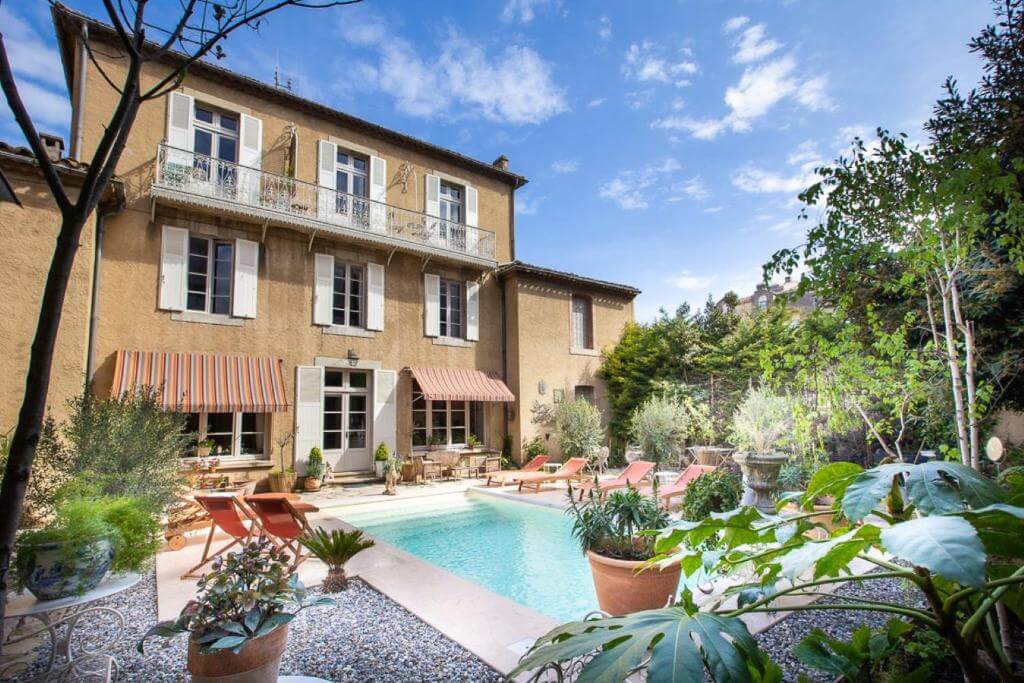
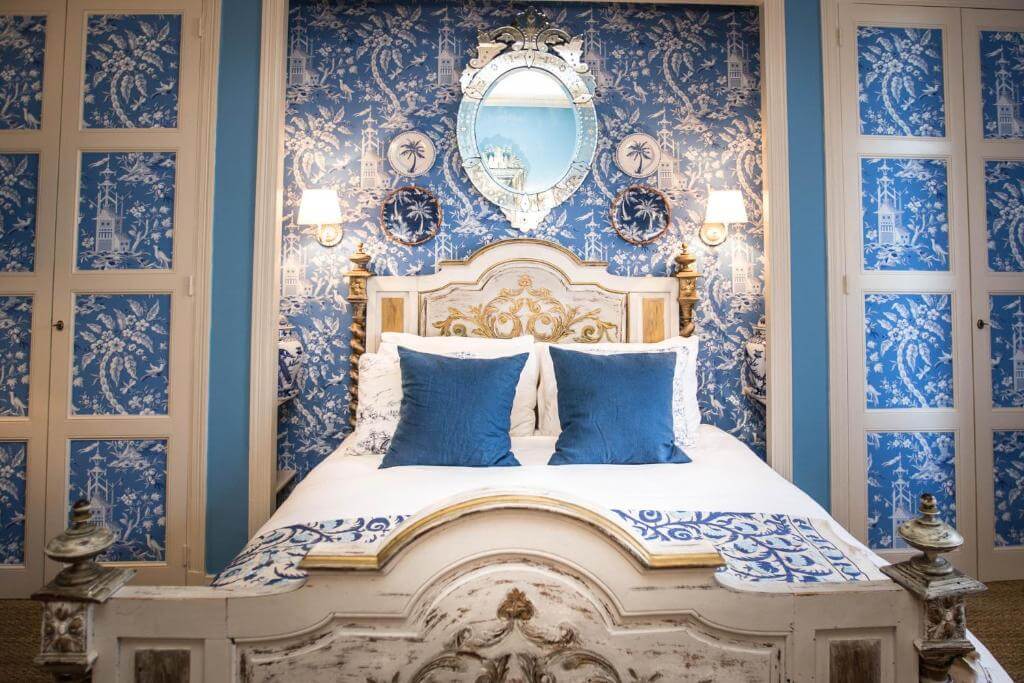
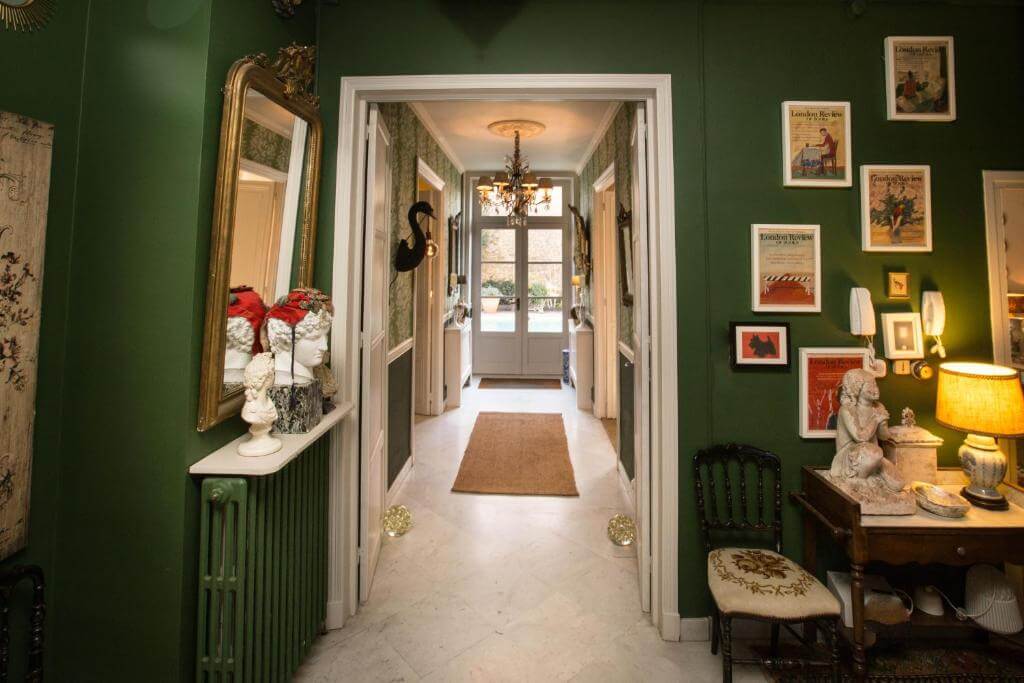
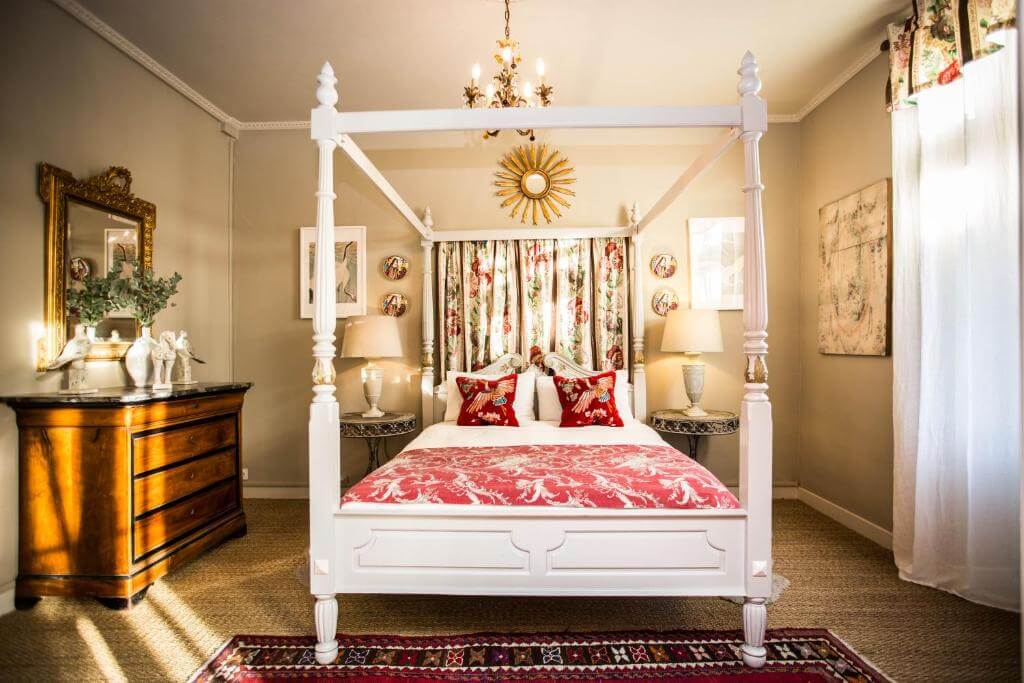
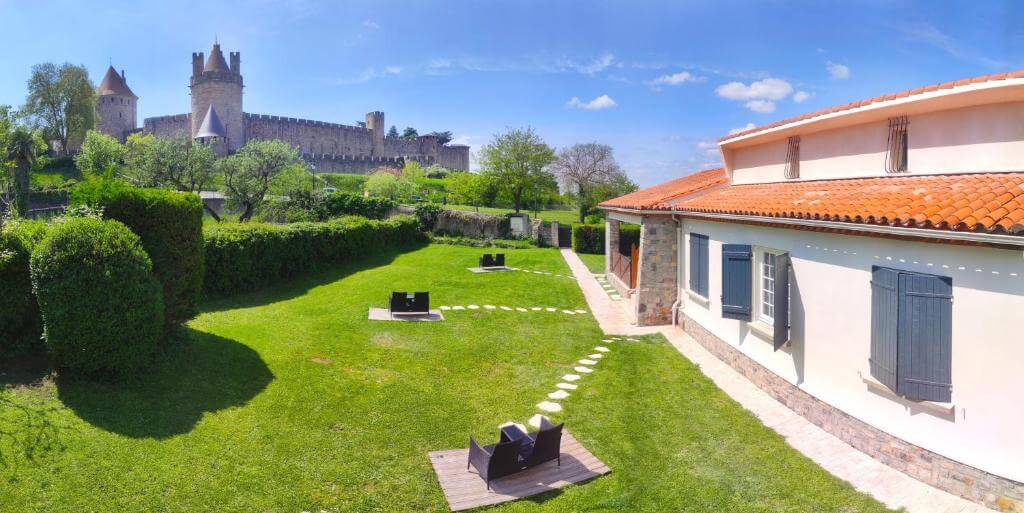
Carcassonne Bed and Breakfast du Palais
Carcassonne Bed and Breakfast du Palais is a gem of a find. It is located in one of the premier residental areas of Carcassonne and each of the 5 en-suite bedrooms is individually decorated with an eclectic collection of artefacts. You will be served a delicious breakfast each morning of your stay and the hosts are really helpful and happy to recommend things to do during your stay in Carcassonne. The pool is heated from May to October and there is a beautiful garden terrace to enjoy.
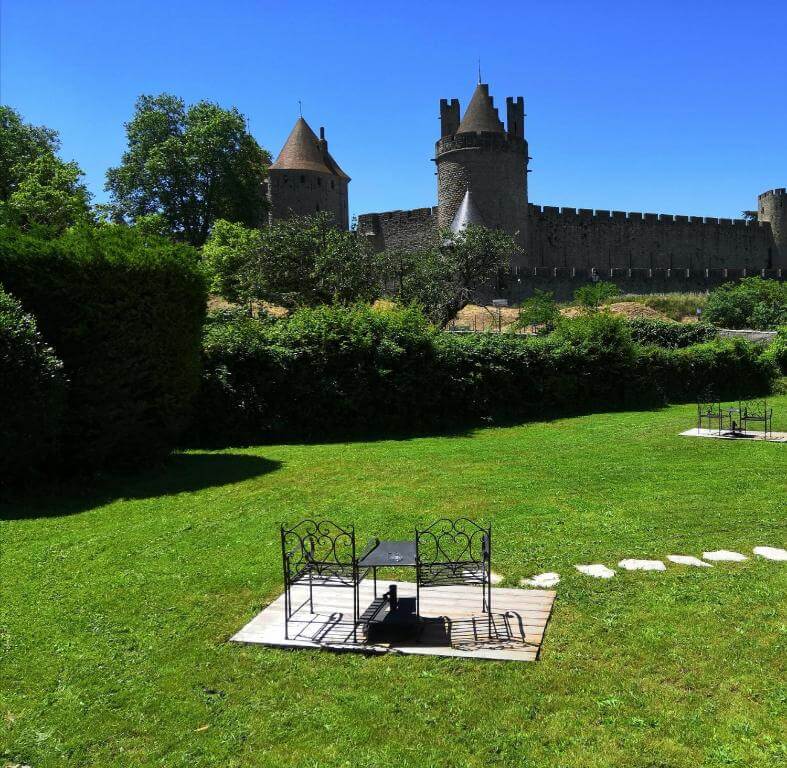
Good Knight
If you would prefer to stay closer to the citadel of Carcassonne then we recommend Good Knight. It is a pretty basic accommodation to be honest but it is affordable and you just can’t beat the location! It is self check-in which is really handy and there is parking near by. If you do book, try to get a room with a view of the castle. We were given room 9 which was around the back of the property in a small room with no view. Having said that we would stay again for the convenience of the location. Breakfast can be pre-ordered through a local restaurant but it is worth noting that apart from coffee-making facilities there is nothing onsite.
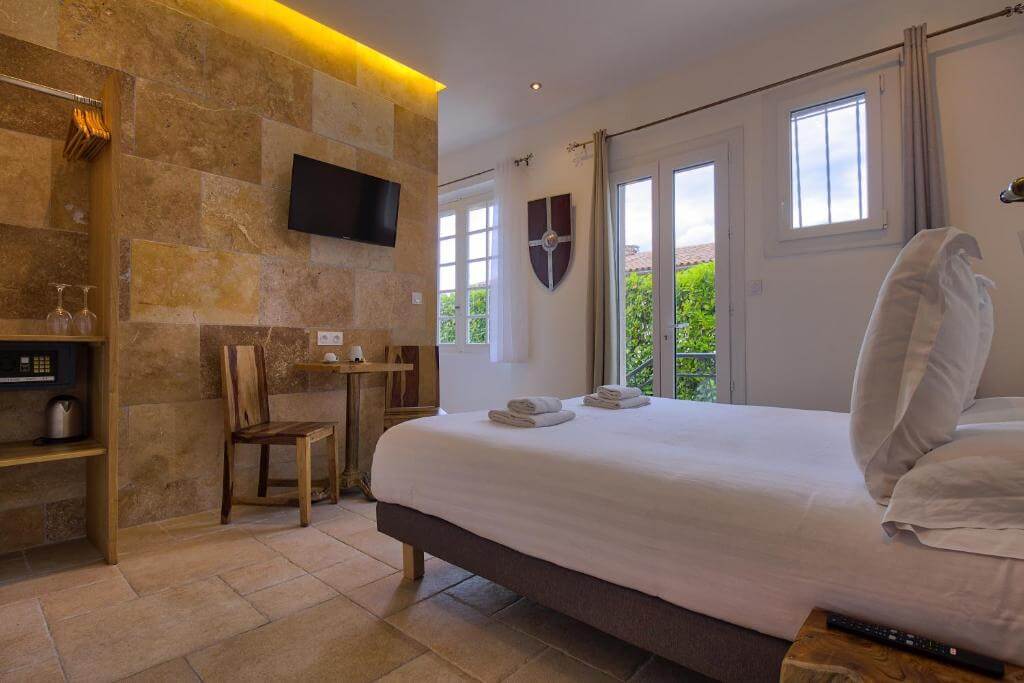
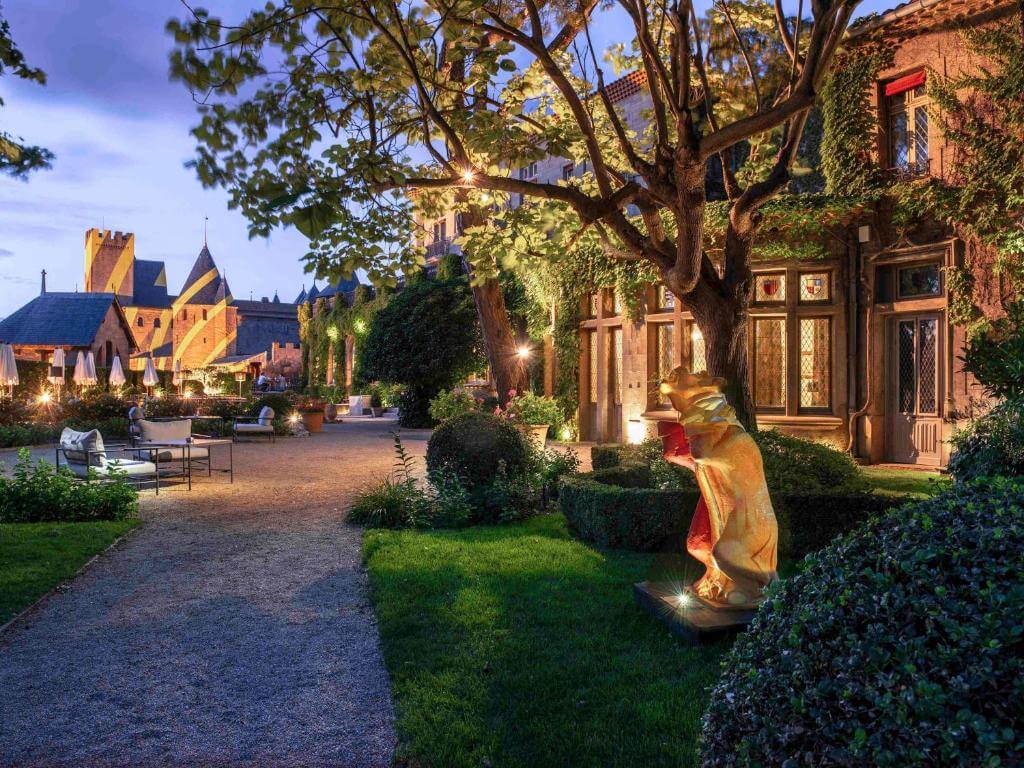
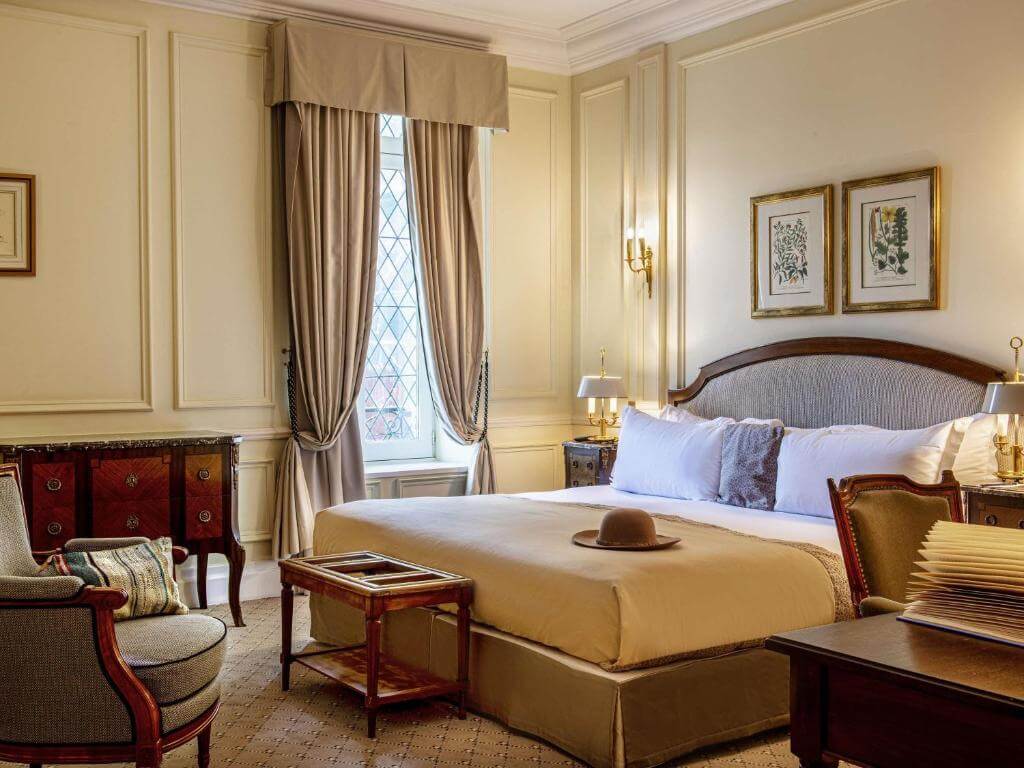
Hôtel de la Cité & Spa
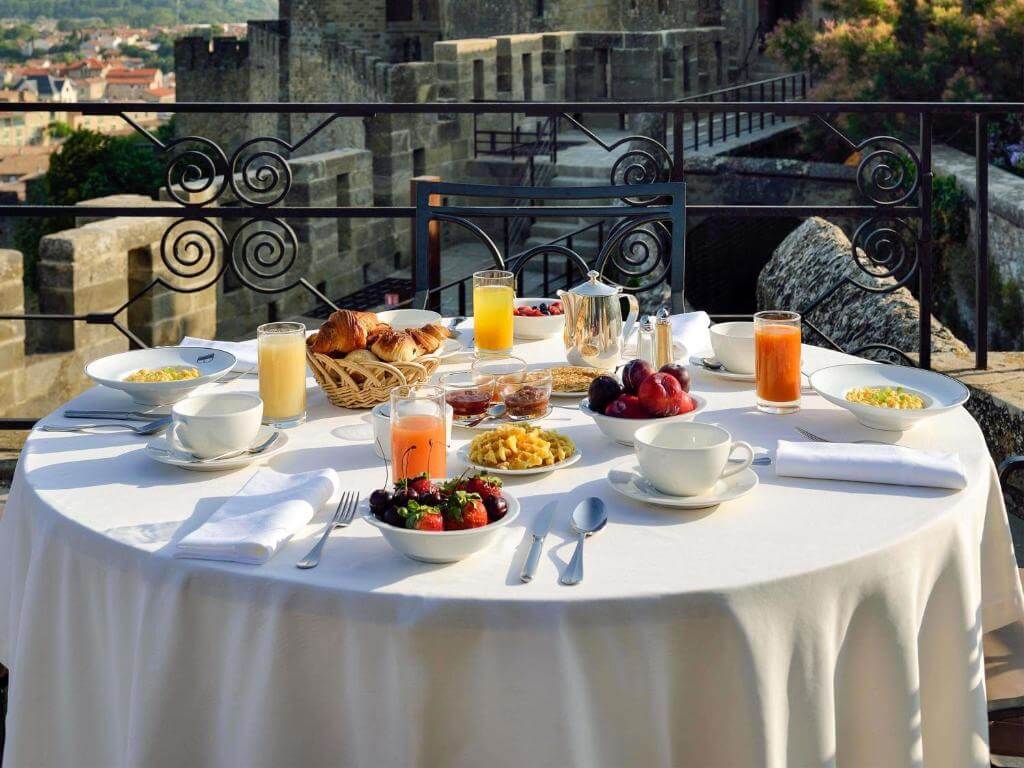
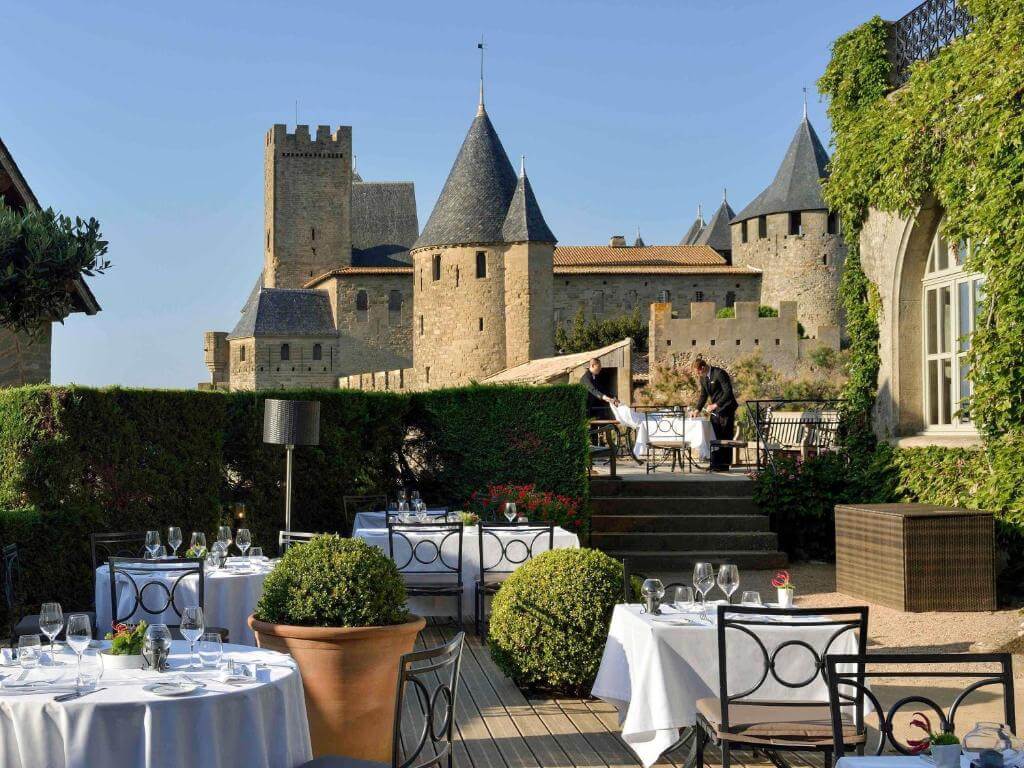
To experience Carcassonne in its most refined form, there is one definitive choice that stands above the rest: Hôtel de la Cité & Spa.
As the only five-star hotel located directly within the UNESCO-listed medieval ramparts, it offers an incomparable “insider” experience that simply cannot be matched by hotels outside the walls.
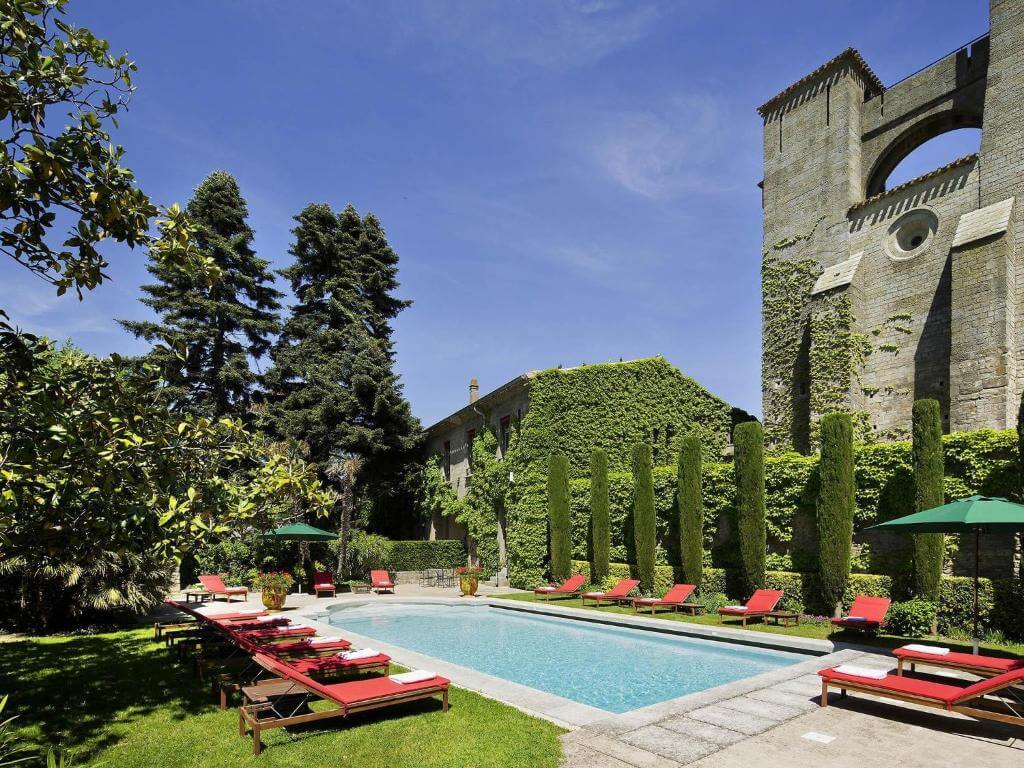
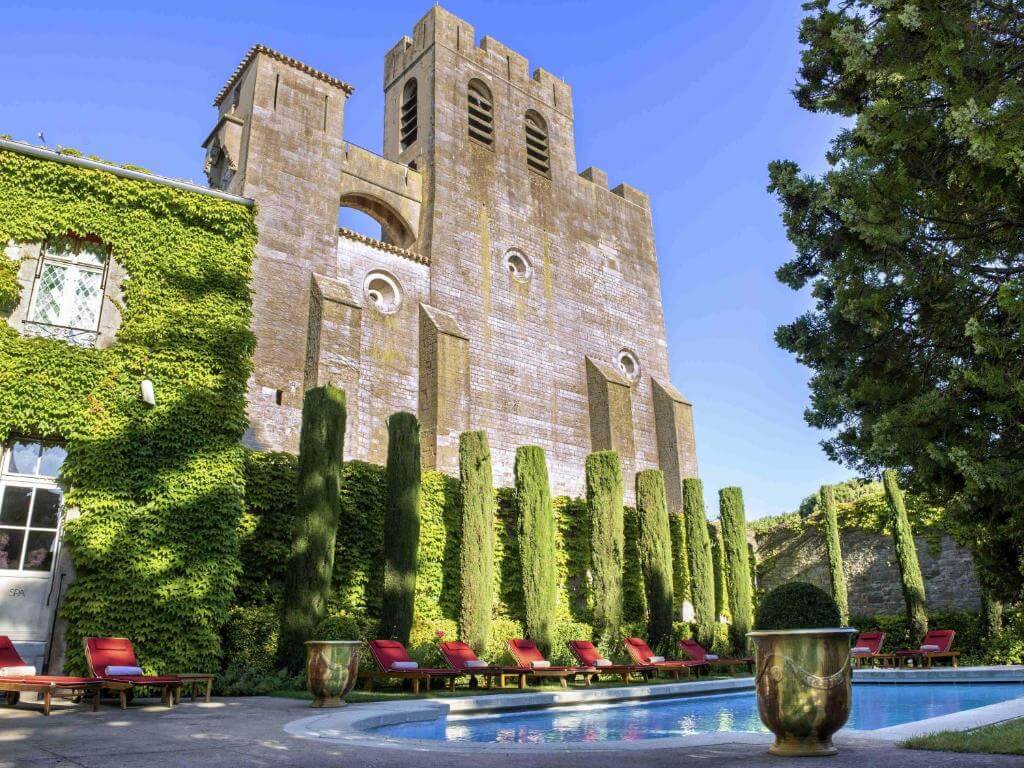
Built on the site of a former episcopal palace and adjoining the Saint-Nazaire Basilica, this hotel is an integral part of the city’s heritage. It blends Neo-Gothic architecture with Art Deco elegance, creating a stay that feels like stepping back in time without sacrificing modern luxury.
• The Ultimate Perk: Staying here grants you “private” access to the medieval streets and ramparts in the evening and early morning, long after the day-tripping crowds have vanished.
• Dining: Home to La Barbacane, the city’s only Michelin-starred restaurant, where you can dine on the terrace with sweeping views of the turrets.
• The Spa & Pool: Features a seasonal outdoor pool nestled against the ancient stone walls and a Cinq Mondes spa for high-end Ayurvedic treatments.
Top Alternatives for Different Styles of Luxury
While Hôtel de la Cité is the icon, two other five-star properties offer distinct high-end experiences:
• For Foodies: Hôtel Le Parc – La Table de Franck Putelat
Located at the foot of the Cité, this sleek, contemporary hotel is owned by two-Michelin-star chef Franck Putelat. It is arguably the best choice if your primary goal is a world-class gastronomic journey in a modern, intimate setting.
• For Seclusion: Domaine d’Auriac (Relais & Châteaux)
Set on a 19th-century estate just a few minutes drive from the centre, this property offers a quieter, “country manor” version of luxury. It is ideal for travelers who want to escape the city entirely and enjoy a private golf course, tennis courts, and Michelin-starred dining in a tranquil park.
We definitely think that Carcassonne is worth visiting and we are hoping that after this blog post it has made its way to your travel bucket list too.
• Join the Conversation: Have you visited Carcassonne before? We’d love to hear about your favourite restaurant or the best cassoulet you discovered in the comments below!
• Share the Guide: If you found these local tips helpful, pin this post to your France Travel board so you can find it later!
About us
We are Nicola and Ronan Lavin experts in finding unique accommodation all over the world. Voted as No.1 Travel Bloggers in Ireland by Stellar Magazine and the Top 10 Travel Influencers in Ireland by readers of the Irish Independent, we are dedicated to helping you find authentic and immersive travel experiences to help you plan your perfect vacation.
We’ve spent years exploring Ireland and have a real passion for finding the most unique places to stay — from dreamy luxury cabins tucked away in the woods to boutique hotels with a story to tell. We’re drawn to places that feel personal, thoughtful, and full of character. It’s not just about pretty interiors (although we do love those too), it’s about the feeling a space gives you. Somewhere that lets you switch off, reconnect, and make memories. That’s what we always look for, and it’s what we love sharing with you. We’re currently putting the finishing touches on a brand new guide featuring hundreds of the most unique places to stay and luxury hotels across Ireland. If you’re planning a romantic break, a wellness retreat, or just a cosy weekend away, this guide will be packed with inspiration. Sign up to our email list to be the first to hear when it launches — trust us, you won’t want to miss it.
**Disclaimer: This post contains affiliate links meaning that if you book through one of our links we will receive a small commission at no extra cost to you. This helps us create the wonderful travel guides that we do**
Are you new here? Join thousands of other happy readers and subscribe to Our Unique Stays via email. The good news is that by signing up via email you will get exclusive travel deals straight to your inbox. The only other place that we publish these deals is on Instagram stories, so be sure to signup to get the heads up on amazing travel deals to save you money when booking.
We also share everything about ourselves on Instagram with nothing held back so be sure to follow along there.
If you liked this then you may also like:
The Best 2 Day Prague Itinerary
The Best Vienna 3 Day Itinerary
The Ultimate 2 Day Dublin Itinerary
The Ultimate Guide to visiting Tallinn in Winter

Sharing is sexy!