While most travellers flock to the glittering coast of San Sebastián or the industrial-chic streets of Bilbao, those in the know head inland to discover the Basque Country’s “hidden capital.” In this guide, we’ll explore the best things to do in Vitoria-Gasteiz, from wandering through its perfectly preserved medieval “Almond” (El Campillo) to cycling through the award-winning Green Belt. Whether you are a history buff following the footsteps of Ken Follett or a foodie searching for the most authentic txikiteo (pintxo crawl) in Northern Spain, Vitoria-Gasteiz offers an atmospheric and affordable alternative to the more crowded coastal hubs.
Vitoria-Gasteiz is a city that lives in the present but that also looks after and embraces its past. Often overlooked for San Sebastián or Bilbao, Vitoria-Gasteiz deserves to have a place on your travel bucket list. There are so many fantastic things to do in Vitoria-Gasteiz. With its historic Medieval Quarter, incredible murals, parks, and cuisine, the capital of the Basque Country offers a quality of life like nowhere else in the world!
Is Vitoria-Gasteiz worth visiting?
Yes, Vitoria-Gasteiz is absolutely worth visiting, especially for travellers who prefer “slow travel” and authentic local culture. Often overlooked by international tourists, it was named the European Green Capital, and it shows. The city offers a unique blend of high-end gastronomy, a sprawling medieval old town, and a vibrant street art scene. Because it isn’t as “touristy” as its coastal neighbours, you’ll find lower prices and a much more genuine Basque experience.
Álava’s capital, Vitoria-Gasteiz. is nestled in a flat green plain surrounded by small mountains. This almost millennium-old city offers so much for the tourist wanting to explore Basque Country, blending history, street art, community life, inclusivity, and the environment.
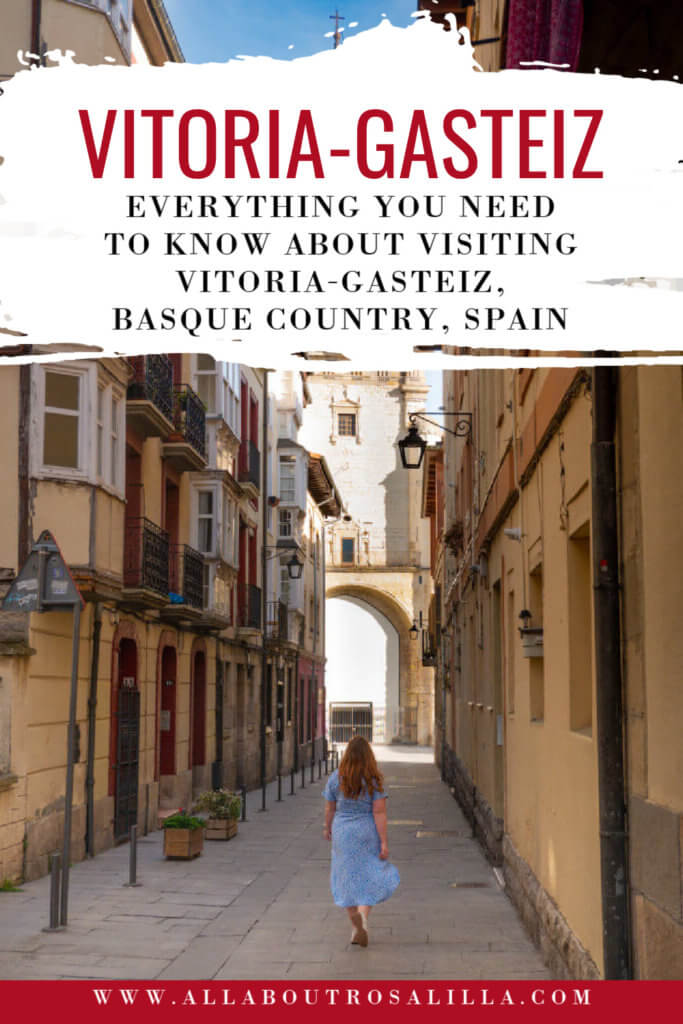
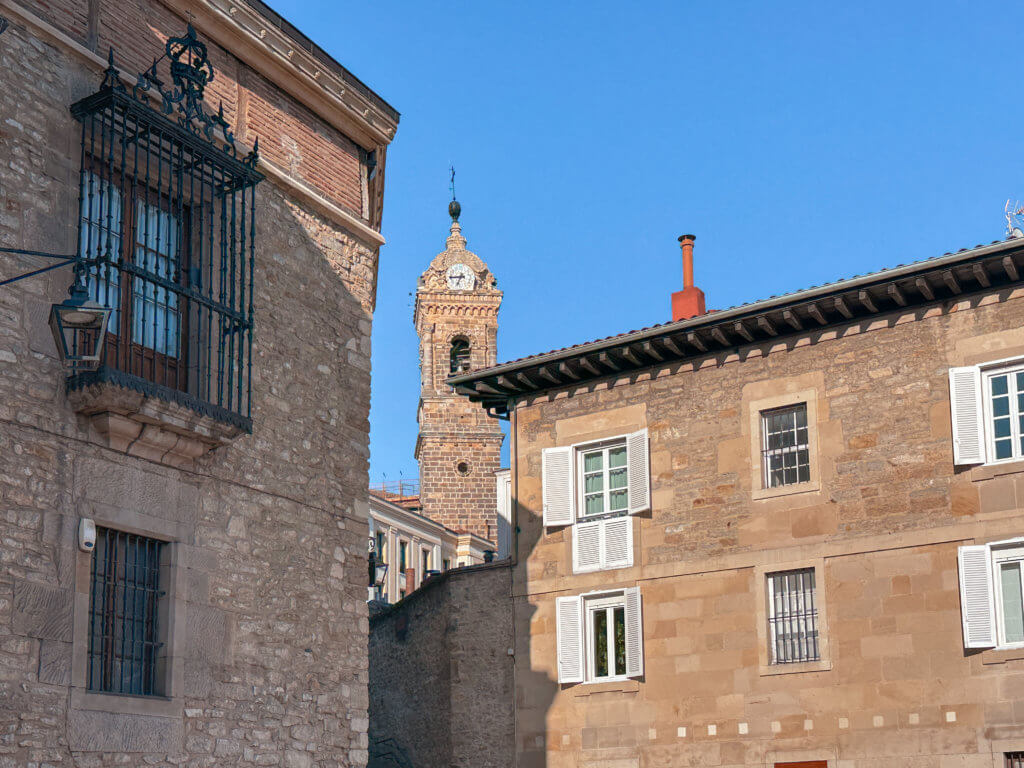
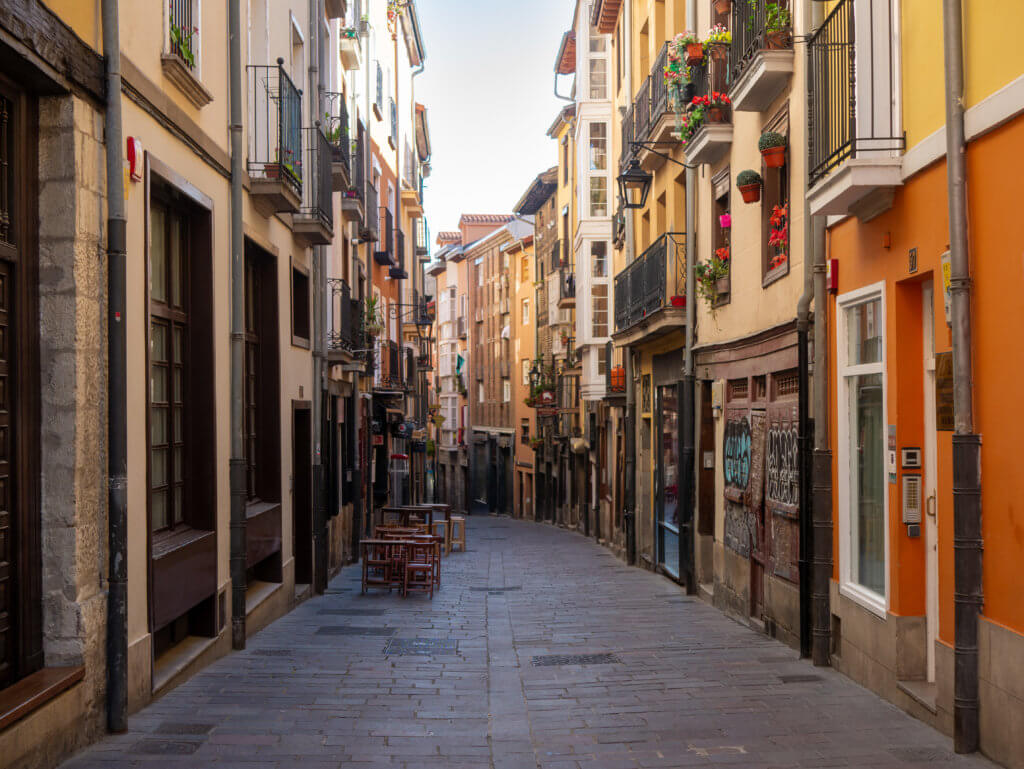
It is a pleasure to visit Vitoria-Gasteiz and stroll around its beautiful and colourful streets. The city has preserved its magnificent medieval centre (Casco Viejo), which can be easily identified by its outline that resembles the shape of an almond. Santa Maria Cathedral is a spectacular 13th century Gothic building located in this neighbourhood with an incredible, immersive, virtual reality experience that was one of our favourite things to do in Vitoria-Gasteiz.
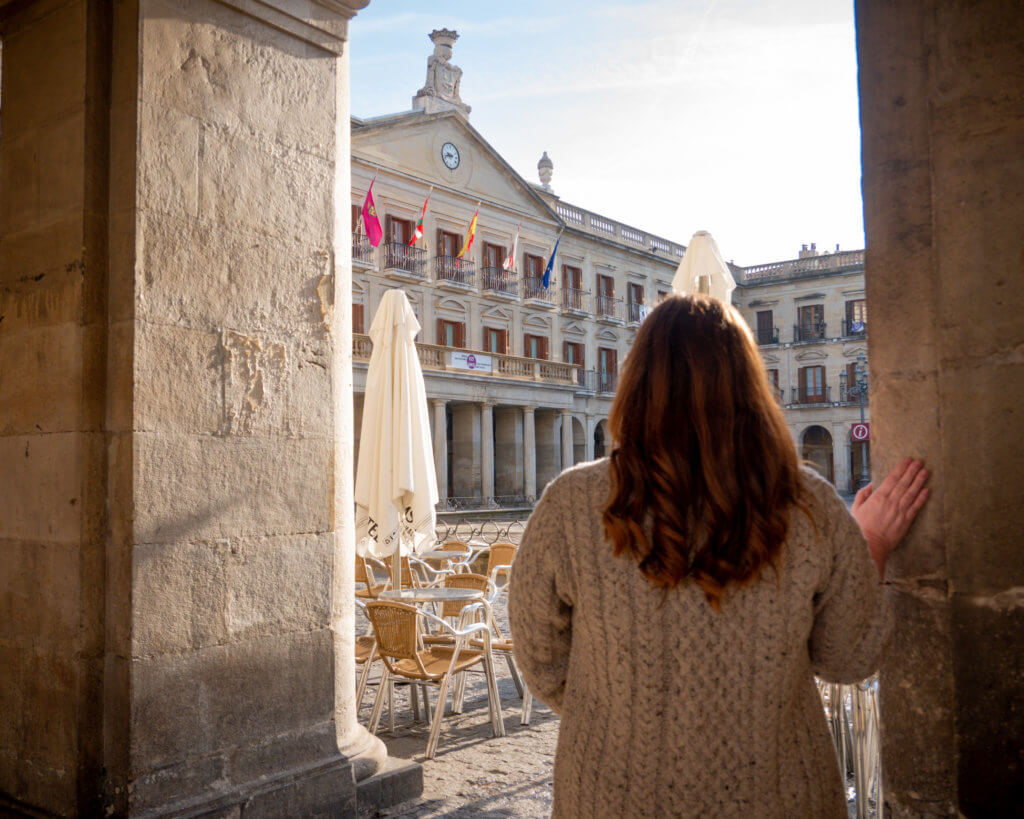
People come to admire the elegant façades adorned with northern Spain’s characteristic bow windows of Plaza de la Virgen Blanca. Art lovers will be in heaven because art is everywhere in Vitoria-Gasteiz, whether it is in the museums or on the streets!
What is Vitoria-Gasteiz known for?
Vitoria-Gasteiz is most famous for its Medieval Quarter, known locally as El Campillo or “The Almond” due to its unique oval shape. It is also globally recognised for its commitment to sustainability and its Green Belt, a series of interconnected parks that surround the city. Additionally, it is the home of the world-renowned Fournier Playing Card Museum and served as the real-life inspiration for Ken Follett’s historical novel, World Without End.
What is the history of Vitoria-Gasteiz?
Most people we have spoken to about visiting Vitoria-Gasteiz ask, “Why two names?” And it is true, most cities only have one name, even if they were previously known as something else. Present-day Vitoria was founded in 1181 on a small hill by Navarrese king Sancho VI under the name of Nueva Victoria. At that time, it was a walled defensive outpost belonging to the kingdom of Navarre, and the hamlet that stood on the hill was known as Gasteiz, the original name of the city.
In 1200, this fortified town went to the Castilian monarch Alfonso VIII. Soon, a flourishing vocation for crafts began to emerge. Because Vitoria is located on the shortest route between the Castilian tablelands and Northern Europe, it has historically benefited from a strategic location and quickly became a significant trading hub. According to historical accounts, there were three markets held each week in the 13th century. After 1399, there were two large-scale annual fairs. In the 15th century, Juan II of Castile granted Vitoria the title of city. Through the 18th and 19th centuries, the expansion of the city into the new suburbs took place.
During our guided walking tour of Vitoria we noted how many times our guide noted inclusivity and accessibility for all residents of Vitoria-Gasteiz, and this frame of mind appears to go back through the ages. An important historical feature of the city is its individual privileges, which declared all its inhabitants to be equal, without distinction between nobles and the masses. And this attitude is still very much evident throughout the city.
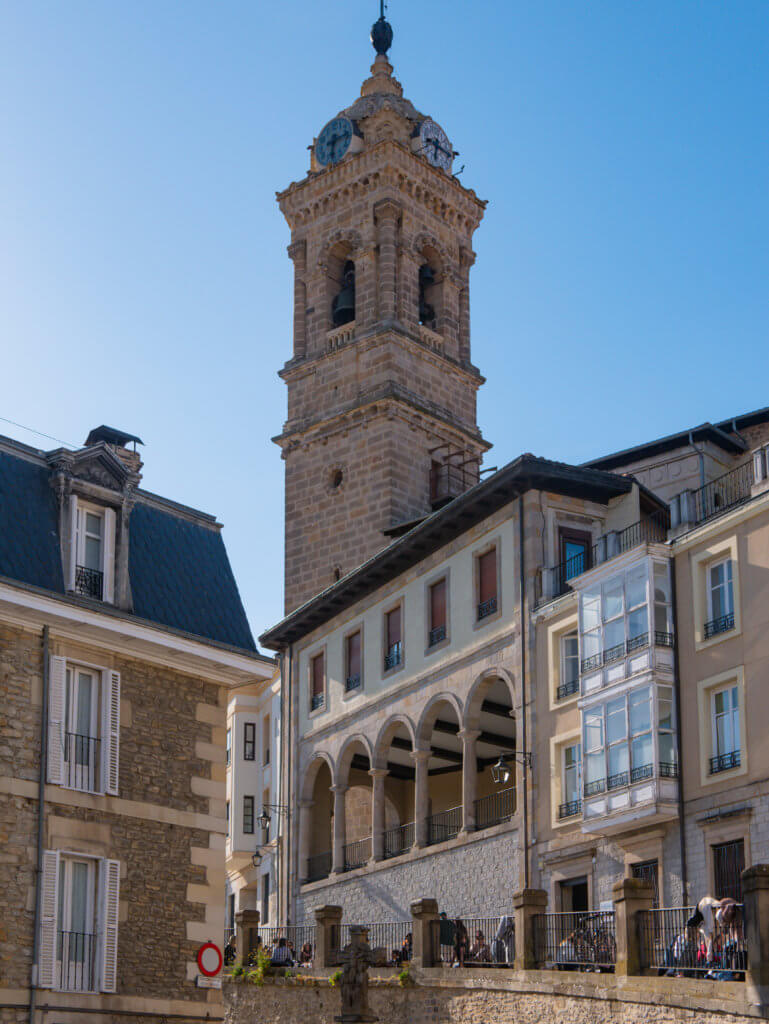
In 1980, Vitoria-Gasteiz was chosen to be the capital of the Basque Country by the Basque Parliament.
Are you ready to visit Vitoria-Gasteiz?
We believe that travel is about the stories you bring home, not the stress of planning them. That’s why we only partner with booking platforms like Booking.com, Viator, and GetYourGuide, the same ones we use to book our own family adventures. When you book through the links on our site, we may earn a small commission at no extra cost to you. This support allows us to keep wandering, keep testing, and continue sharing honest, ad-free guides with you. We value your trust above all else and only recommend services that we know will treat your journey with the same care we do.
- Book your flight here at Kiwi.com
- Book your Vitoria-Gasteiz accommodation at Booking.com
- Book your tours at GetYourGuide.com
- Book travel insurance
- Hire a car in Basque Country
- Private Airport Transfers
We never set off on an adventure without good travel insurance, and after years of travelling we’ve found Heymondo to be the one we trust most. When Ronan had a health scare on a trip a few years back, we realised just how important reliable cover really is. Heymondo makes the whole process simple, from getting a quick quote to accessing their 24/7 medical chat when you’re abroad. We wouldn’t recommend them if we didn’t use them ourselves, and they’ve given us complete peace of mind on trips big and small. You can get your own cover here with Heymondo and travel knowing you’re protected. The good news is that you will get 5% discount just for using our link.
If you don’t want to hire a car and you are flying into Bilbao, then we recommend using Welcome Pickups or Book Road for airport transfers. They are a trustworthy and convenient 5-star airport transfer service that offers a great experience and safety to travellers. They use local English-speaking drivers, have a flat pre-paid fee, monitor for flight delays so that you are not left stranded, have a free cancellation policy, and offer 24/7 customer support. Bilbao is about 50 minutes away from Vitoria-Gasteiz.
Vitoria-Gasteiz is the Green Capital of Europe
In an effort to fight climate change Vitoria-Gasteiz recently developed a progressive Sustainable Mobility and Public Space Plan. The aim was to get as many people out of their cars and walking as possible. Vitoria-Gasteiz was the first southern European city to win the title of Green Capital of Europe, proving that “green” isn’t just for northern latitudes. Vitoria-Gasteiz also holds the Biosphere Responsible Tourism Certificate. Even as the city’s population soars, Vitoria-Gasteiz is greener, more beautiful, and more vibrant than ever. Where cars used to line the streets, garden beds now flourish.
In 2012, Vitoria-Gasteiz became the Green Capital of Europe for its commitment to the environment. Only two cities, Hamburg and Stockholm-held this award before Vitoria-Gasteiz. It has transformed itself from a congested and car-dominated city into one of the most pedestrian and bicycle-friendly places in Europe. The city is mostly flat and compact, which makes it easy to travel short distances by foot. Public spaces have also been given back to people with less space allocated to cars.
People are encouraged to leave their cars at home and do the majority of their travel on bikes or by foot. Over 50% of the city’s transport happens in this way, and there are dedicated bike lanes throughout the city. Areas, such as the hill in the Medieval Quarter, have had travelators installed so that the area is accessible to everyone by foot, even those with limited physical abilities or who struggle with gradients. As someone travelling with chronic illness after Lyme Disease we wish that more cities adopted this approach.
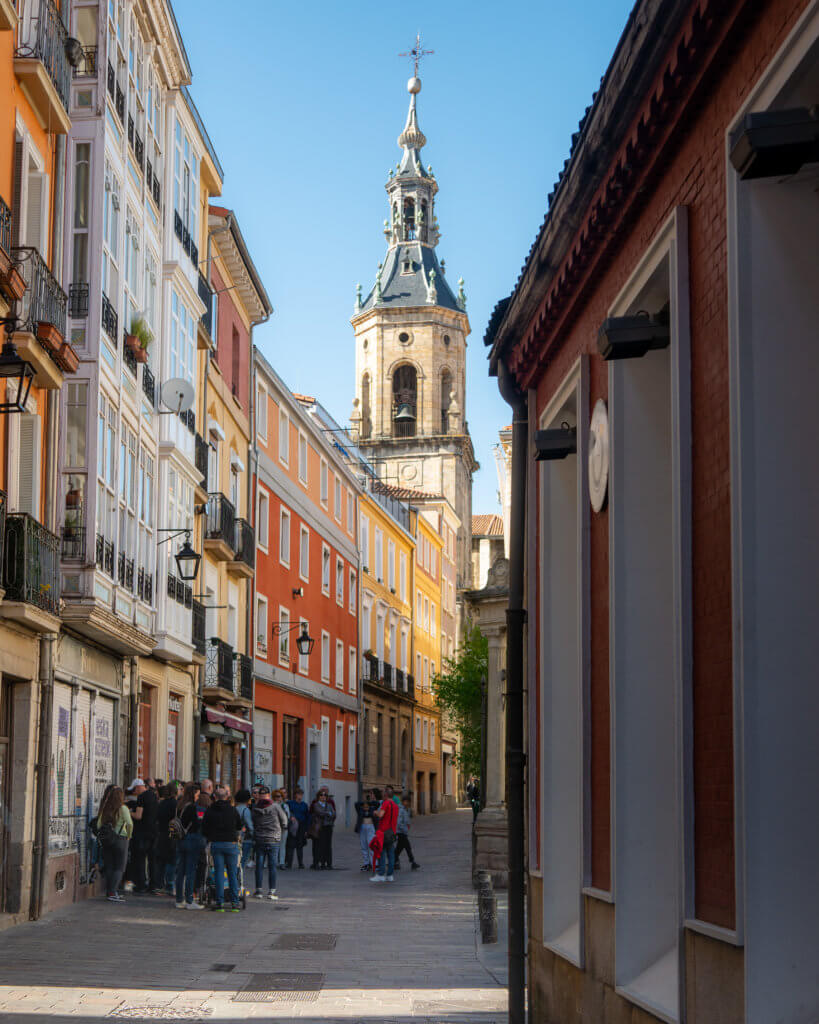
There was also a complete redesign of the city’s public transport system. BEI stands for Bus Eléctrico Inteligente (or Electric Intelligent Bus), a public transport line with state-of-the-art futuristic electric vehicles making a loop in the city of Vitoria Gasteiz. Hundreds of trees and thousands of flowers have been planted along the route of the smart bus line to make this Green Ring literally come to life.
All of this is not only incredible news for residents but also for tourists to the city who can enjoy walking along green boulevards bustling with vibrant cafes. The city has a healthy, social vibe that simply doesn’t exist in other urban cities and makes a visit to Vitoria-Gasteiz an incredibly unique experience.
If you find that you have more time to explore Spain after wandering through the green plazas of Vitoria-Gasteiz, we highly recommend heading south to the sun-drenched Andalucia region. While you should definitely check out our guides on the best places to visit in Basque Country or the stunning Lloret de Mar beaches, the iconic cities of Seville, Granada, and Córdoba are absolute must-sees for any Spanish itinerary.
To help you plan your southern detour, we’ve put together local guides on how to make the most of 5 days in Seville, one day in Granada, and one day in Córdoba!
How to get around Vitoria-Gasteiz
By bike
One of the best ways to really get to know Vitoria-Gasteiz is by bike. The city has almost a hundred kilometres of streets and pathways specifically for cyclists. As the area is mostly flat (except for the Medieval Quarter, which is on a hill), the city is the ideal place for getting around and following routes on your bike. Impressively, the Vasco Navarro Railway has been turned into a beautiful greenway that you can easily explore by bike or even by foot. There, you can enjoy the varied landscapes of this region of Basque Country, from incredible urban and industrialised landscapes to more rural and natural areas of great beauty.
There are places to rent bikes and electric buggies throughout the city.
By tram
Vitoria-Gasteiz has had a tram service since 2008, and it is a quick and easy way to get around the city. There are currently 2 lines, Ibaiondo-Unibertsitatea and Abetxuko-Florida, in operation. There is also a service to Salburua. Trams run approximately every 15 minutes throughout the day (except weekends and bank holidays) Before getting a tram, you must purchase a ticket at one of the ticket machines. This ticket will expire after 50 minutes. They also run on electricity, adding to the push for sustainability in the city.
By bus
Vitoria-Gasteiz has 10 bus lines that connect all areas of the city. In an effort to be sustainable, these buses are electric and run approximately every 10 minutes from 6am to 10pm. There are also night buses, Gautxori (that run every 30 minutes), and buses serving special lines, such as the one that connects the city centre with the Buesa Arena basketball pavilion, the Alava Technology Park, or the airport.
What to do in Vitoria-Gasteiz?
The city is best explored on foot or by bike. You can start by marvelling at the “Open for Construction” tour at the Santa Maria Cathedral, then head to the Plaza de la Virgen Blanca to take a photo with the iconic grass-covered “Vitoria-Gasteiz” sculpture. Don’t miss the Street Art Mural Route, which turns the city’s ancient walls into a giant outdoor gallery. Finally, spend your evening on Calle Cuchillería (locally called The Cuchi), which is the heart of the city’s social life and the best place for a traditional Basque pintxo crawl.
Top Things to Do in Vitoria-Gasteiz
Whether you come to Vitoria-Gasteiz to discover over eight centuries of history, explore its many parks and nature, or simply want to enjoy its incredible gastronomy, there are lots of things to do in Vitoria-Gasteiz. Here are some of our favourite things to do in the Basque capital.
Plaza de la Virgen Blanca
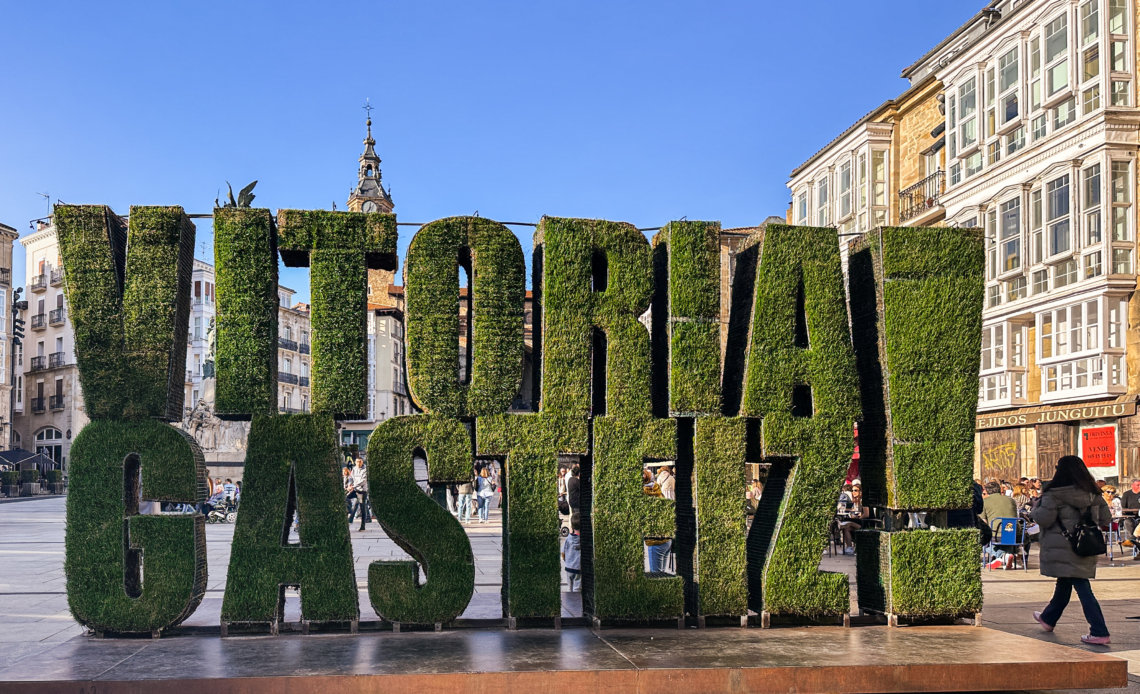
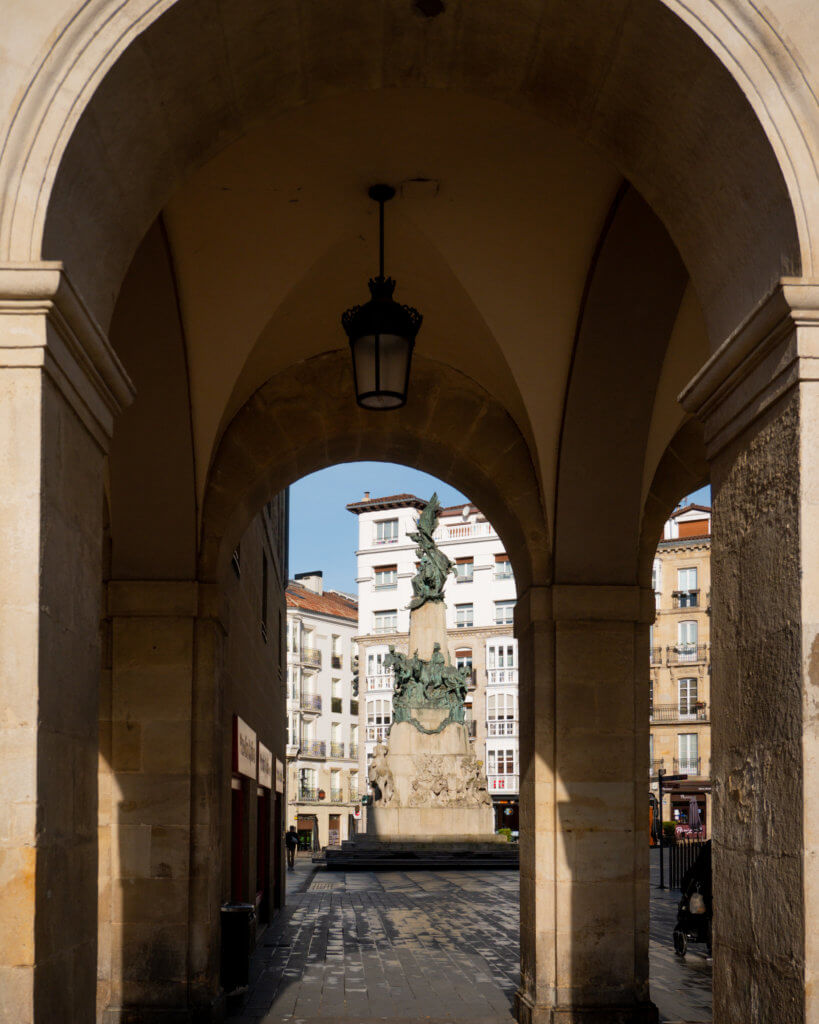
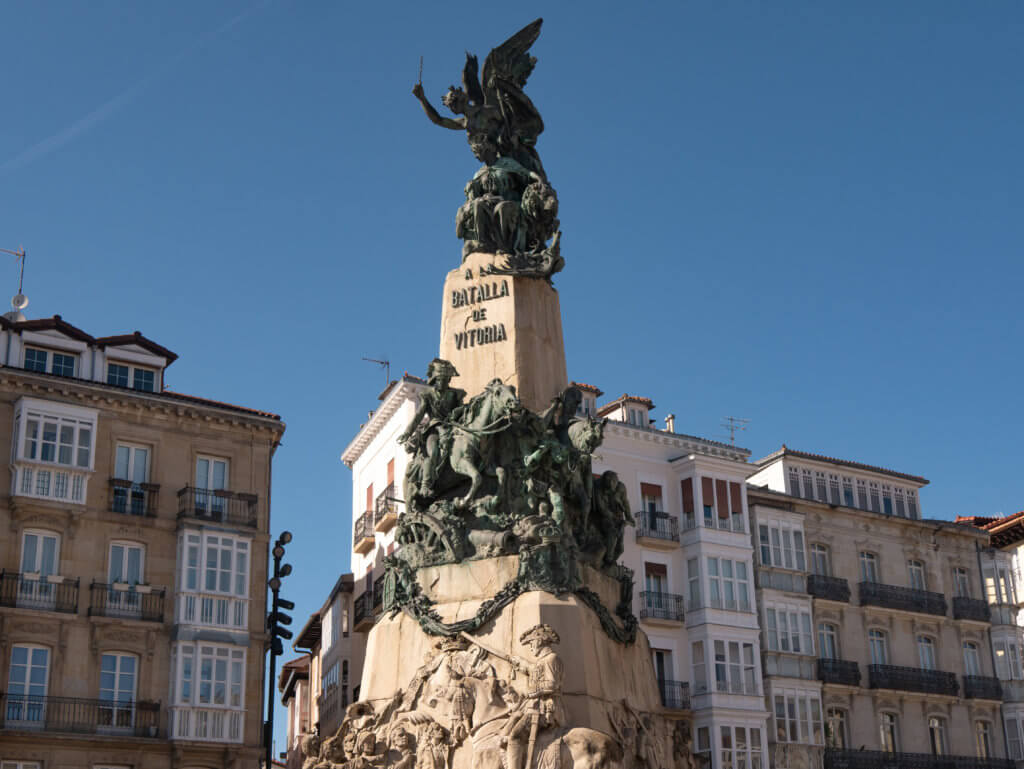
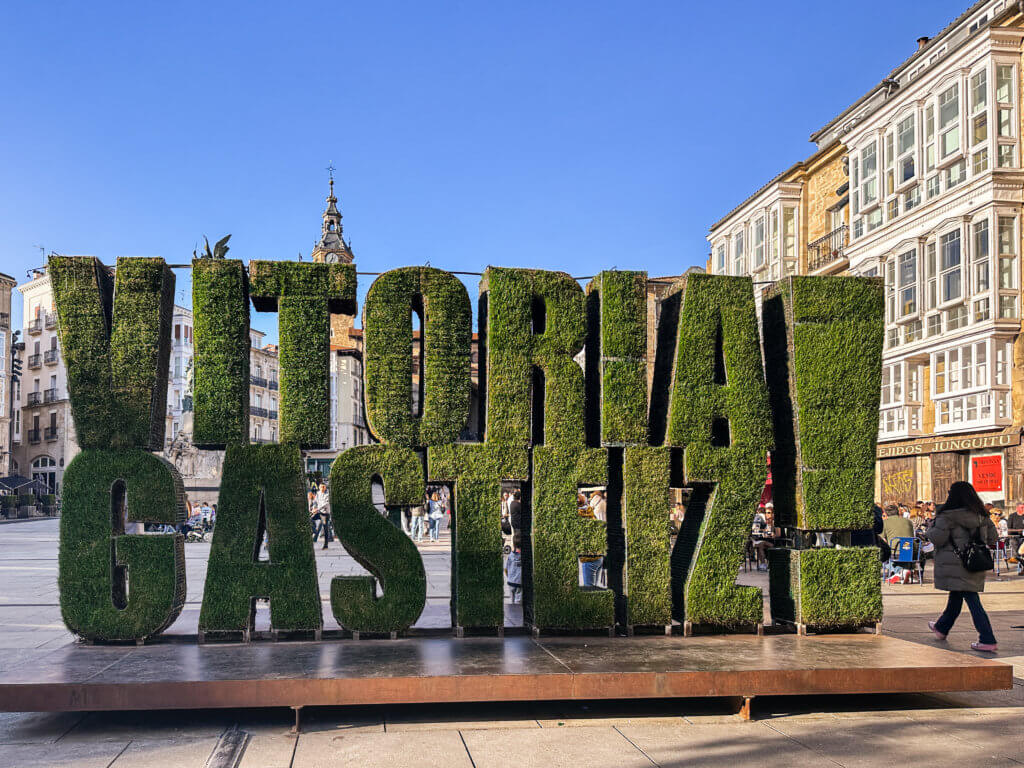
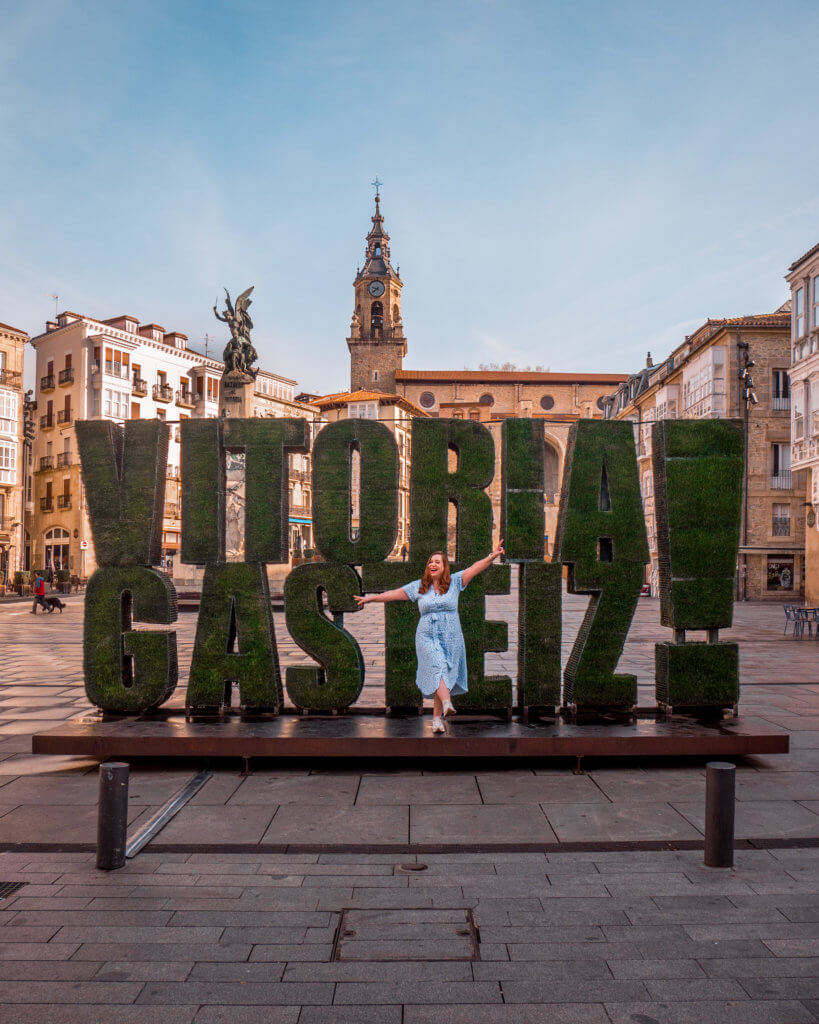
One of the oldest and most beautiful gathering places in Vitoria-Gasteiz is the Plaza de la Virgen Blanca. In the centre of the square, you will find an impressive monument honoring La Batalla de Vitoria, a battle that took place in the city in 1813, during the Napoleonic Wars. For many centuries, this was, and continues to be, the heart of the city. It is also where you can find the famous Vitoria-Gastiez sign made from grass to symbolise its Green Capital status. It is so popular that tourists happily line up throughout the day to have their photographs taken in front of it.
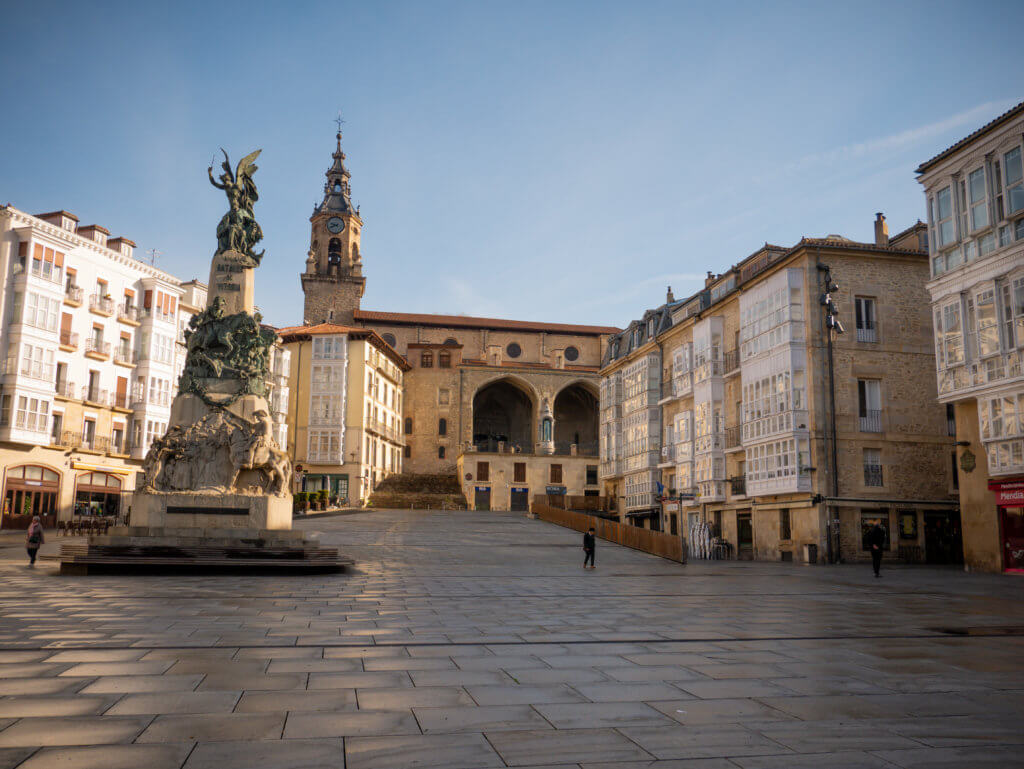
Here, you can enjoy the traditional wooden bow windows from the houses overlooking the square. You can enjoy the many bar terraces and nearby shops, and it is also the place that you go to greet Celedón on August 4th, the city’s celebratory day, in honour of the white virgin (hence the name of the square).
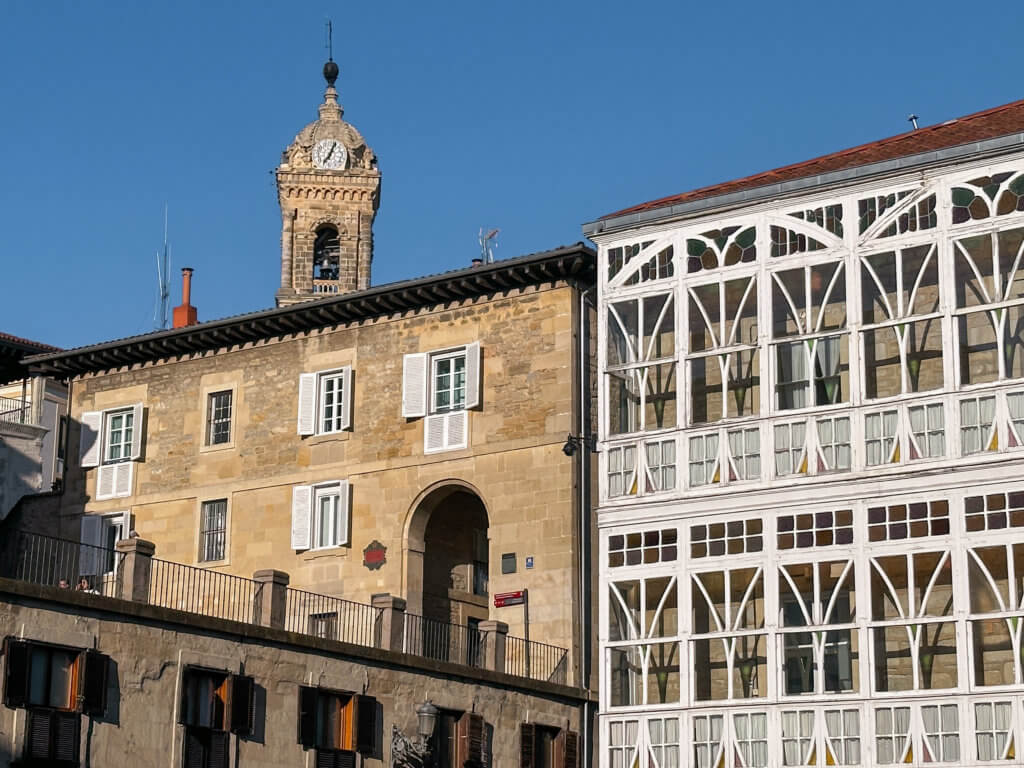
The character of Celedón is supposedly based on a real person named Juan Celedonio de Anzola from the village of Zalduondo in Álava. With his typical clothing and umbrella in hand, he is a reference to the villagers from the past who would travel to Vitoria-Gasteiz to join in with the celebrations.
Celedón comes down from the tower to start the festivities in the city. This, along with the chupinazo (fireworks), signals the start of the celebrations. After Celedón gives his speech, encouraging people to have fun, he makes his way through the crowd. All the while, people try to touch his txapela (hat) for good luck.
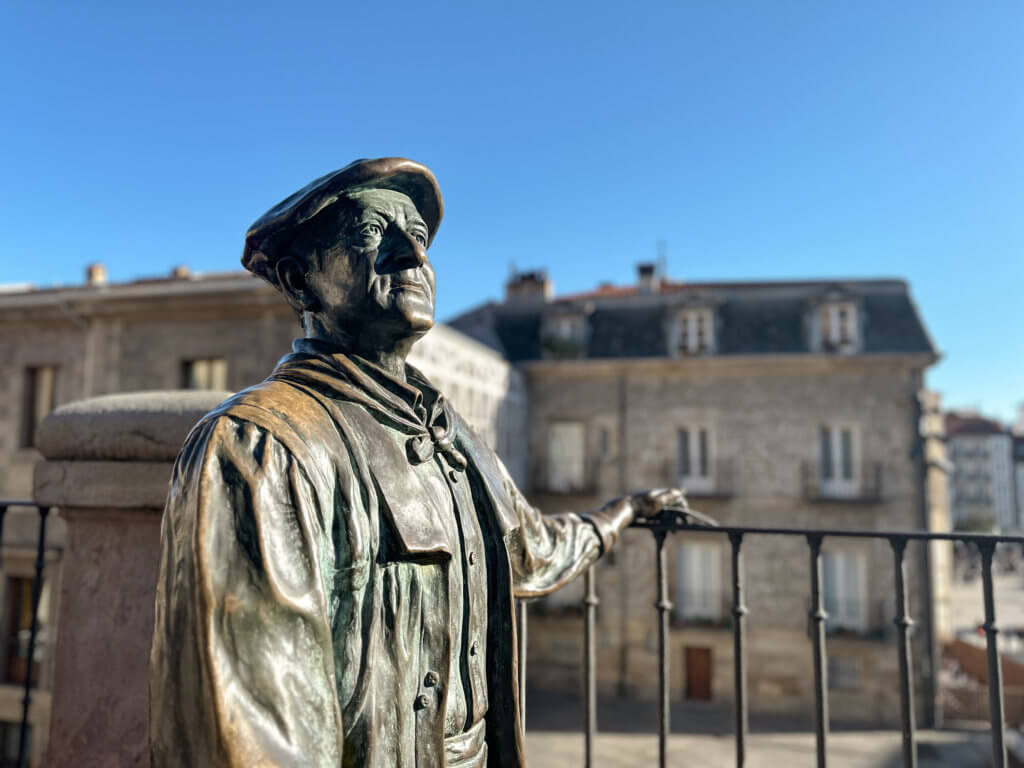
It is the perfect time to enjoy a few days of great party atmosphere in the streets, with concerts, children’s shows, theatre, procession of lanterns, walks of Blouses and Neskas, the very descent of Celedón from San Miguel church into the square, and Neska Txiki (which means little girl in Basque). Basque rural sports and bullfights can also be experienced. It is a wonderful time to encounter Basque culture and clothing, as many people dress in traditional costumes during the celebrations.
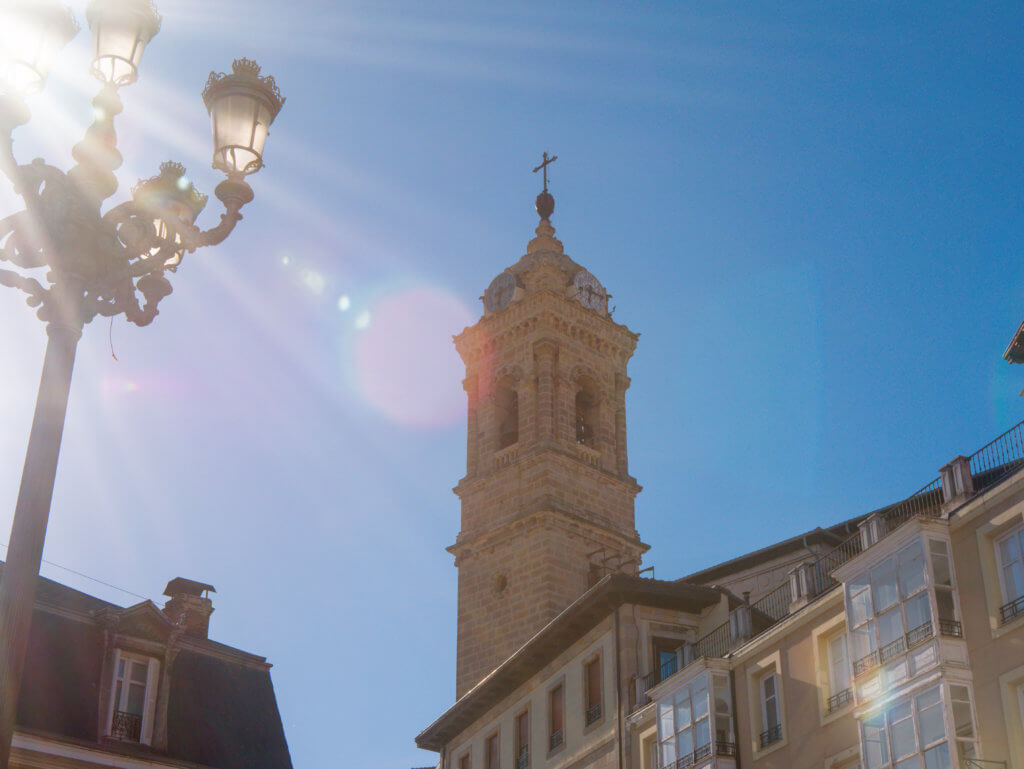
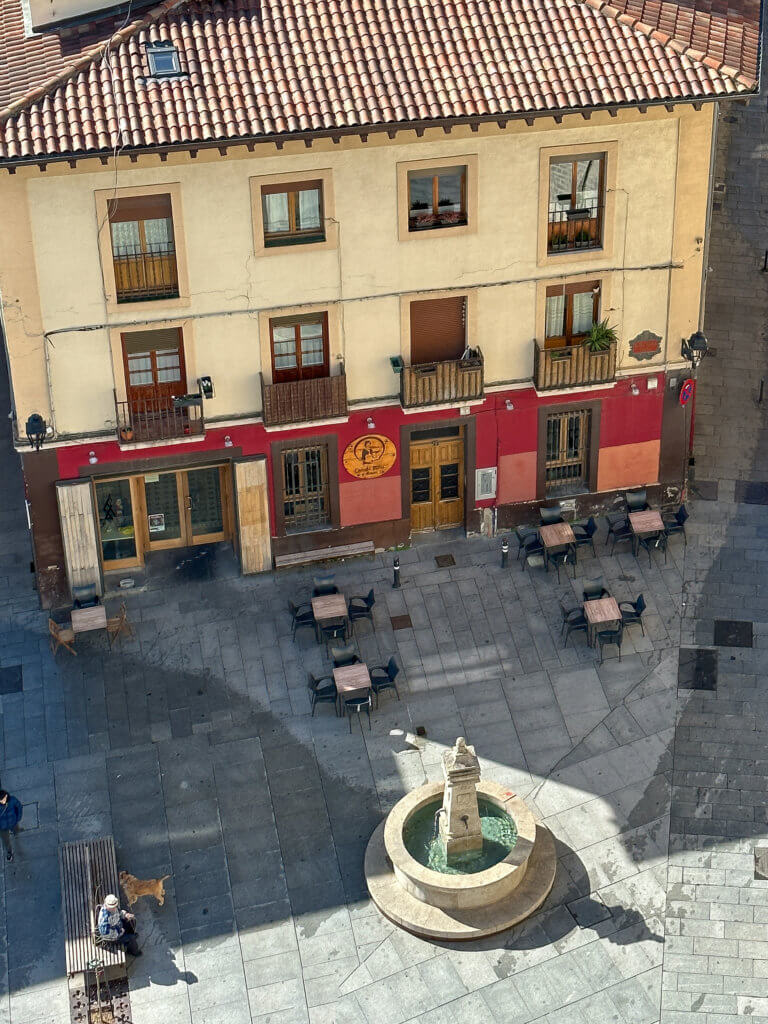
One of our favourite vantage points of the square is from the balcony of San Miguel church next to the bronze statue of Celedón.
Guided Tour of Santa María Cathedral
The Cathedral of Santa María originated as a church fortress in the early 13th century. It is located at the top of the hill on which the original Gasteiz settlement was built and occupies the area bounded by its first walled enclosure. Construction was subsequently completed in the Gothic style in several stages throughout the 14th and 15th centuries. To enter Santa María Cathedral is a unique experience. Here, you can visit a building more than 800 years old that reveals the history and origins of the village of Gasteiz.
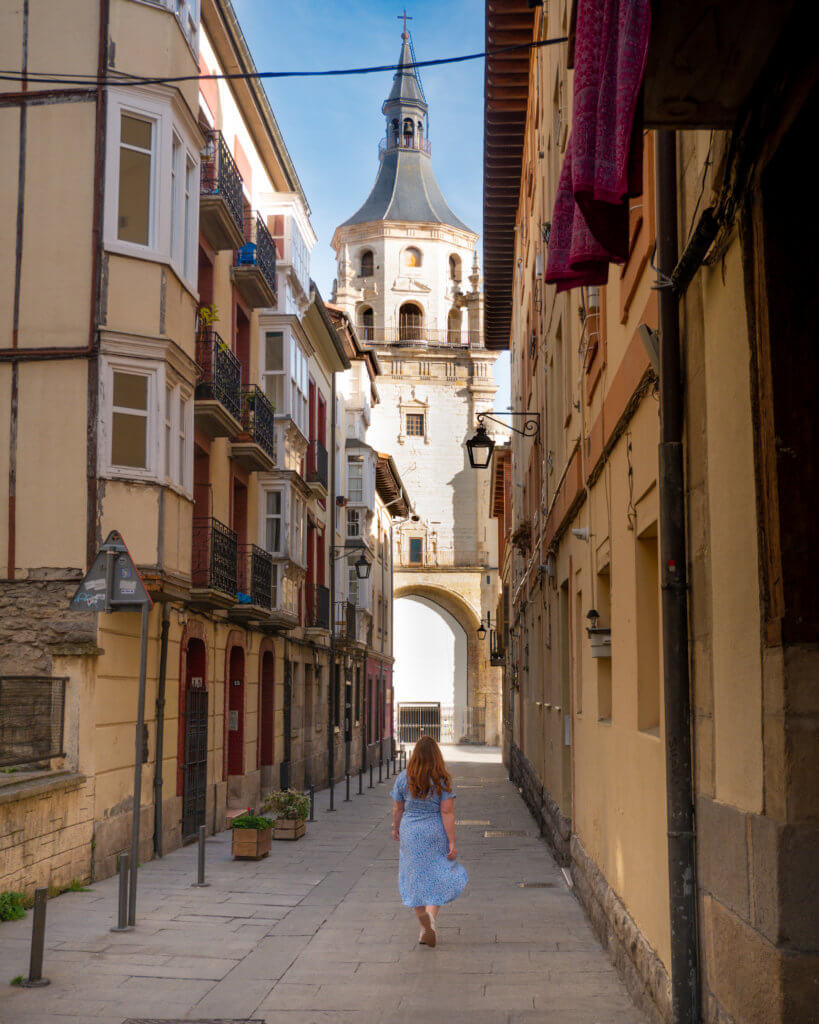
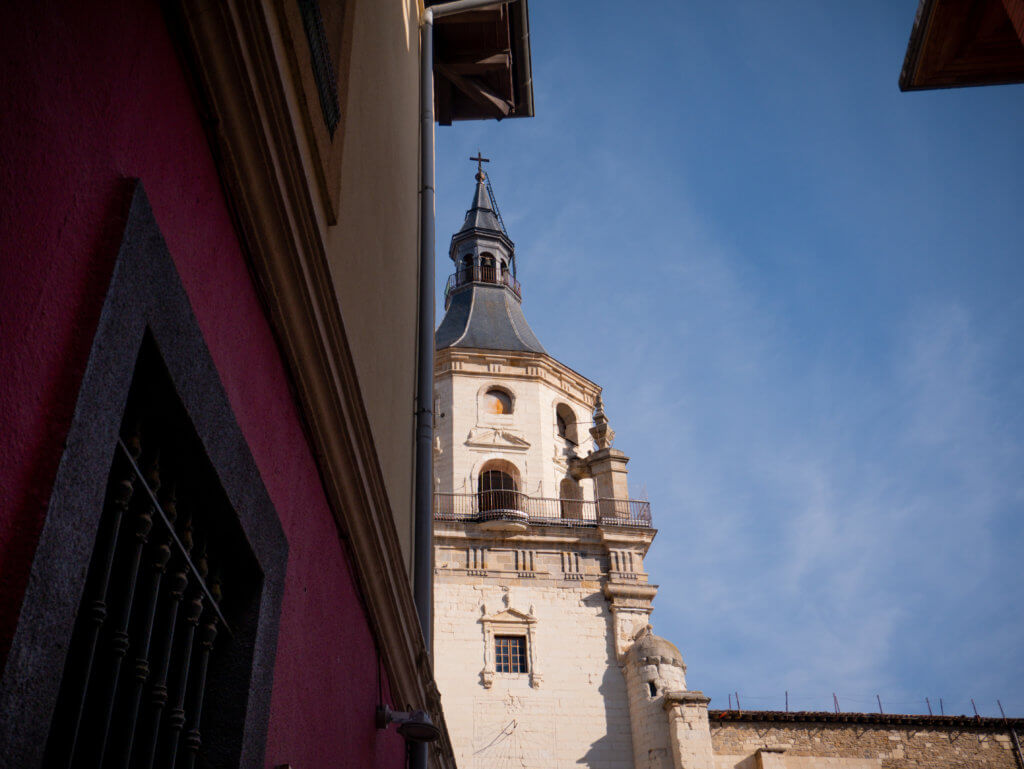
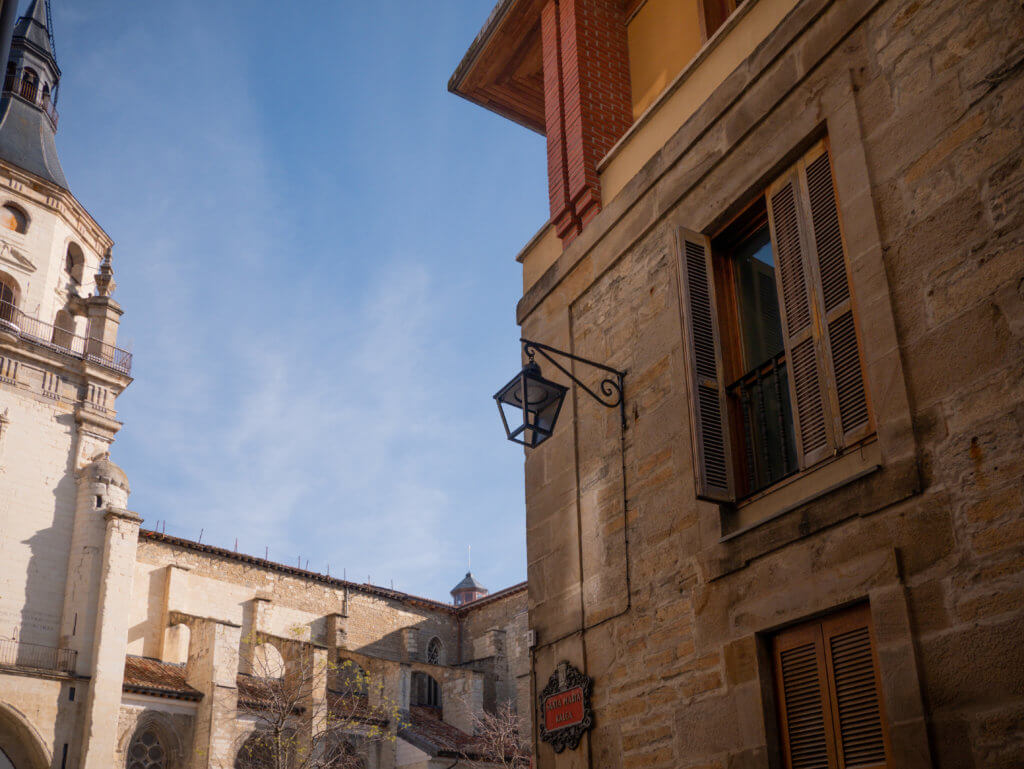
Currently, it is undergoing repair as part of a project run by the Santa Maria Cathedral Foundation, which also oversees the organization of tours. Visitors will appreciate watching live restoration and archaeological work being done on this complex 13th-century building. Architects, archaeologists, stonemasons, scaffolding, and reinforcements that make up this creative cultural tourism project tell the story of the repair of this building in an immersive virtual reality tour. This means that visitors can see first-hand how restoration work is being carried out.
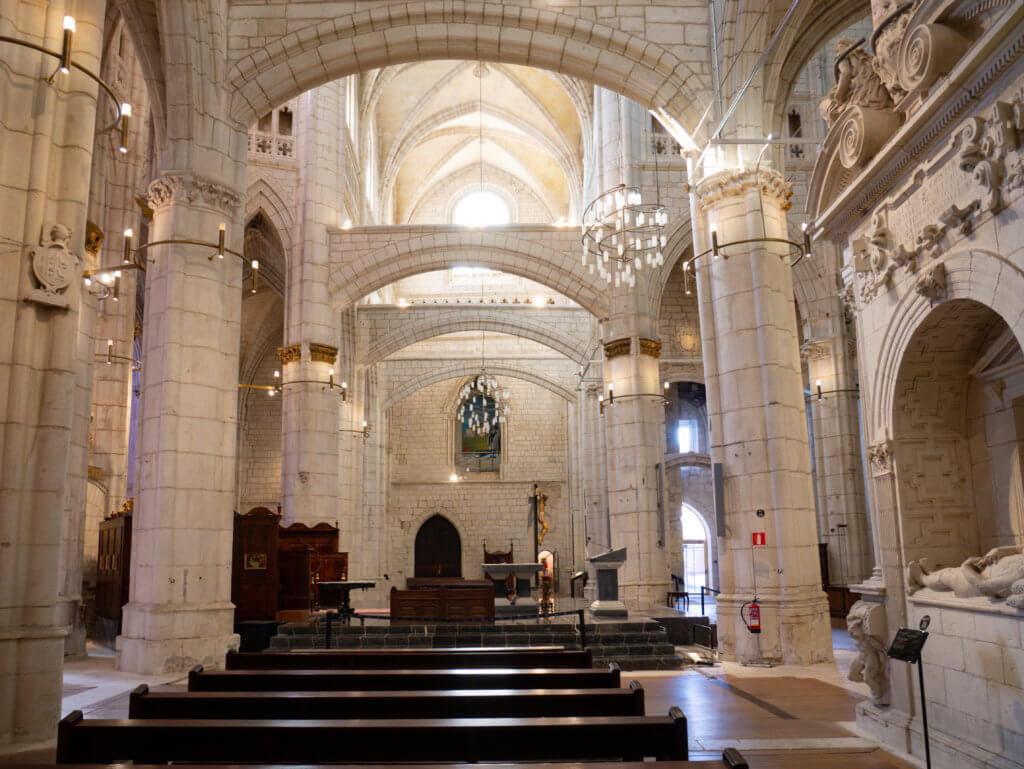
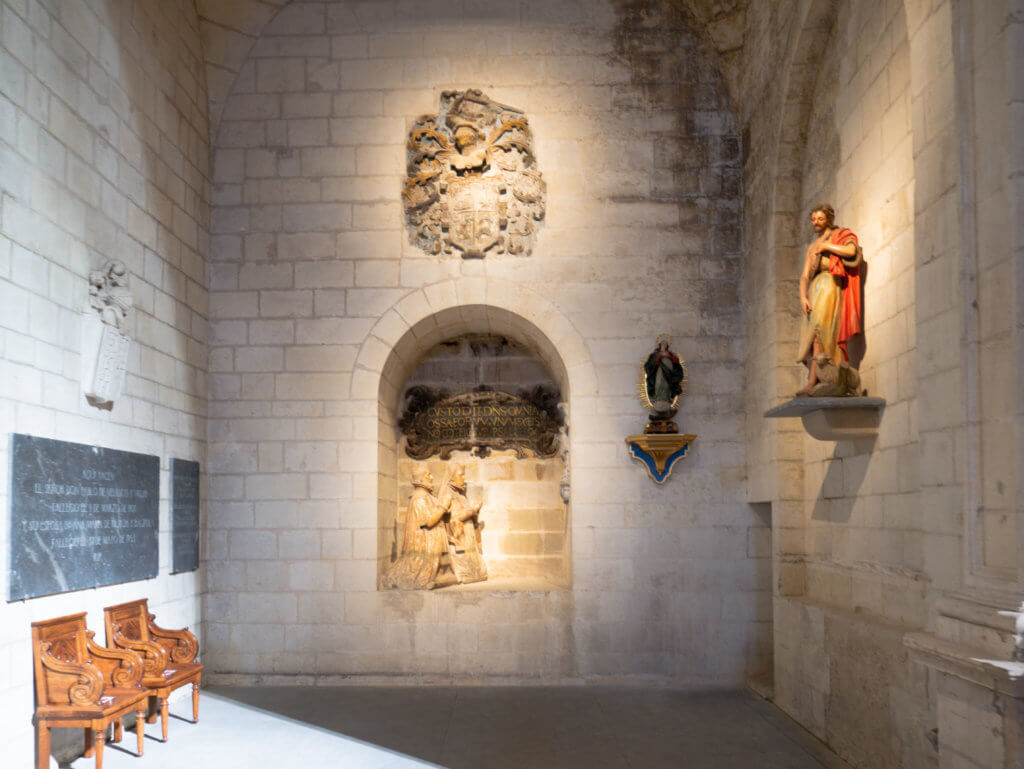
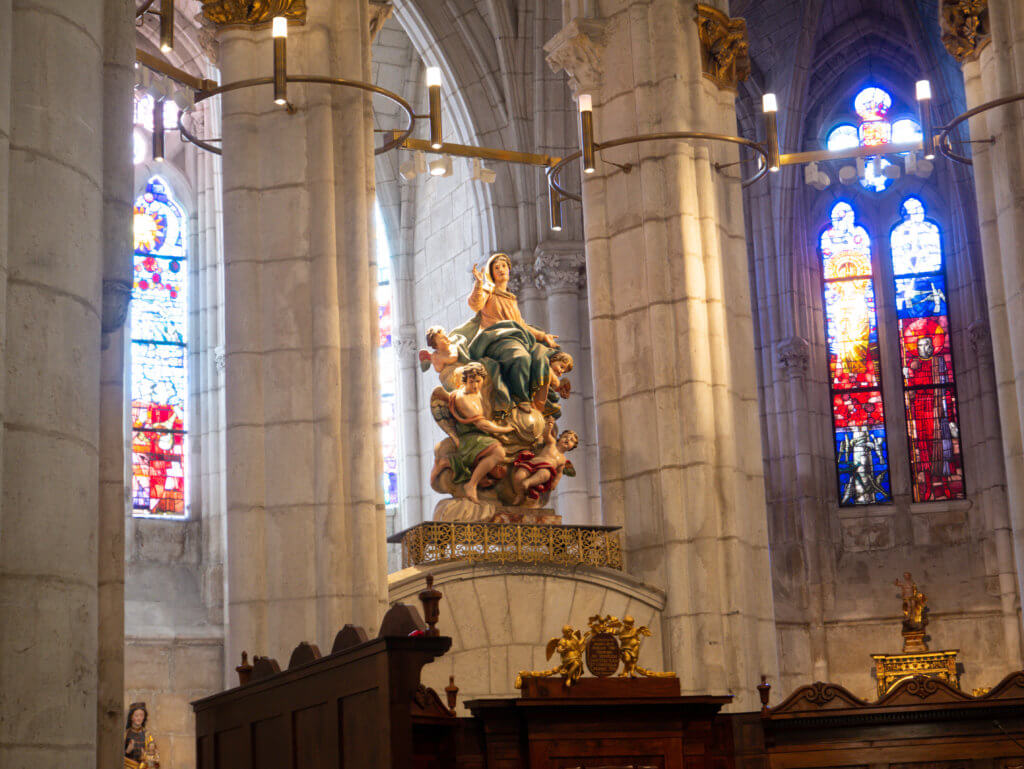
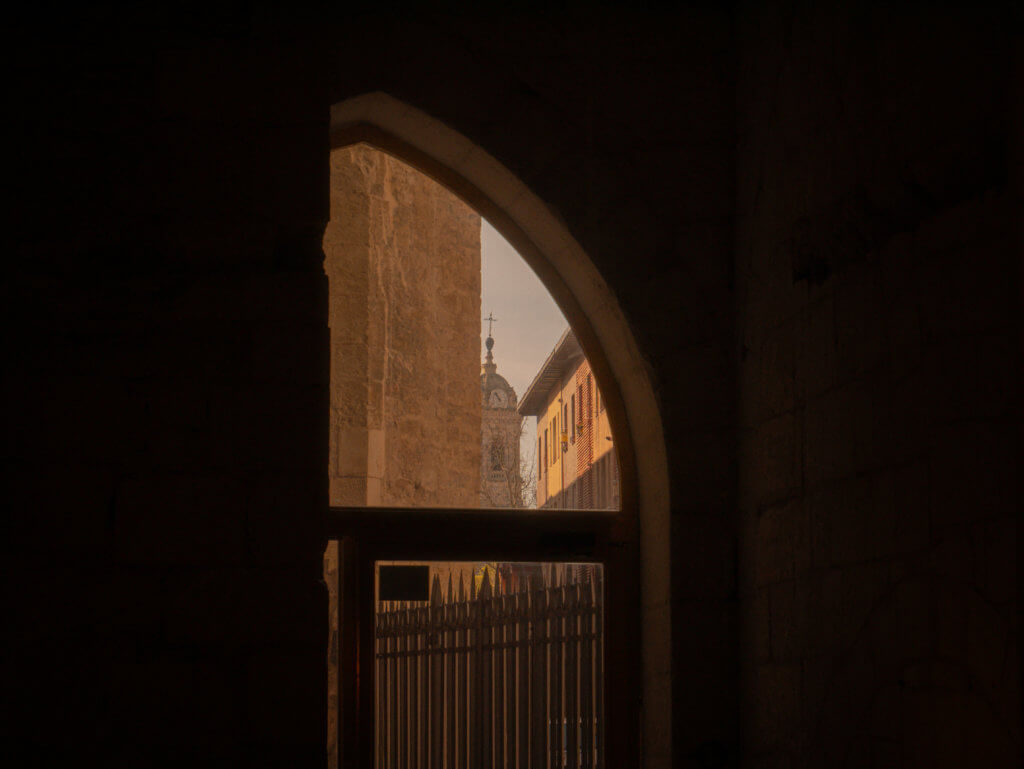
These works have enabled not only the rehabilitation of the damaged parts but also in-depth knowledge of the origins of the city from the archaeological excavations carried out as a complement to the works in the cathedral and its surroundings.
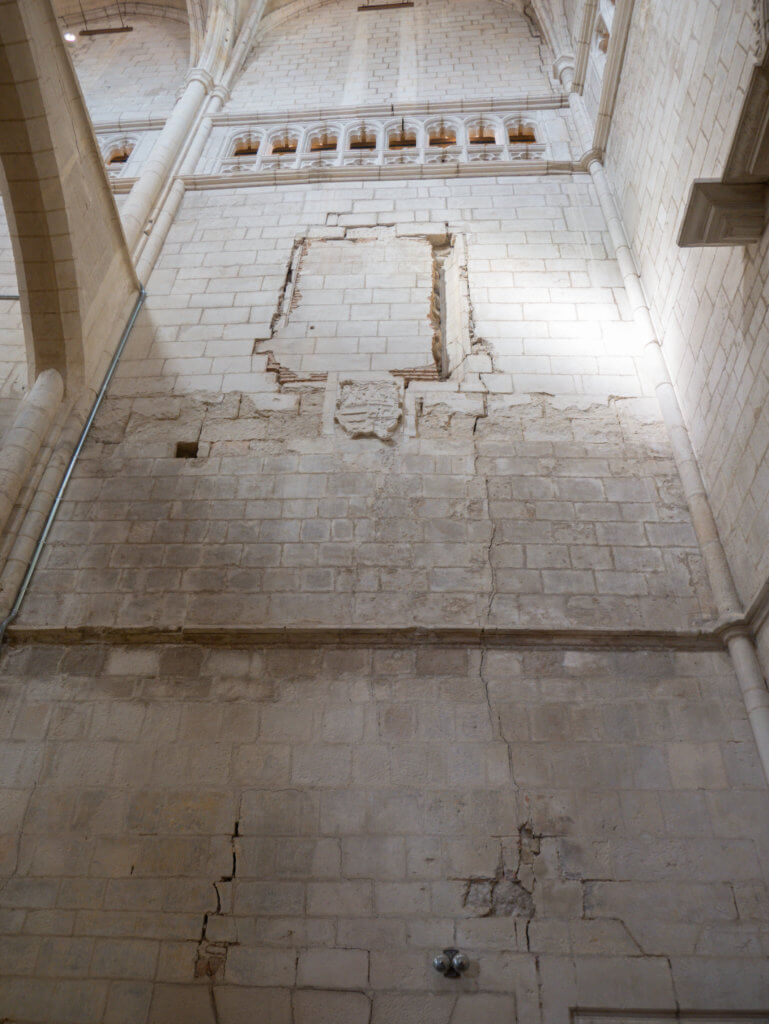
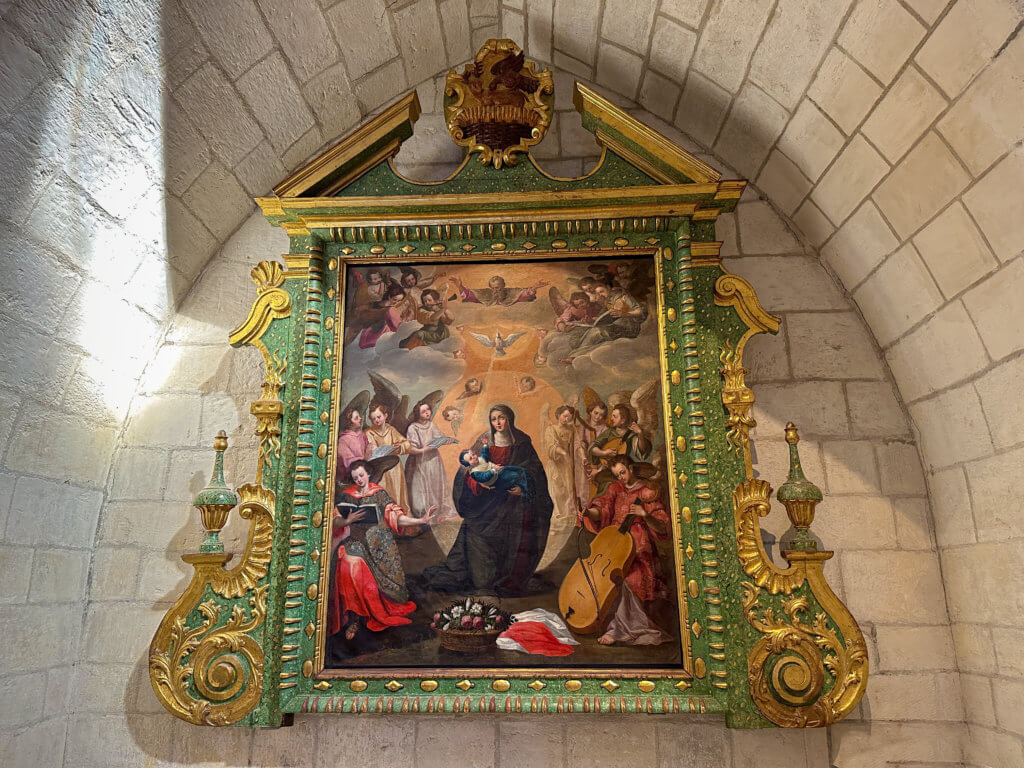
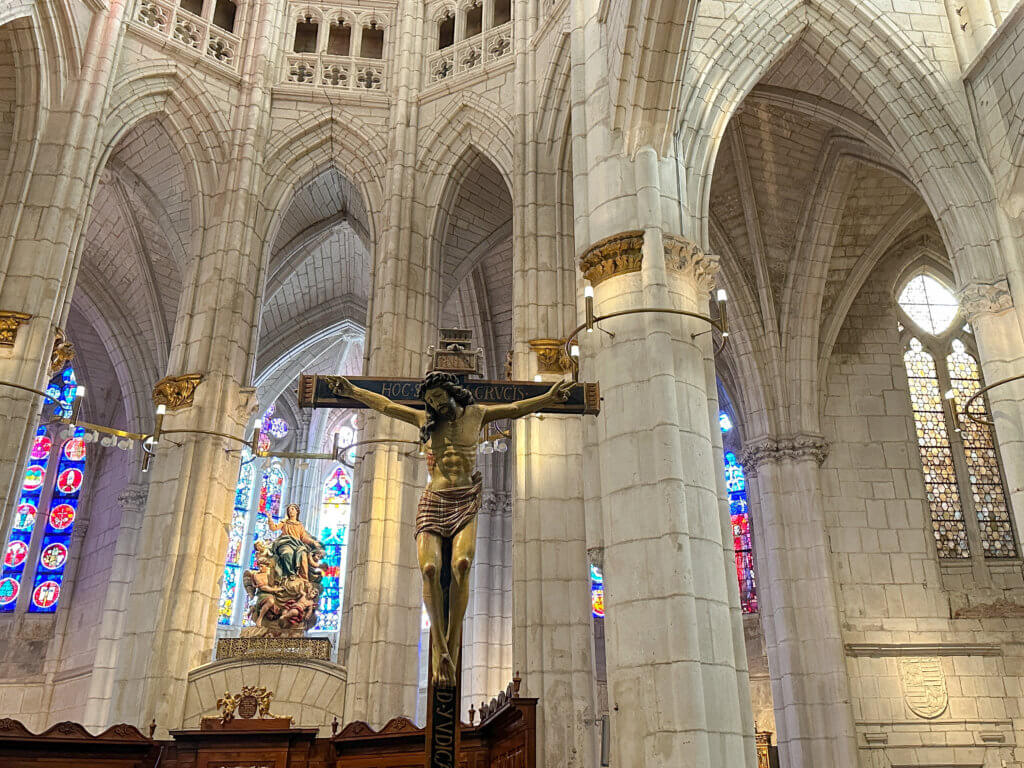
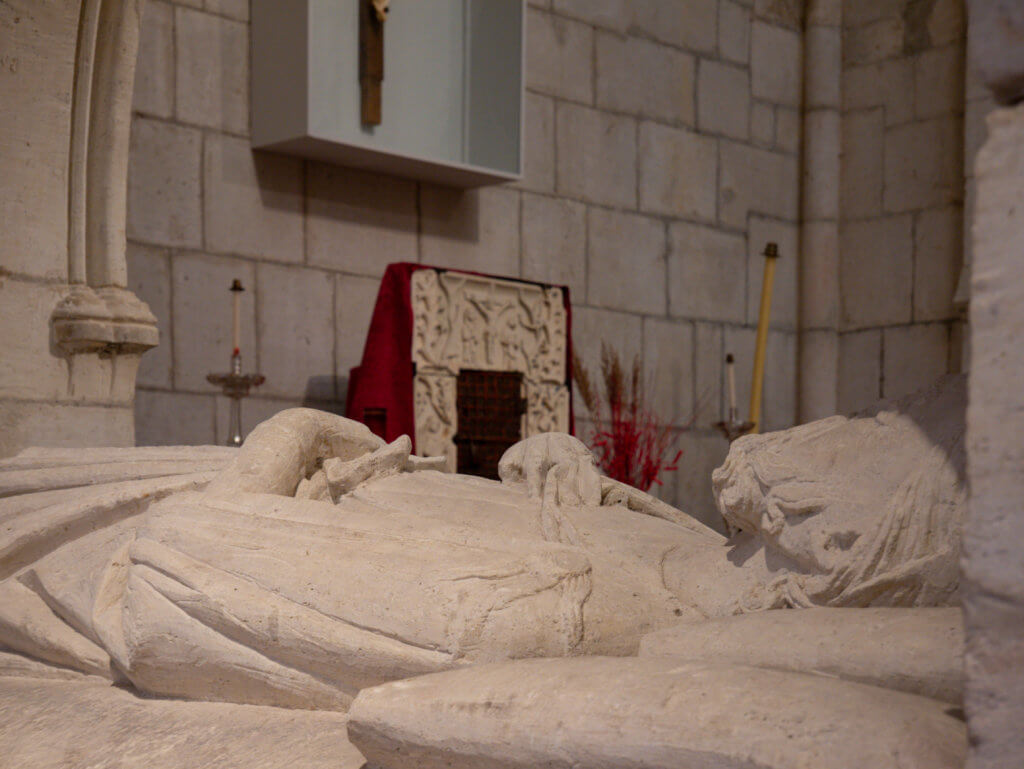
The cathedral crypt has been converted into a museum where you can find out about the history of both the building and the city itself through panels and multimedia content. The journey goes the whole way from the first settlements in the city to the present day.
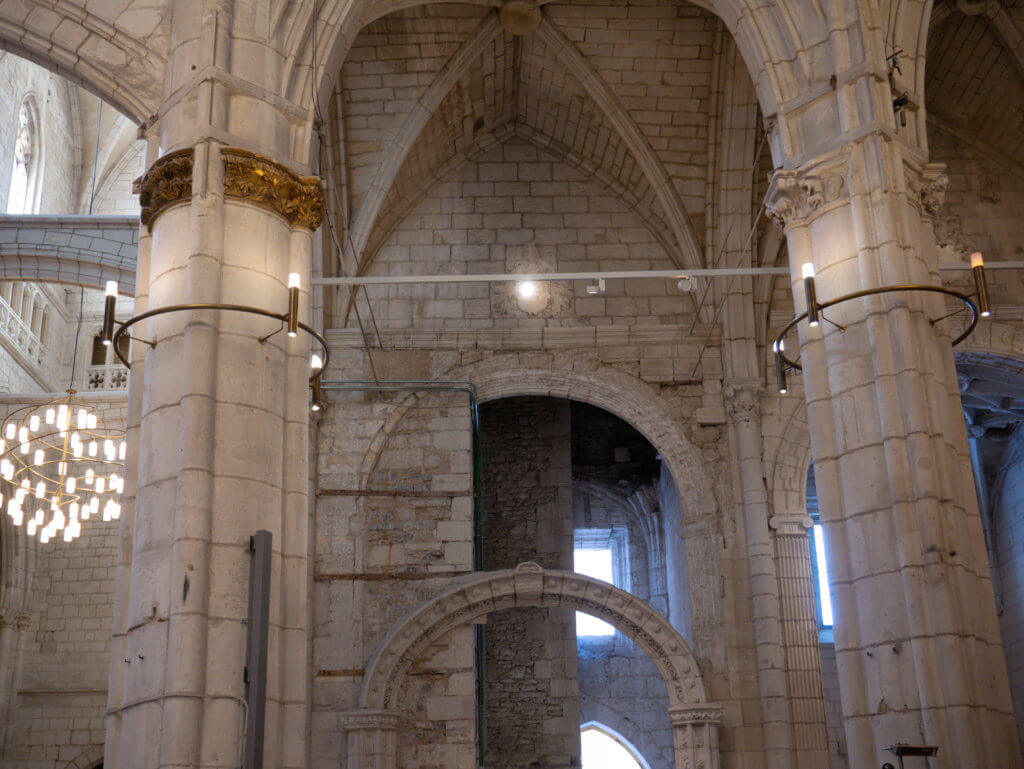
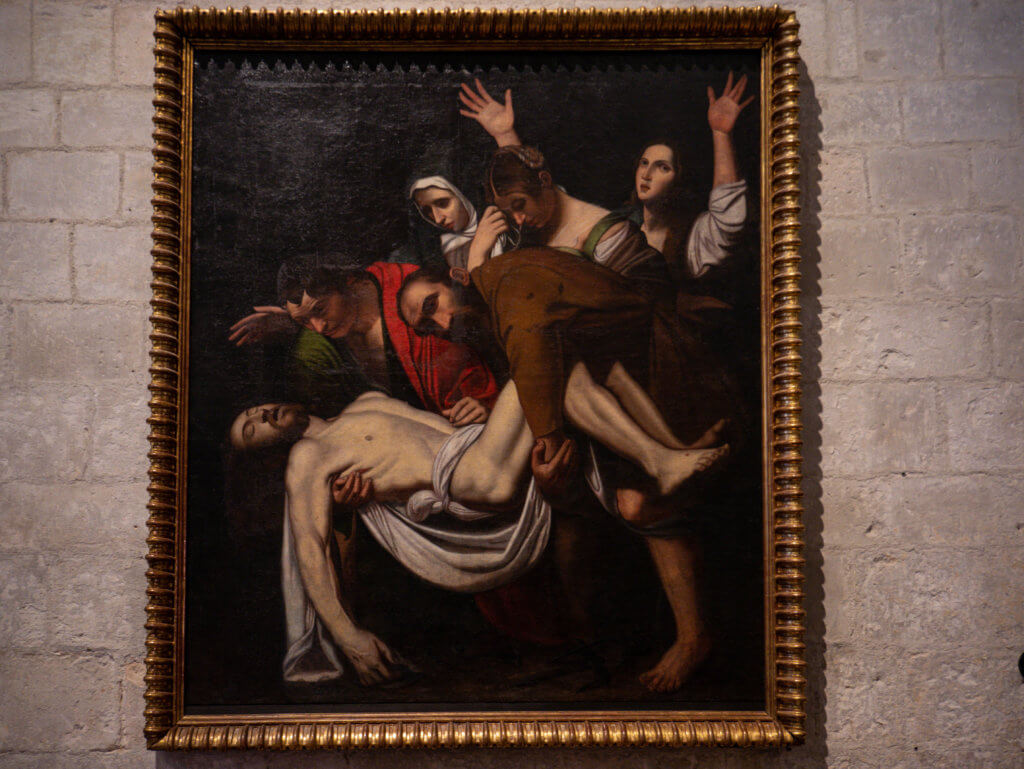
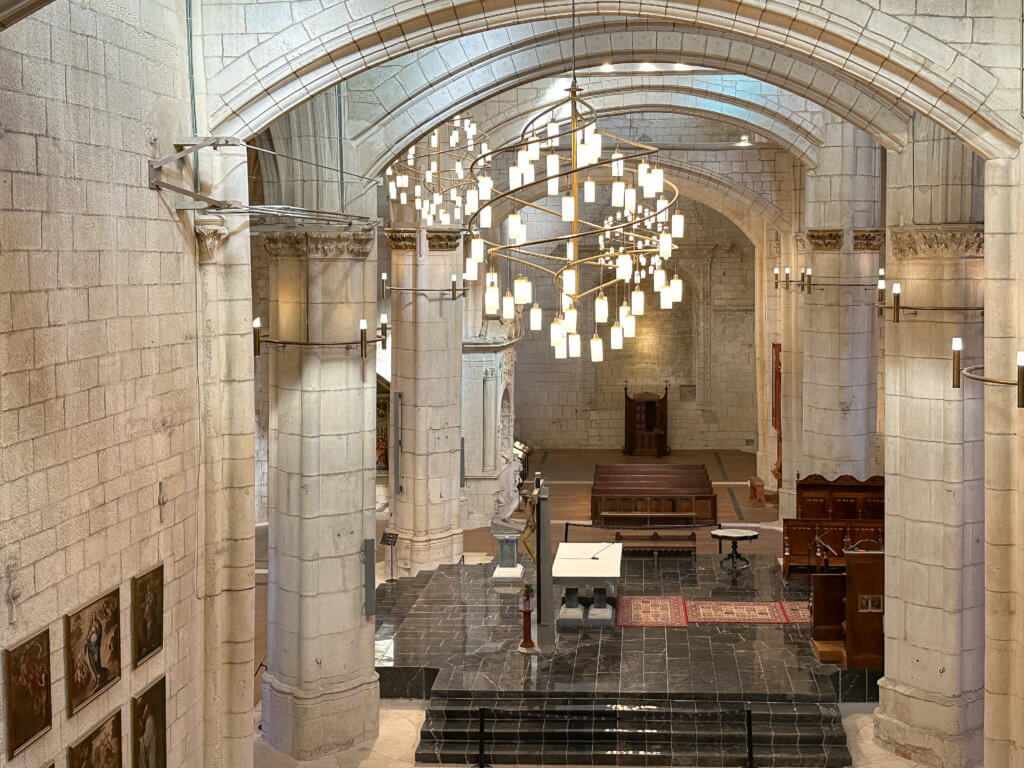
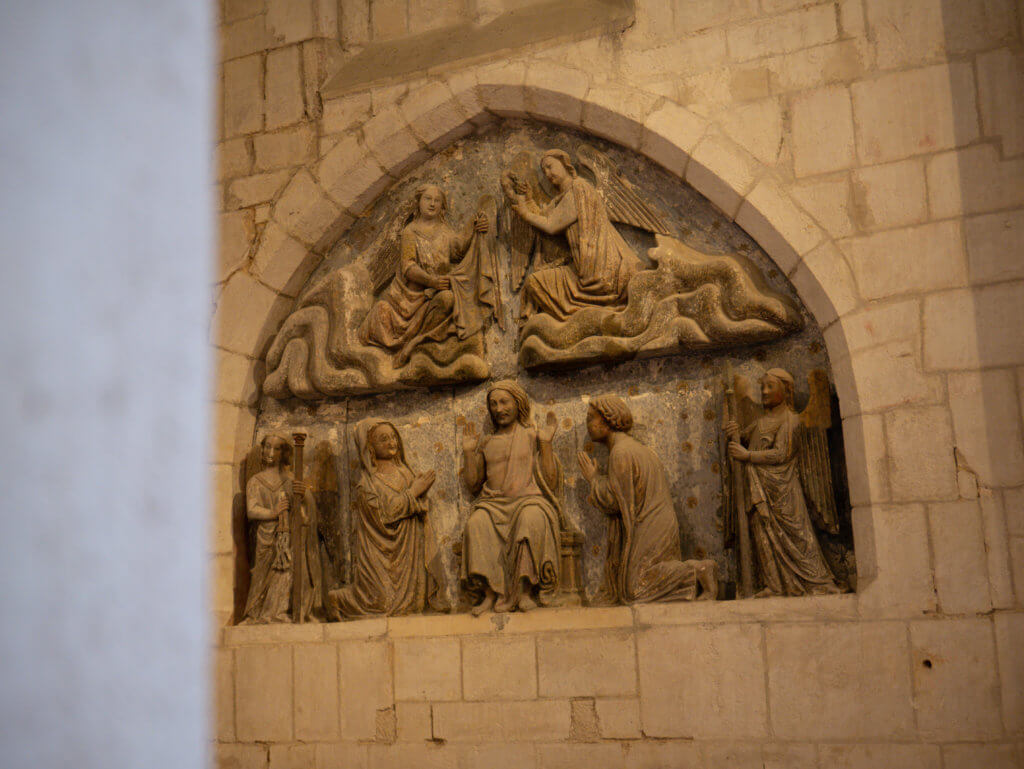
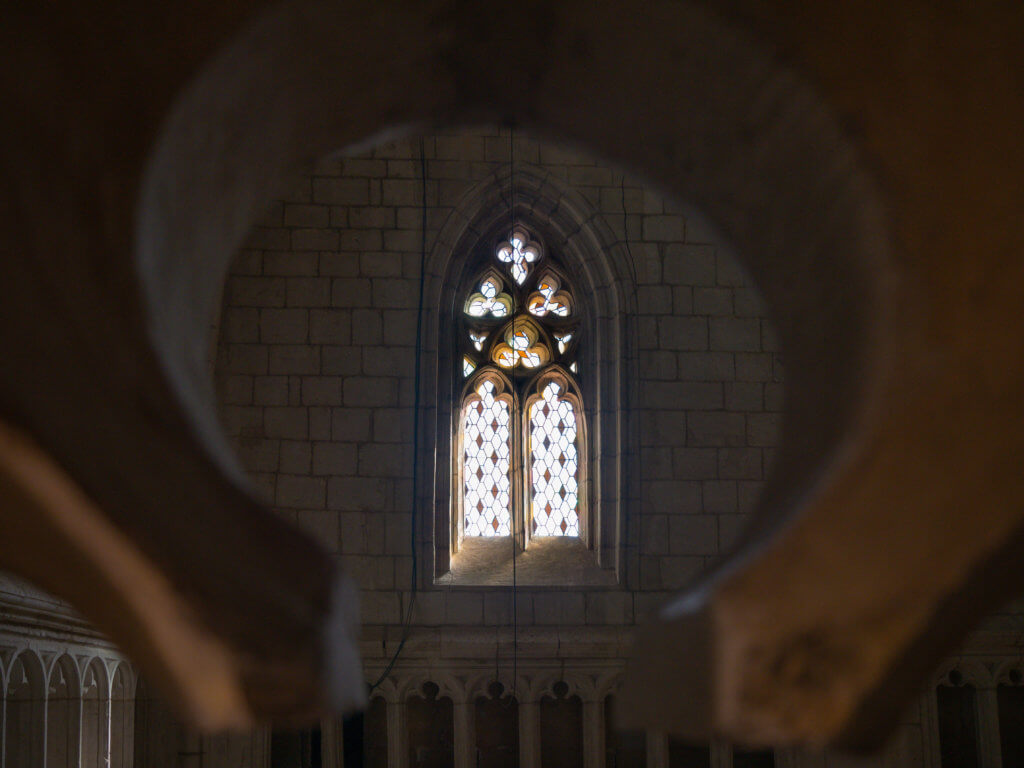
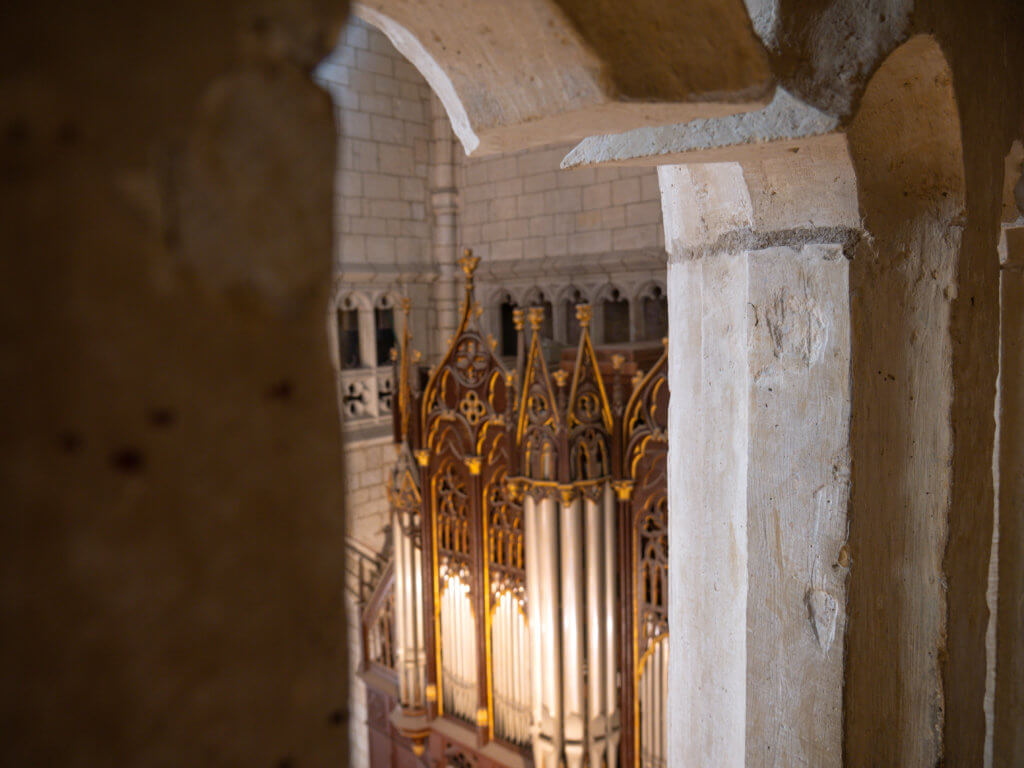
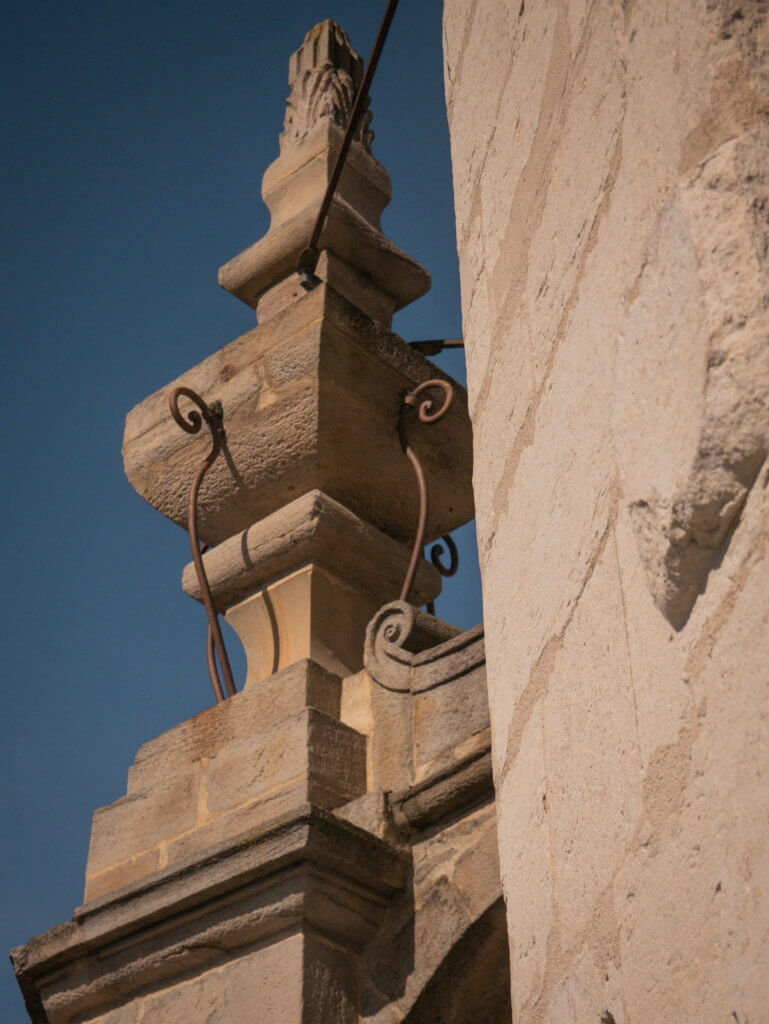
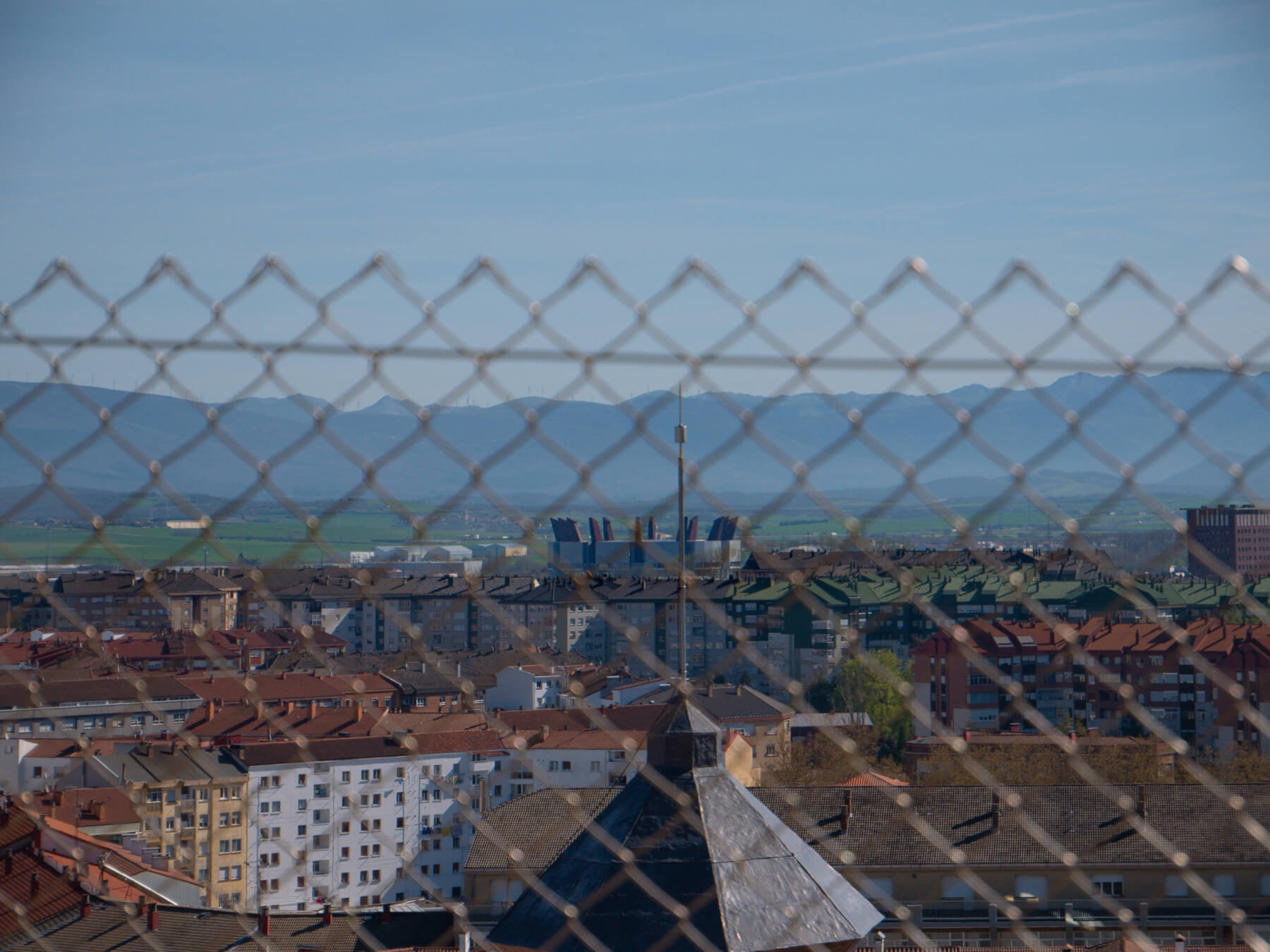
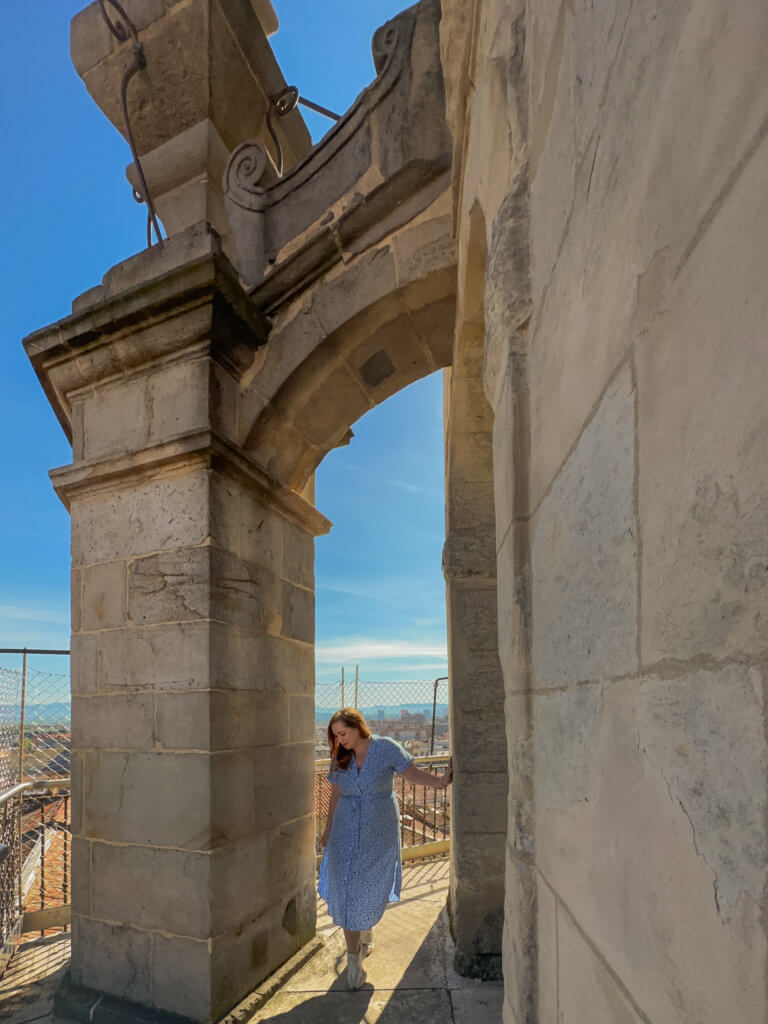
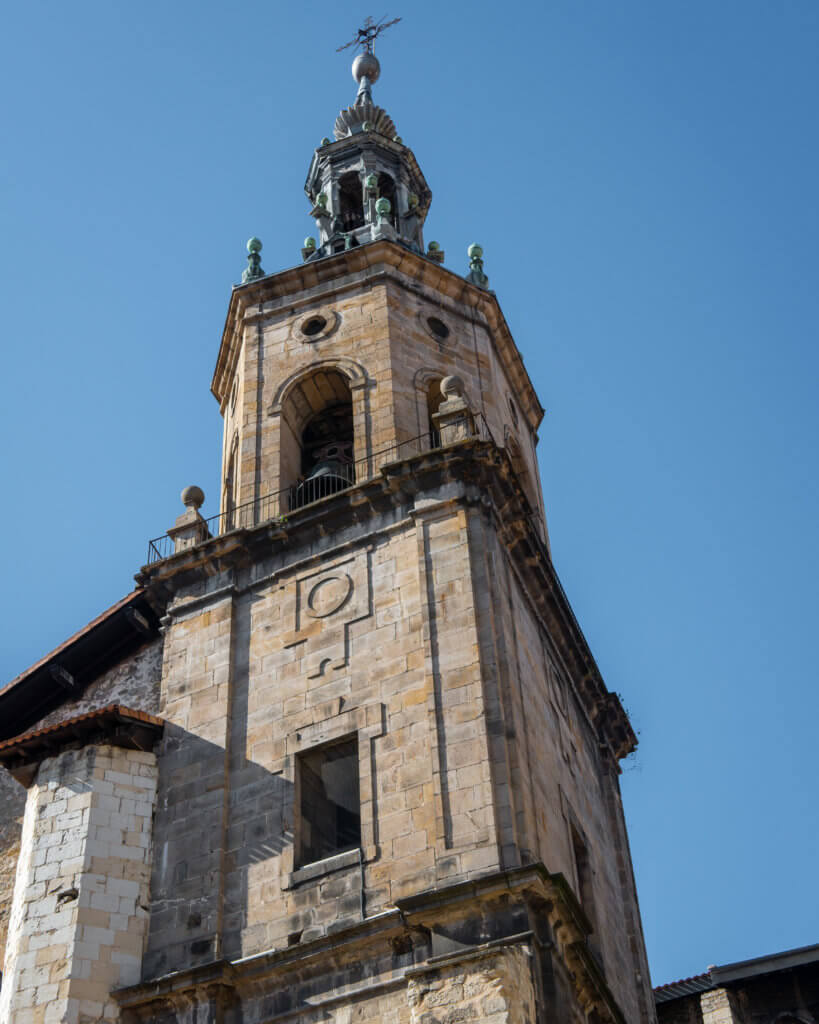
The octagonal tower, with its bell tower that dates from the 16th and 17th centuries, enables visitors to enjoy a unique panorama of the city.
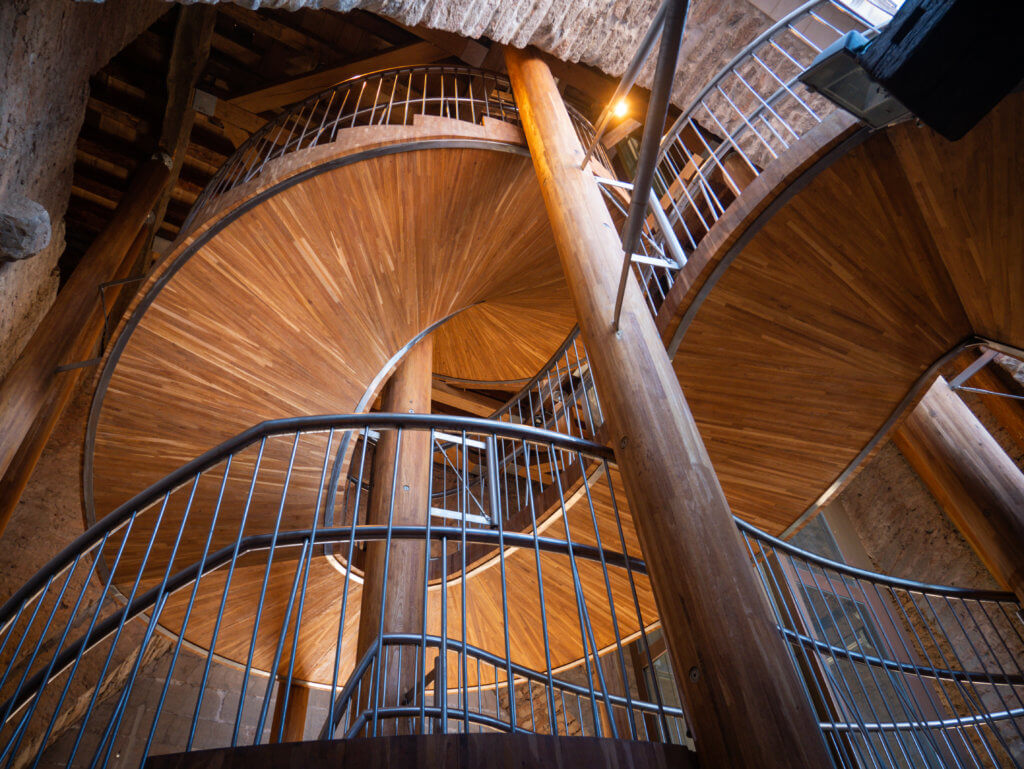
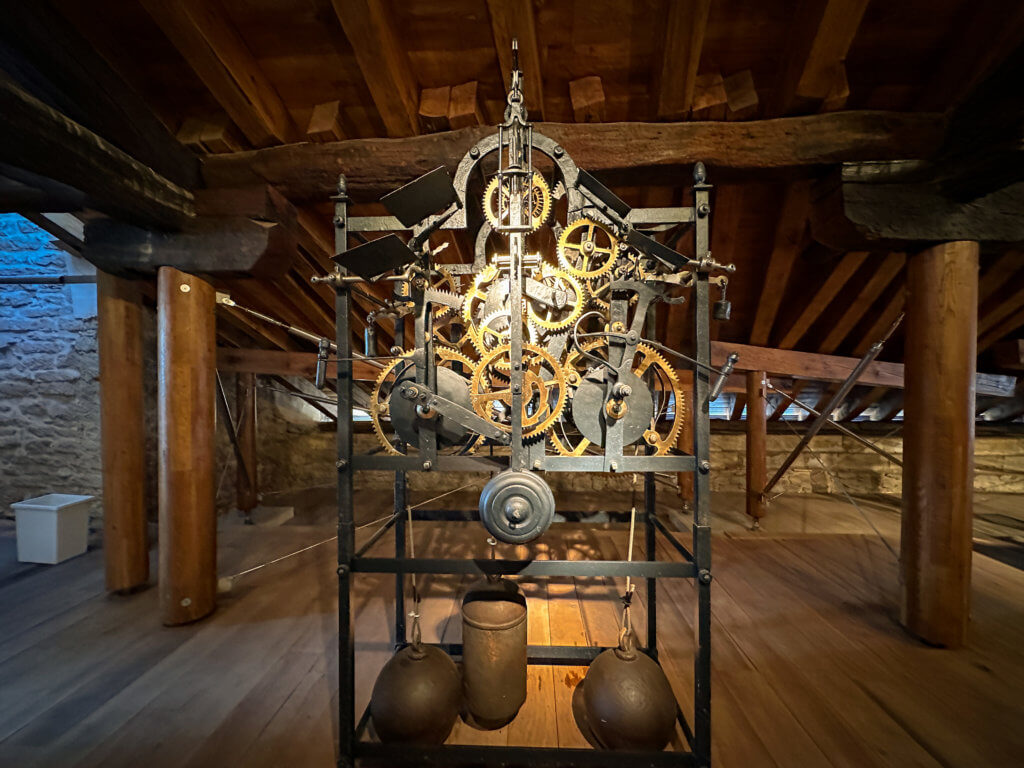
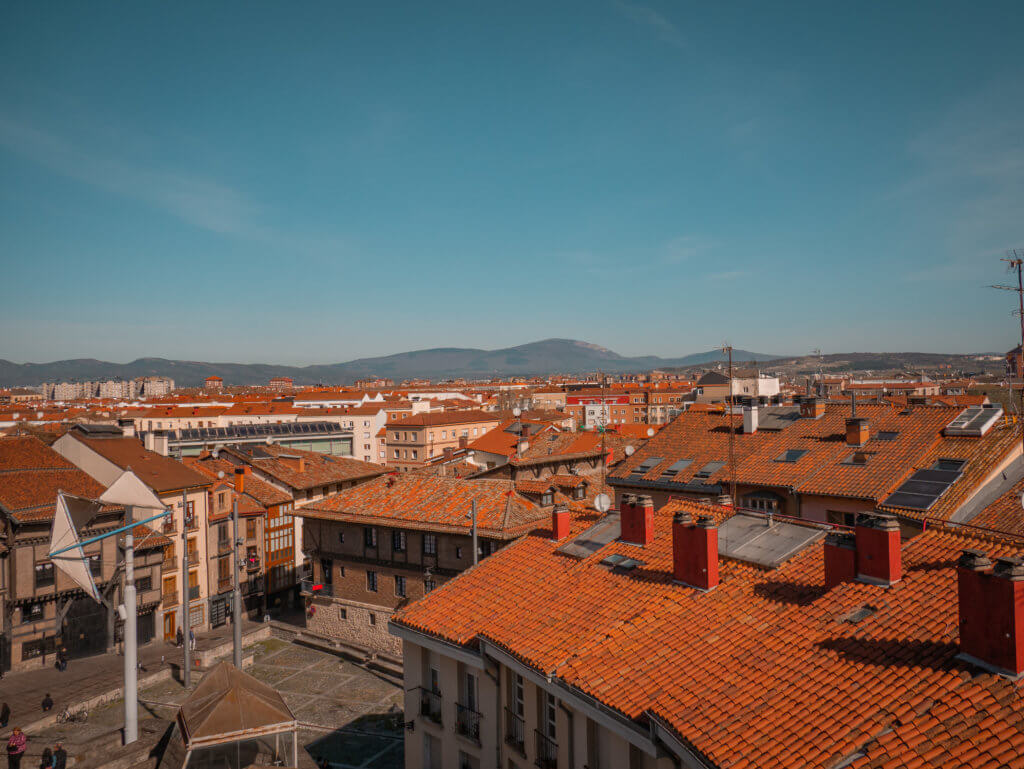
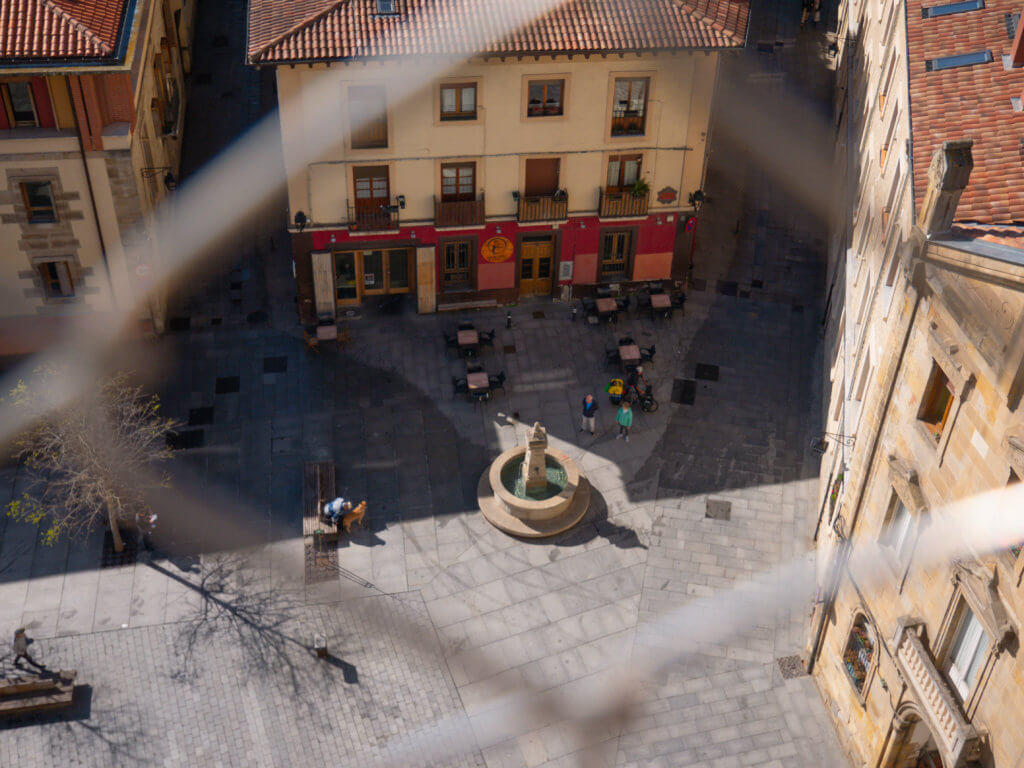
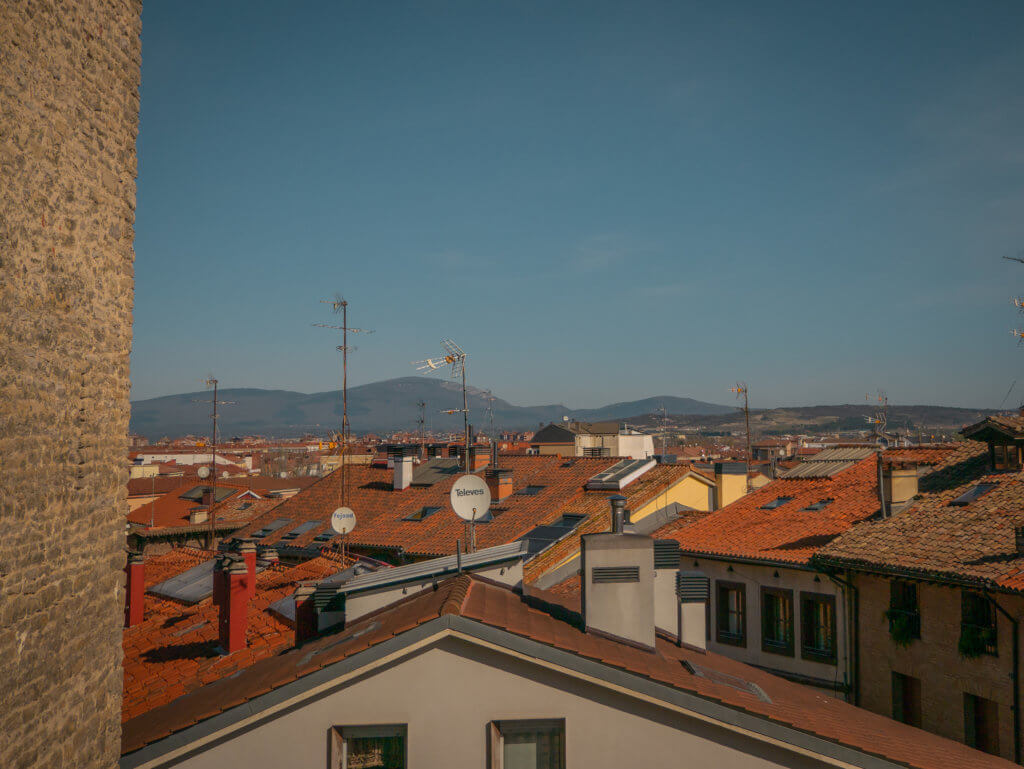
The Real-Life Inspiration for World Without End: Santa Maria Cathedral
For literature lovers, Ken Follett’s Vitoria Cathedral connection is a must-see. The British author used the Santa Maria Cathedral history and its unique restoration process as the primary muse for his bestseller, World Without End. Today, you can even find a life-size statue of Follett in the nearby Plaza de la Burullería, gazing up at the monument that inspired him.
To experience the cathedral exactly as he did, book the famous “Open for Construction” tour. Unlike traditional church visits, this tour takes you behind the scaffolding and into the heart of the 13th-century structure, allowing you to walk along the triforium and learn about the complex engineering that has kept this Gothic masterpiece standing for centuries.
If you happen to be visiting Basque Country during Easter, then check out our guide on La Semana Santa in Spain.
Explore Vitoria-Gasteiz’s historic Medieval Quarter
Vitoria-Gasteiz has one of the best-preserved medieval quarters in Spain. It still has its almond-shaped streets dating back to the middle ages, and wandering through them lets you see the great Gothic temples, the medieval citywall, and special museums like the BIBAT Card and Archaeology Museum. The historical centre sits upon a hill where the initial city of “Nueva Victoria” was once located. You can also take the path around the city murals there.
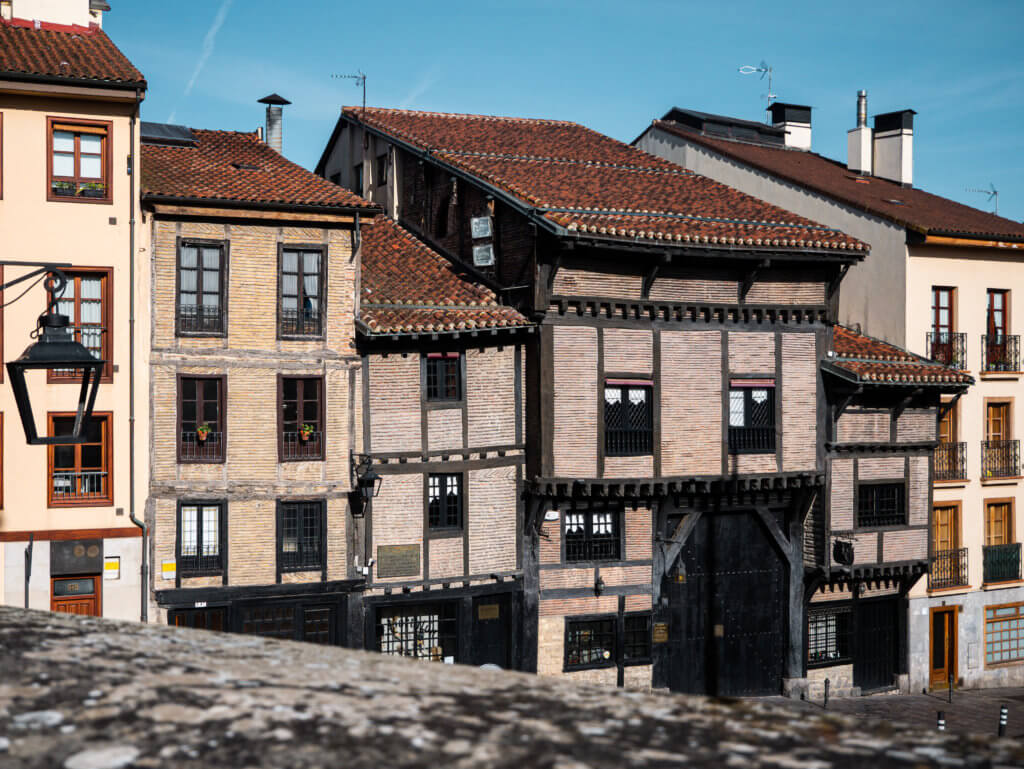
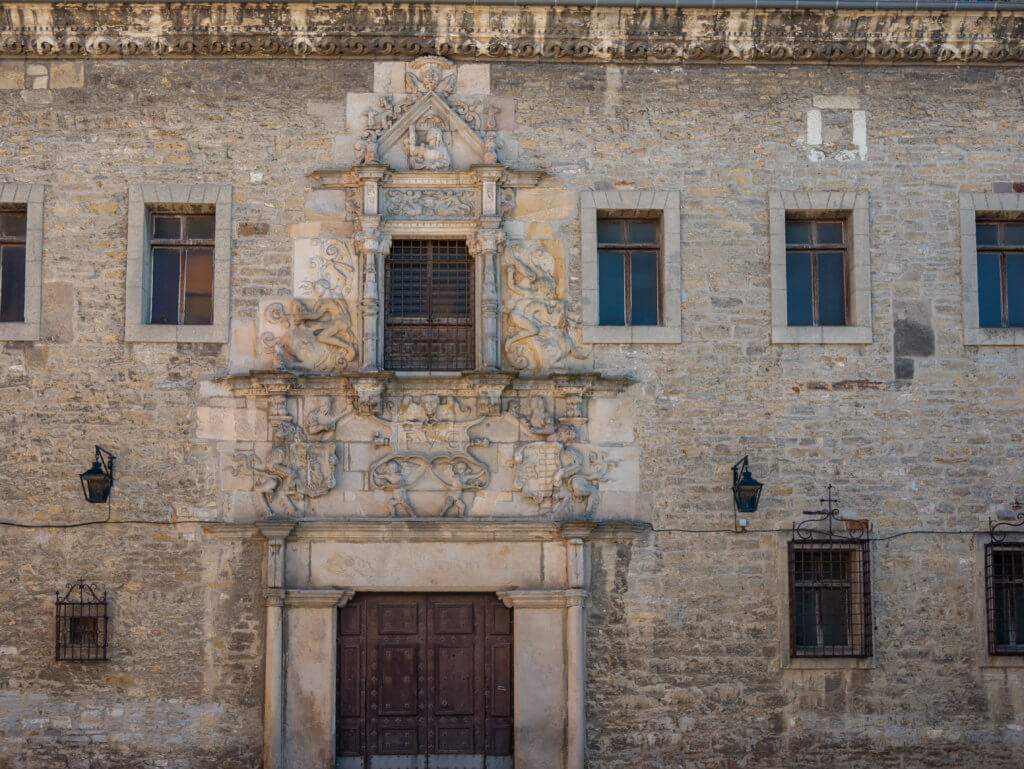
You will see the wall, Renaissance palaces, towers, churches, cathedral and much more on a historic walk around the medieval quarter.
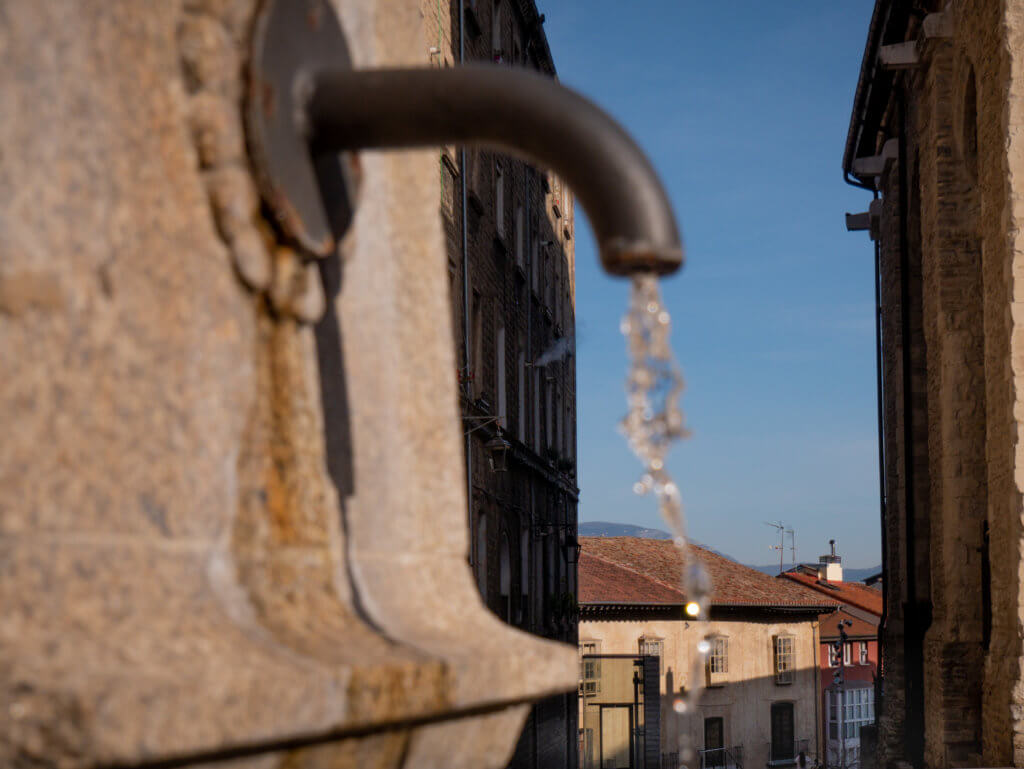
Eat Pintxos on Aiztogile Kalea
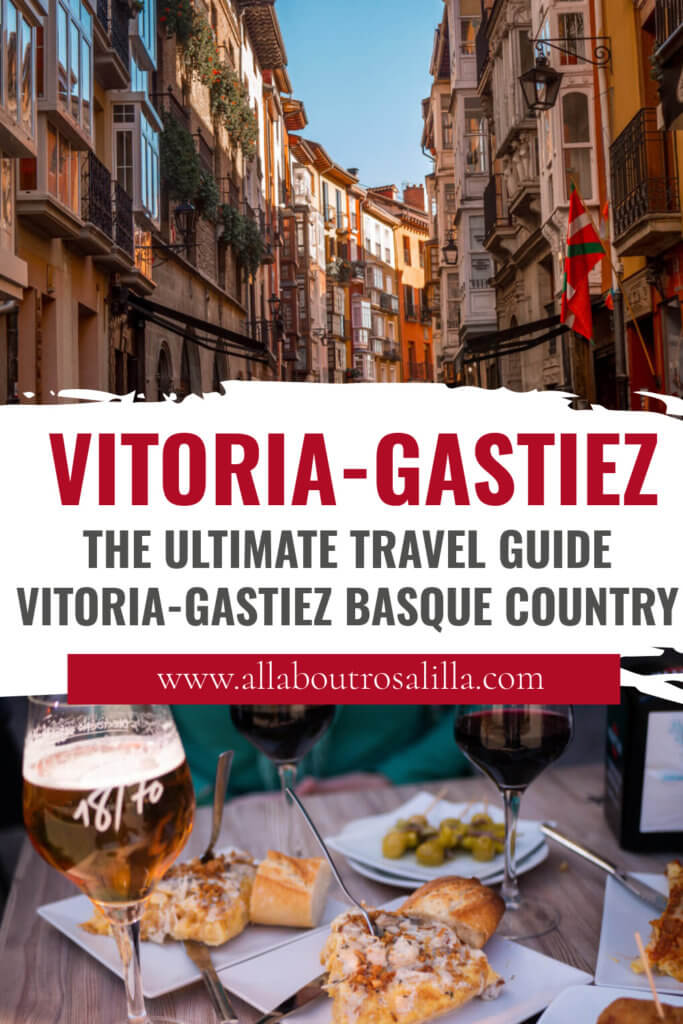
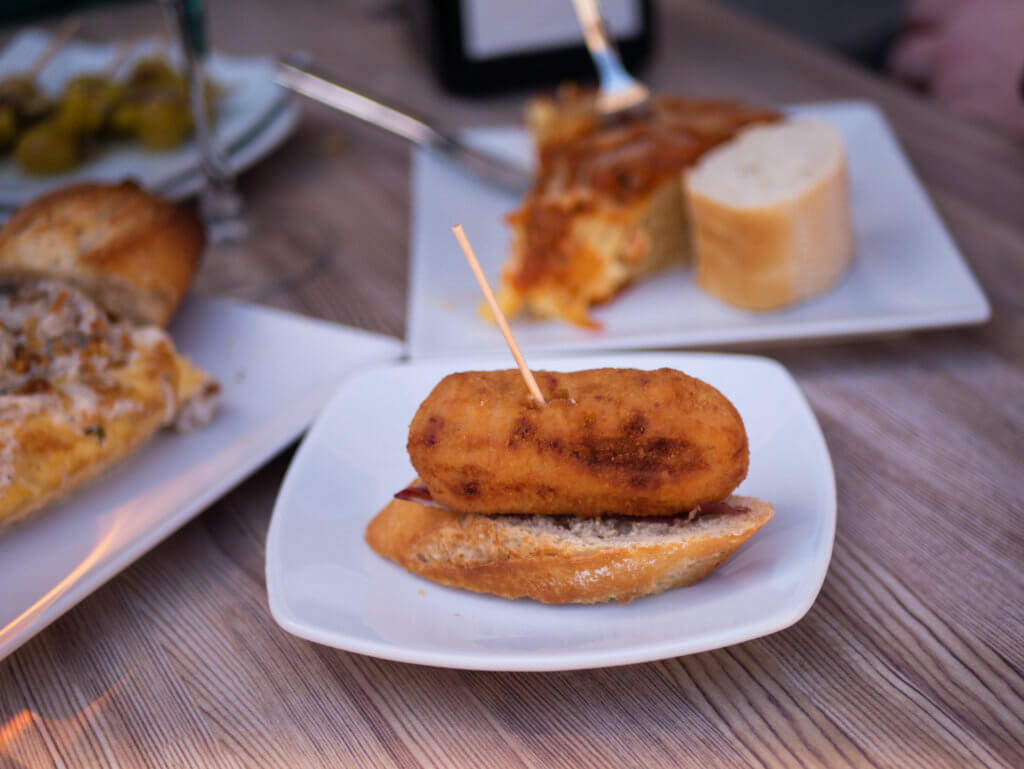
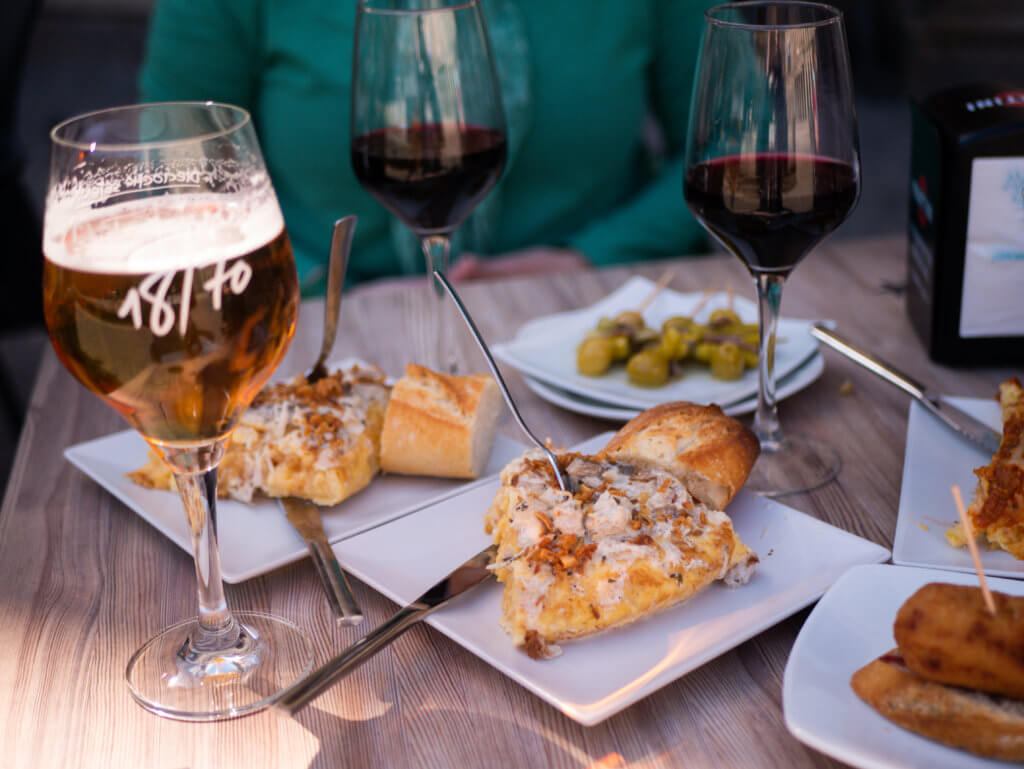
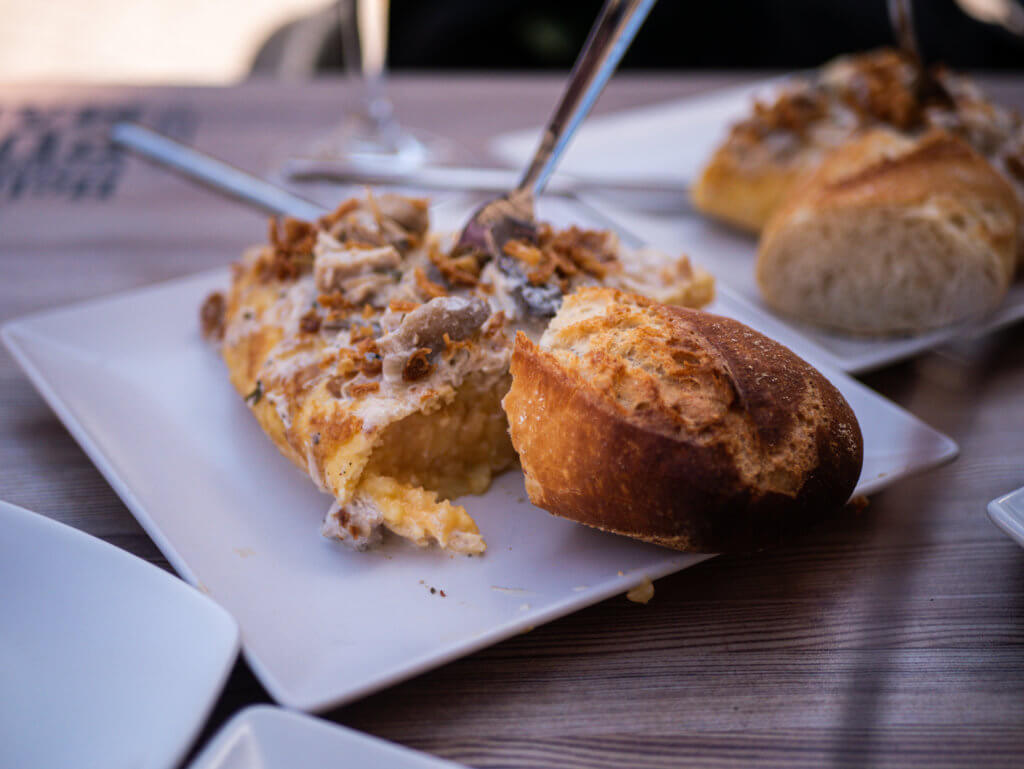
One of the busiest streets in Vitoria-Gasteiz is Aiztogile Kalea (Basque) or Calle Cuchillería (Spanish). It is known locally as “Kuxti” and is lined with lively bars, taverns, and restaurants. It is the place to be in town, and the atmosphere is electric. Glasses clink and stomachs fill up with pintxos, delicious little tapas that you can gobble on the go.
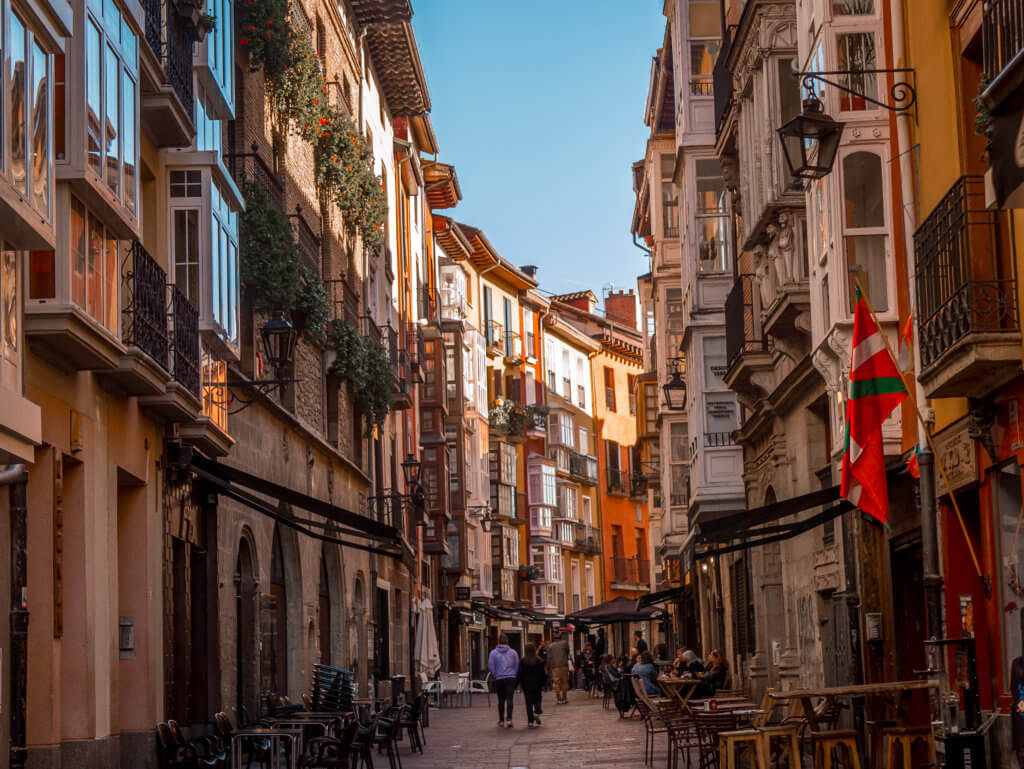

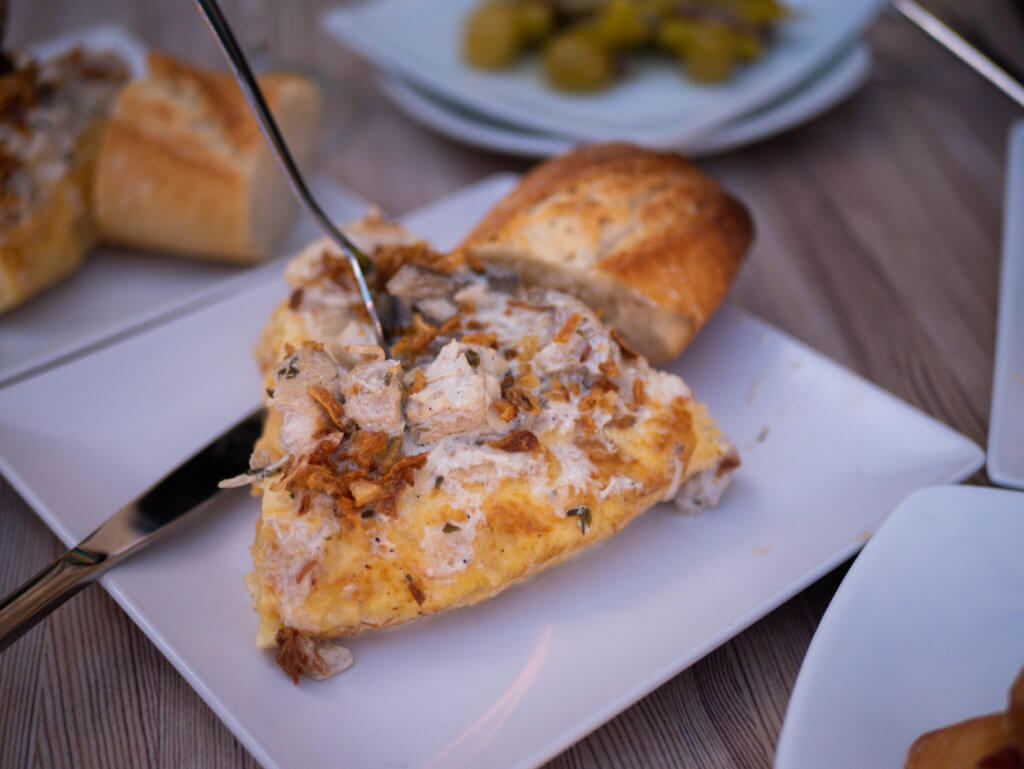
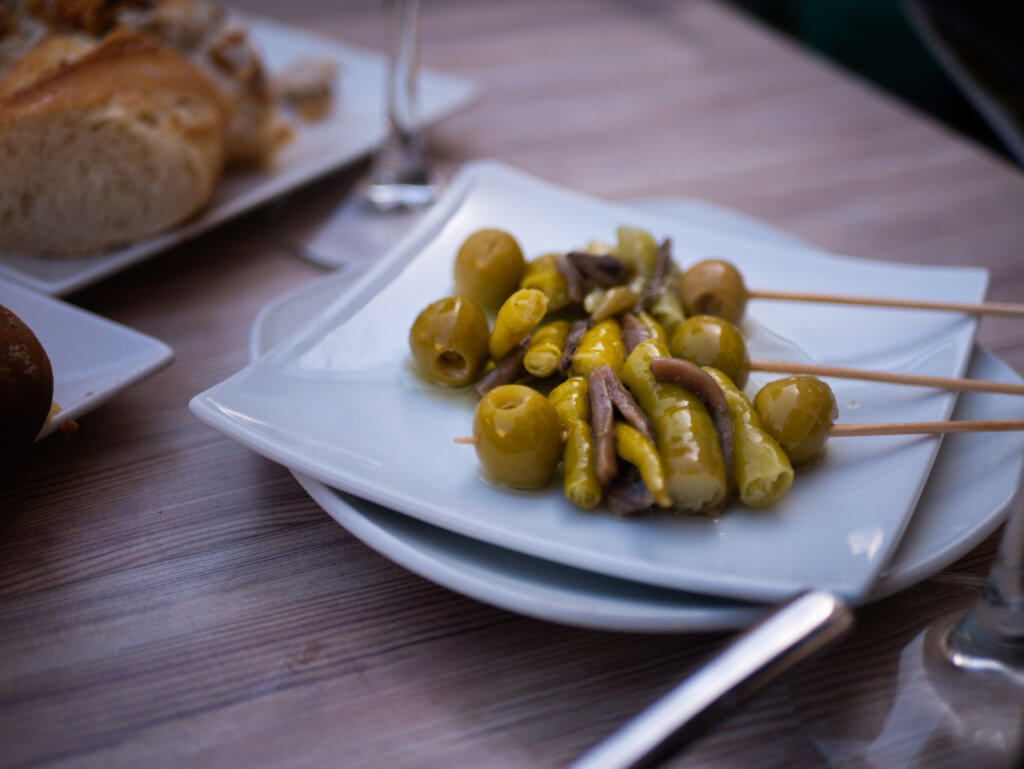
The “El Gautxo” bar is renowned for stuffed pepper pintxos, txistorra (the local chorizo), croquettes, baby eels and salad. “Txolarre” offers exotic pintxos such as chicken fajitas or toast with vegetables, although its signature dish is crisply fried squid.
Visit BIBAT Card and Archaeology Museum
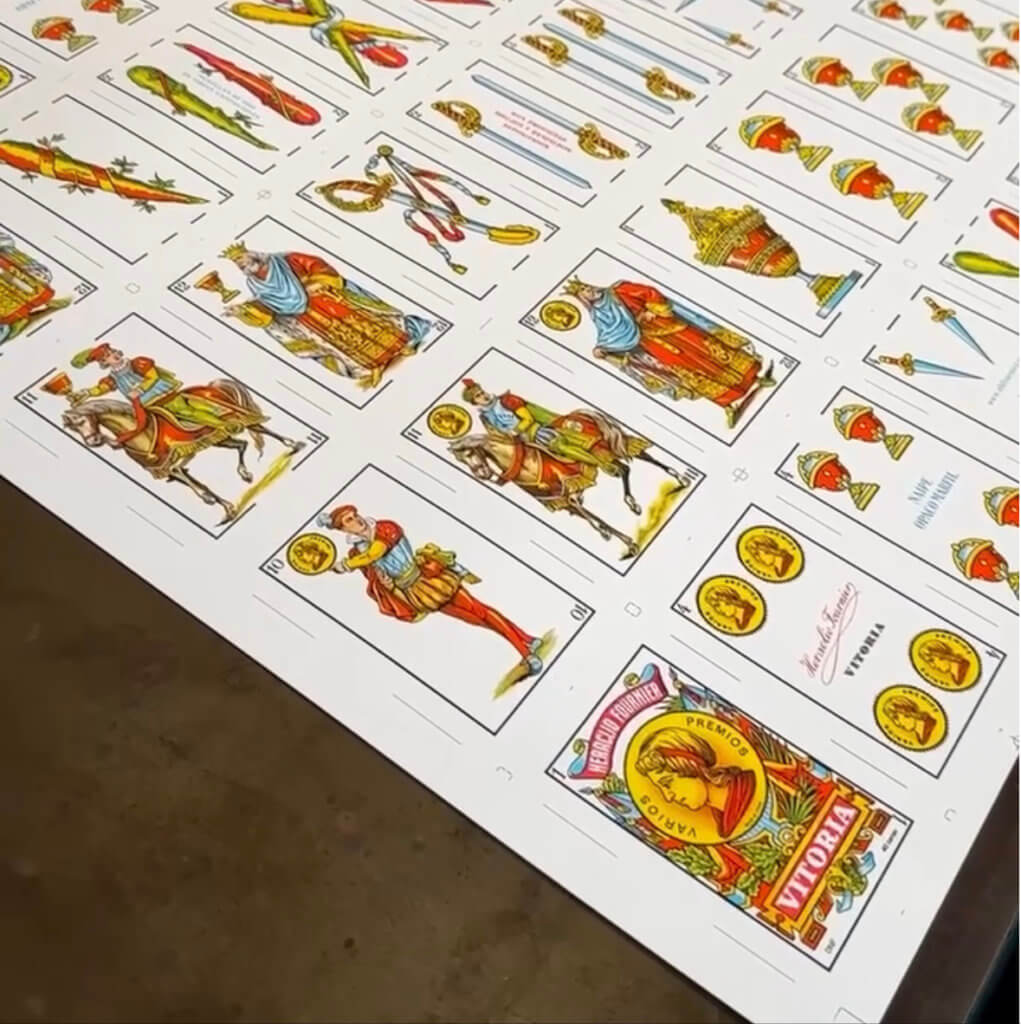
Set in a 16th-century building, Bendaña Palace, you will find the world’s most important museum of playing cards.
Don Heraclio Fournier, who established a significant printing press in Vitoria in 1868, is credited with founding the Fournier card museum. Here, a variety of collections demonstrate to visitors how playing cards have changed throughout time in terms of manufacture as well as content and design. There are a variety of cards available, with a focus on the Spanish deck, including vintage, tarot, humourous cards and cards relating to bullfighting.
Fournier cards are world famous. If you play cards in any reputable casino in the world you will most likely be playing with Fournier cards. Every aspect of the card deck was created by master craftsmen and artists expert in printing techniques and it all started here in Vitoria-Gasteiz.
Next door you will find the city’s archeological museum. The exhibition takes three floors and includes pieces from the Paleolithic, the Iron Age, the Roman world and an extensive journey through the Middle Ages of the town of Vitoria, founded during this long period of time.
Entry is free.
Walk St. James’s Way in Álava
St. James’s Way in Álava has historically been a communication path for pilgrims, travellers and traders, who found a safe route to avoid attacks from Barbarians on this path. Álava is a historical territory of Basque Country with Vitoria-Gasteiz as its capital. Relive history by following a St James’s urban route or a stage of the pilgrimage through the city.
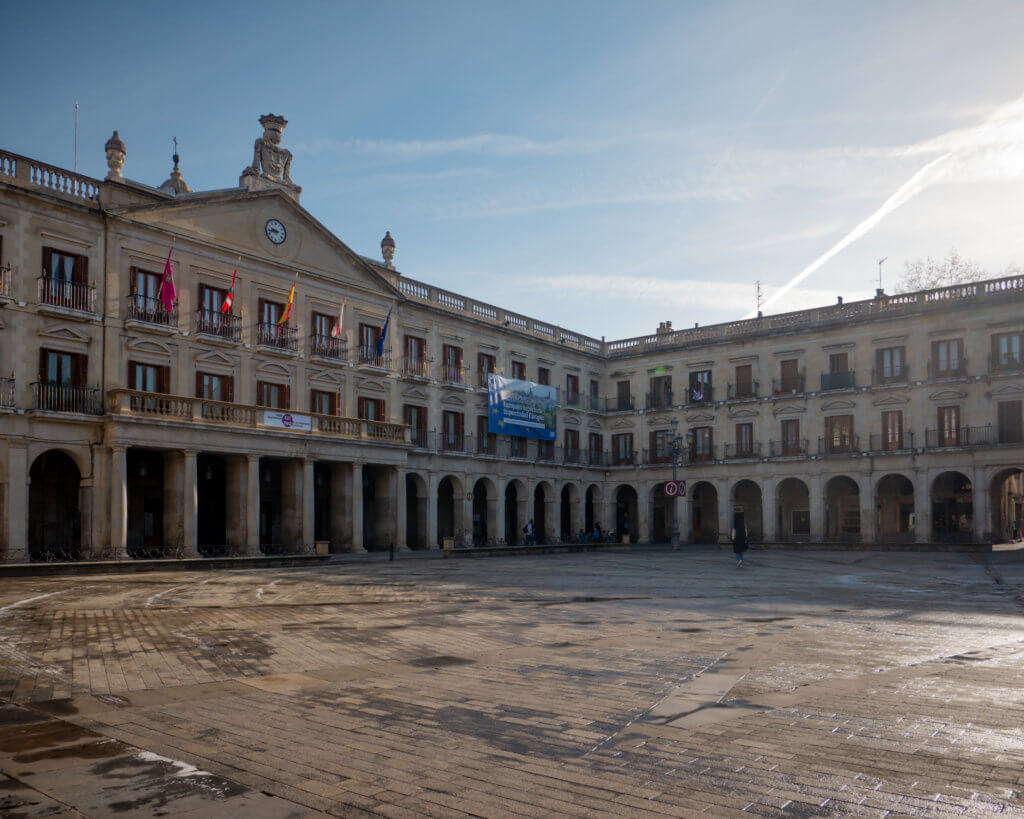
The pilgrimage to Santiago via Vitoria-Gasteiz became very popular in the Middle Ages as an alternative to the French way. This route is currently known as part of the Inland Basque Way, a route which connects Irún to Burgos or Santo Domingo de la Calzada. Stopping off in Vitoria is a must on this part of the route.
Check out this guide if you are interested in finding out more about the Camino del Norte, including great tips on things to do in Bilbao.
The Murals Route: Vitoria’s Painted City
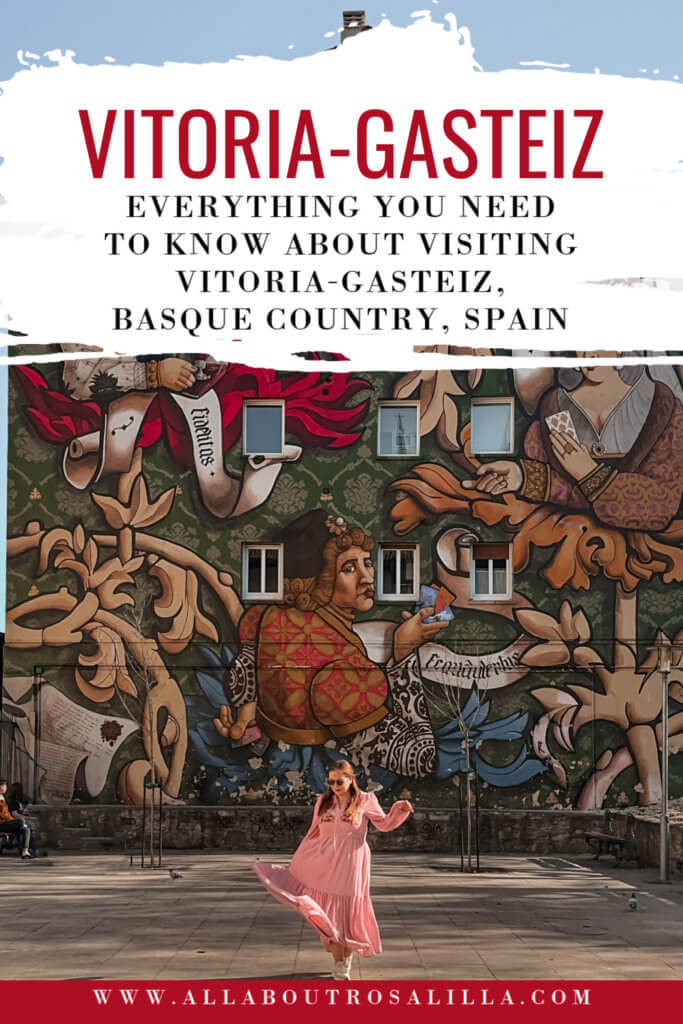
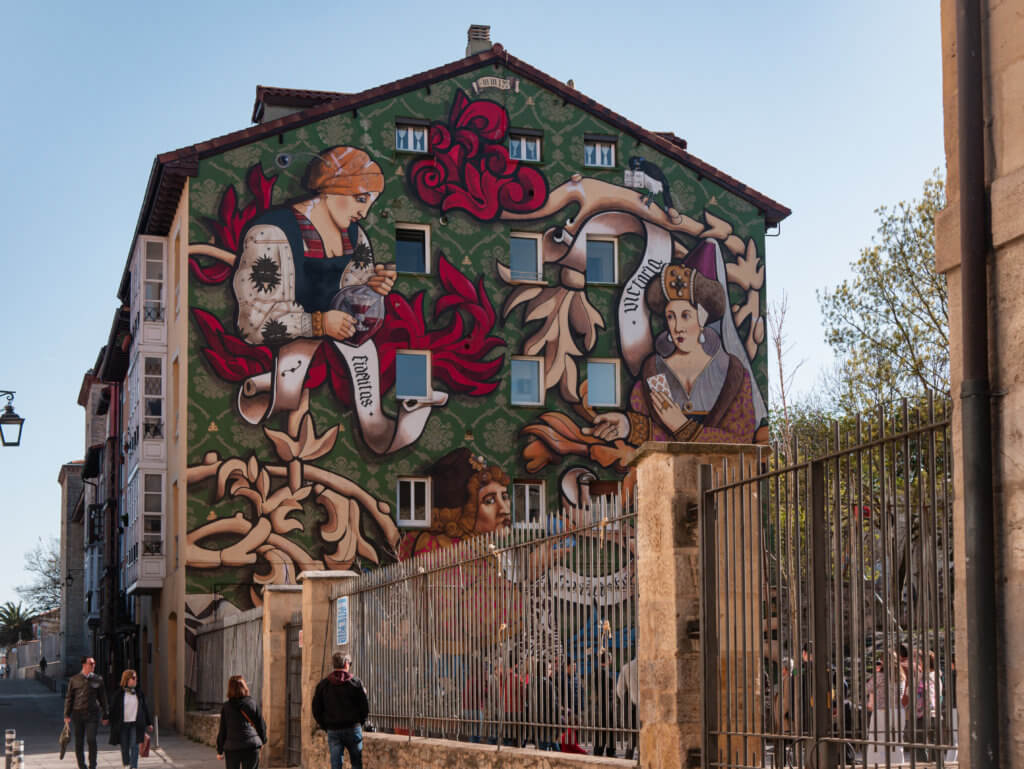
The city comes to life with a gallery of works of art painted onto the façades of buildings in the Medieval Quarter and throughtout other neighbourhoods of the city. Each mural tells a story and they were created collectively by artists and residents of the city. The best way to experience these incredible murals is by guided tours that will show you the imposing building façades which have been converted into authentic works of art and will tell you the stories that lay beneath each murals.
Discover the Murals of Vitoria-Gasteiz
Vitoria-Gasteiz is famous for its vibrant street art, which turns the medieval quarter into an open-air gallery. To see the best of the Mural Itinerary, don’t miss these top three works:
• The Triumph of Vitoria: Located at Santa Maria Kalea, 9, this massive piece is inspired by a 16th-century painting and depicts the victory of the city over various historical challenges.
• The Thread of Time: Found at Kale Txikitxoa, 9, this was the mural that started the entire movement in 2007, representing the city’s textile history.
• Covered by the Sky and the Stars: Situated at the corner of Santa Ana Kantoia and Pintore Kalea, this romantic mural is based on 14th-century artistic styles and features a dramatic, starry night sky.
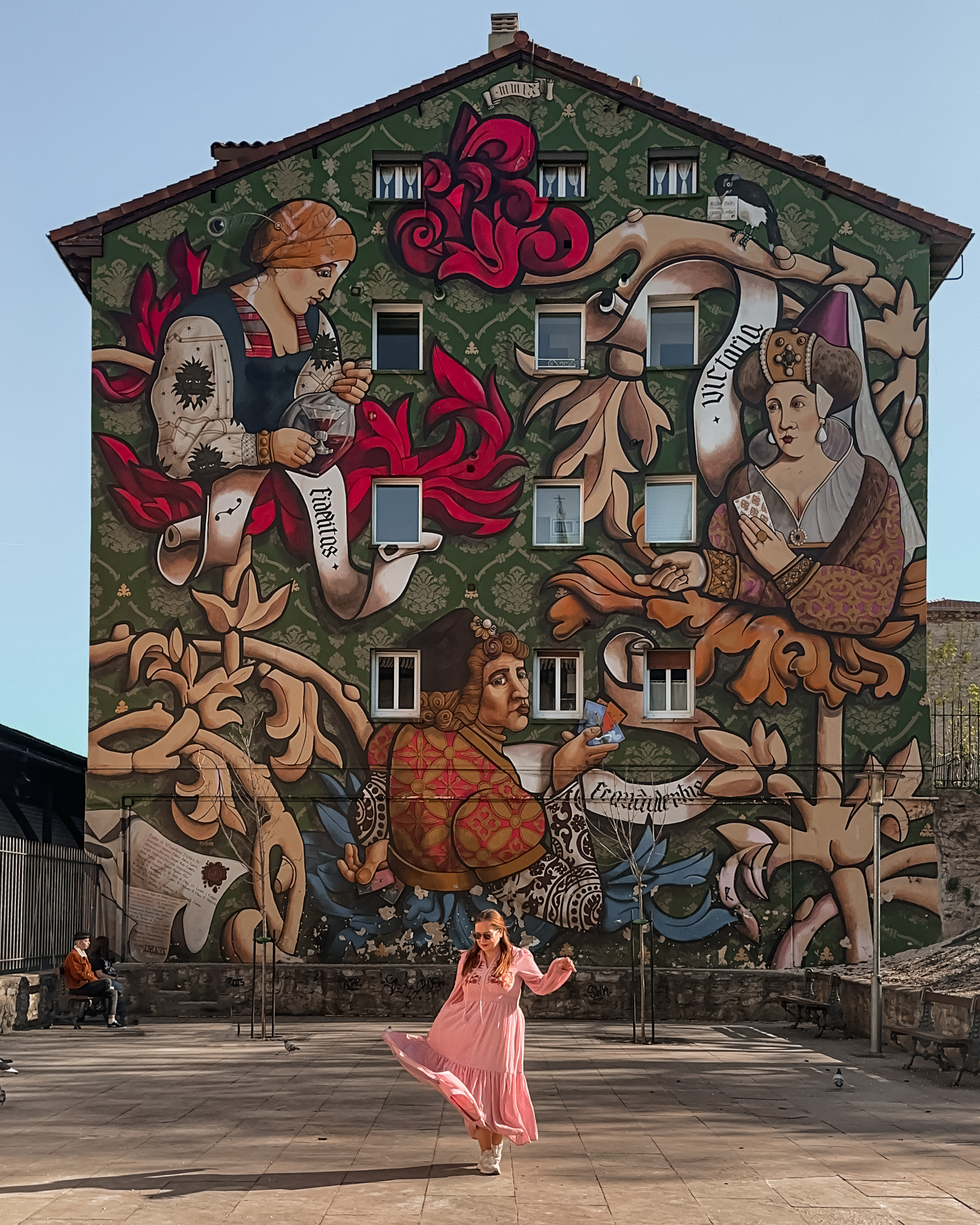
Must-See Murals in the Medieval Quarter
- “Al Hilo del Tiempo” (The Thread of Time): Located on Calle Chiquita, this was the very first mural of the project (2007). It pays homage to the square’s history as a medieval fabric market with colorful, flowing patterns that mimic high-quality textiles.
- “Continentes” (Continents): This vibrant work covers an entire building at the corner of Santa María and San Vicente de Paul. It uses animals from around the world to celebrate cultural diversity and was created specifically to brighten up a local nursery school.
- “La Luz de la Esperanza” (The Light of Hope): Found on Calle Zapatería, this mural uses cool blues and warm yellows to depict a scene of education and enlightenment, symbolizing the power of knowledge to break through darkness.
- “Eskuz Esku” (Hand in Hand): A beautiful trilogy of murals (located on Calle Herrería and Calle Zapatería) that focuses on the theme of “hands”—hands that work, hands that create music, and hands that build community.
- “El Triunfo de Vitoria”: Pictured above, this Renaissance-style masterpiece celebrates the city’s resilience and loyalty, inspired by the 1813 Battle of Vitoria.
Top Tips:
- Guided vs. Self-Guided: While you can easily walk the “Almond” (the old town’s nickname) on your own, the IMVG (Itinerario Muralístico de Vitoria-Gasteiz) offers guided tours that explain the secret meanings and the collaborative community process behind each piece.
- The “Medieval Almond”: Most of these murals are concentrated in the historic center, making it easy to hit 10 or 15 artworks in a single afternoon.
Immerse yourself in Nature
The city is surrounded by a Green Belt made up of many large parks, notably the Salburua wetlands and their Ataria interpretation centre. It incorporates several lagoons, where lookout points allow you to admire birds, deer and other endangered species making you forget that you are even in a city.
Salburua Wetlands: A Wildlife Sanctuary
A short trip from the city centre leads to the Salburua Wetlands, a restored habitat that is now a Ramsar site of international importance. While many search for “wildlife in Basque Country” elsewhere, Vitoria is home to some of the region’s rarest species:
• The European Mink: Salburua is a key site for the conservation of this critically endangered mammal.
• The Deer Herd: You can get a close look at a resident herd of deer grazing freely in the meadows surrounding the Arcaute Pond.
• Birdwatching: The park is also famous for its white storks, spoonbills, and various birds of prey.
Visit the parks of Vitoria-Gasteiz to relax and unwind
One of the most well known parks in the city is La Florida. These are the city’s most representative gardens, situated right in the centre of Vitoria-Gasteiz. La Florida was designed as a large botanical garden of the Romantic era in the style of the French gardens of 19th-century. It contains 95 different species and some trees are over 100 years old.
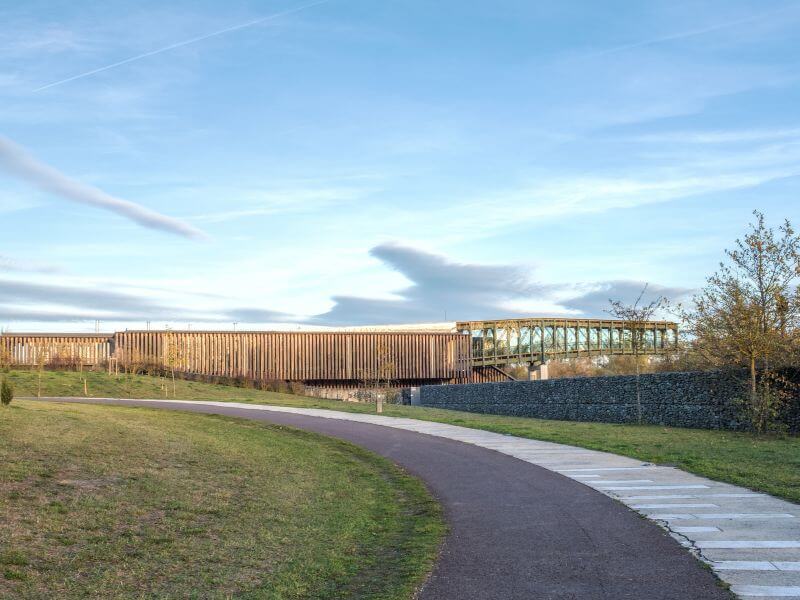
The Europa Congress Palace has become an icon of sustainable architecture. It features a large vegetal façade and a rooftop with views of the city’s inner Green Belt.
Arriaga Park is built around a beautiful chapel. It is mainly populated with acacias, poplars, rose gardens and numerous herbs. It also features a lake frequented by several species of birds. Judimendi Park is located in the city’s former Jewish cemetery. There you can observe the monolith in the park that commemorates its past and white poplars now serve as a trademark for this lovely region.
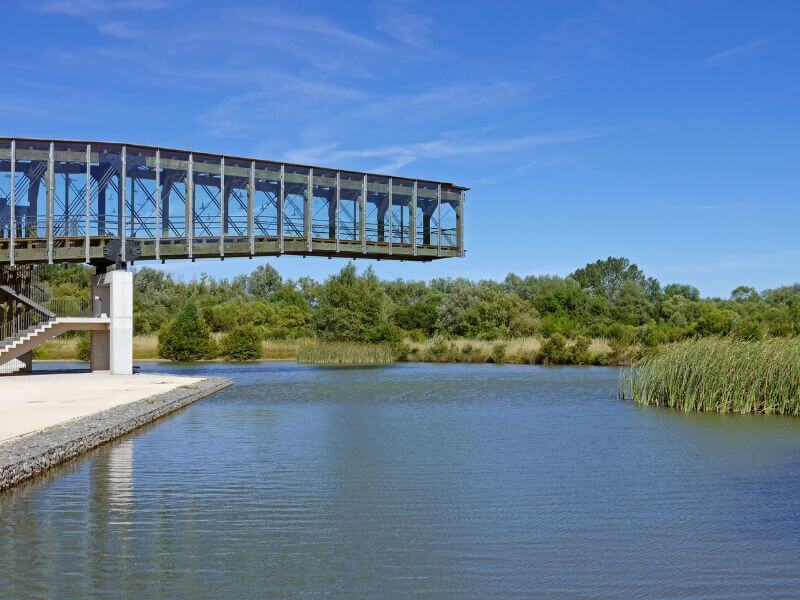
As well as these parks, it’s well worth visiting the Obispo Ramón Fernández de Piérola Gardens: which have botanical species such as strawberry trees, magnolia trees and boxwood shrubs, not to mention the ’Crocodile’ and ‘Rhinoceros’, sculptures by Koko Rico. The La Senda Path is also a highlight, a route among enormous century-old banana trees and which links with the Zulueta Palace Gardens.
Visit Atrium Museum-Centre of Contemporary Art
The Atrium is one of the symbols of Vitoria-Gasteiz and represents one of the most important assets of the art scene in Spain. The building is located on Francia Street. It stands on a trapezoidal, almost rectangular square and there is a main lobby, the Auditorium, the Plaza Room, the Cube Restaurant, ticket office and cloakroom, among others.
It boasts a collection of over 3,000 individual works mainly by artists from Basque and Spain. This impressive collection includes work by Picasso, Miró, Barceló, Elena Rivero, Chillida, Oteiza, Cristina Iglesias and Txomin Badiola
Los Arquillos and Plaza del Machete
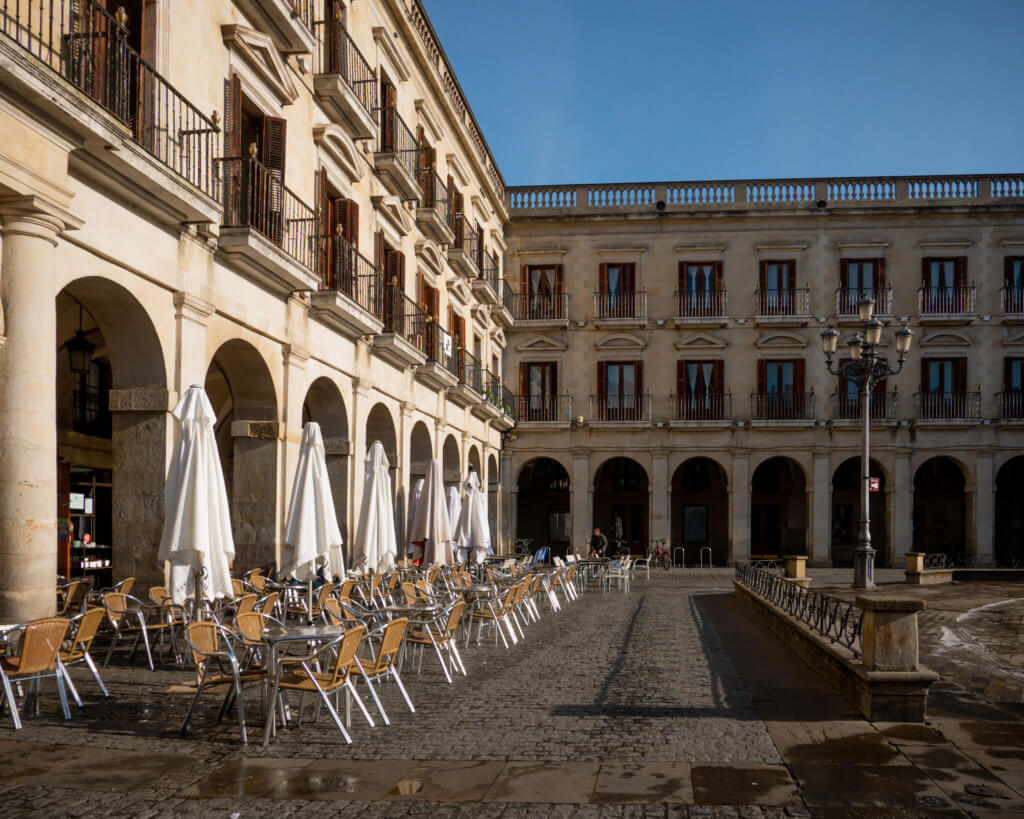
Los Arquillos (The Arches) were designed by the architect Justo Antonio de Olaguibel in an effort to bridge the the 23 metre gap between the medieval city and the neoclassical expansion. On the arches, houses were built using stone. Two other porticoed galleries were built that also served as a connection between the medieval quarter and the main square. It is fascinating to observe the integration of Los Arquillos with the adjacent squares and buildings and you can easily see why ladies used to walk this promenade to showcase their best dresses.
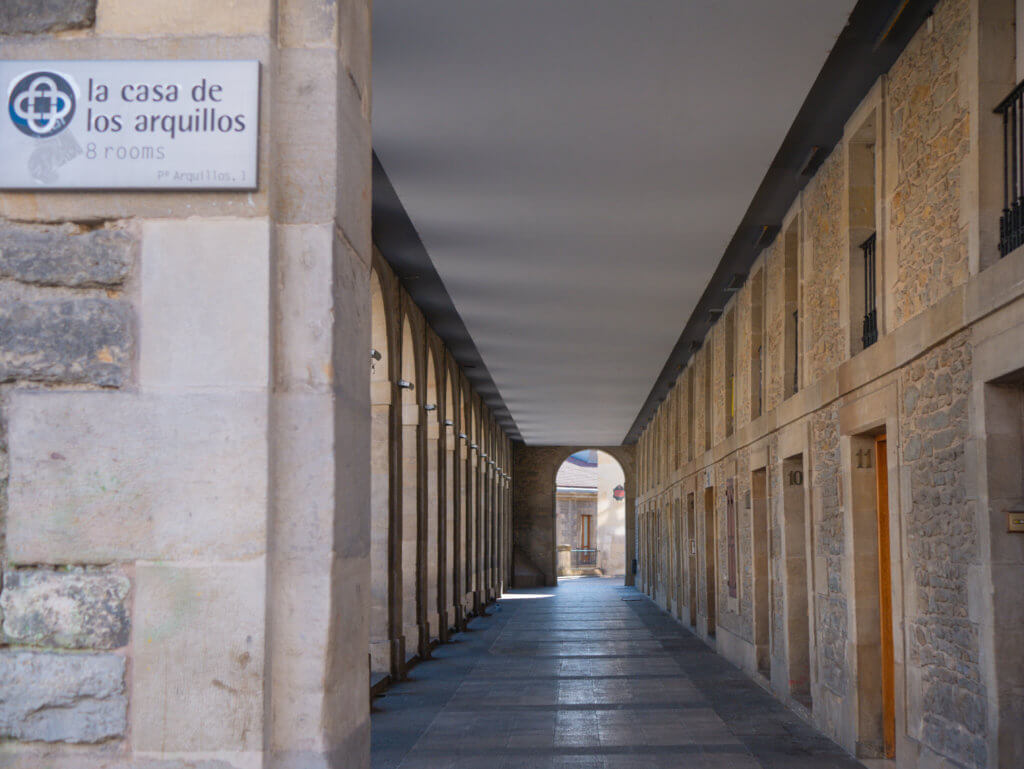
Stroll through the “Arquillos del Ala” to the “Arquillos del Juicio” from the lighthouse, a popular meeting place in the city.
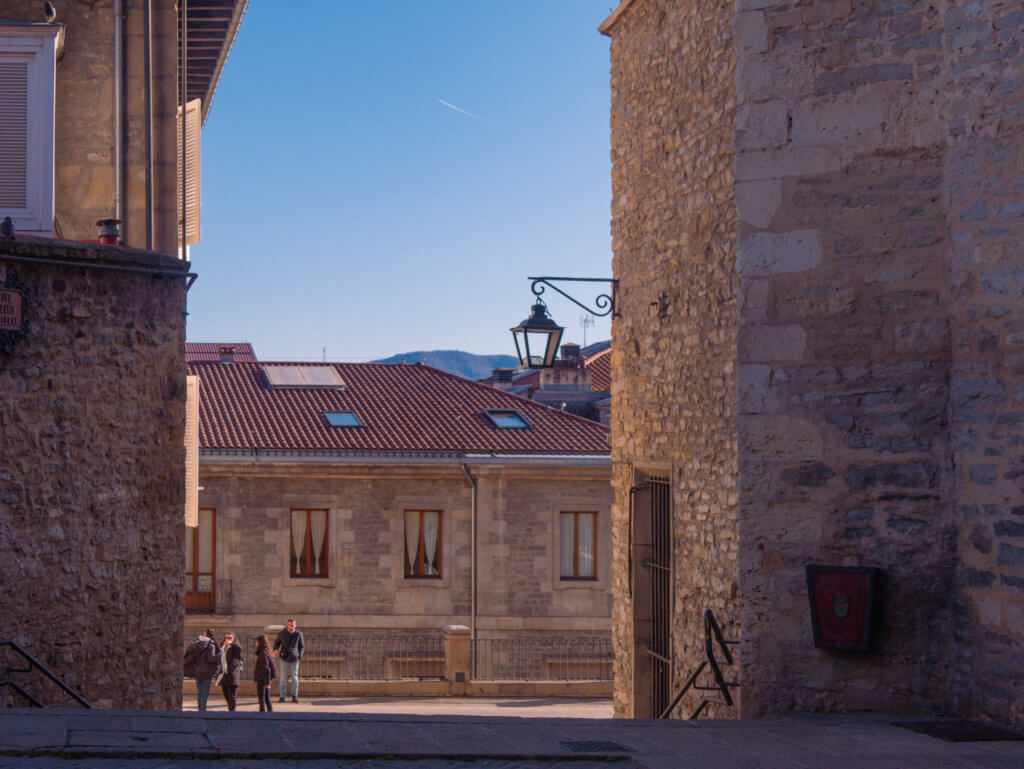
Just a few steps from Los Arquillos you will find Plaza del Machete (Machete Square). In the past, it served as the boundary of the medieval town. Today, it is surrounded by Los Arquillos, the church of San Miguel, the Villa Suso Palace, and the slope of San Vicente.
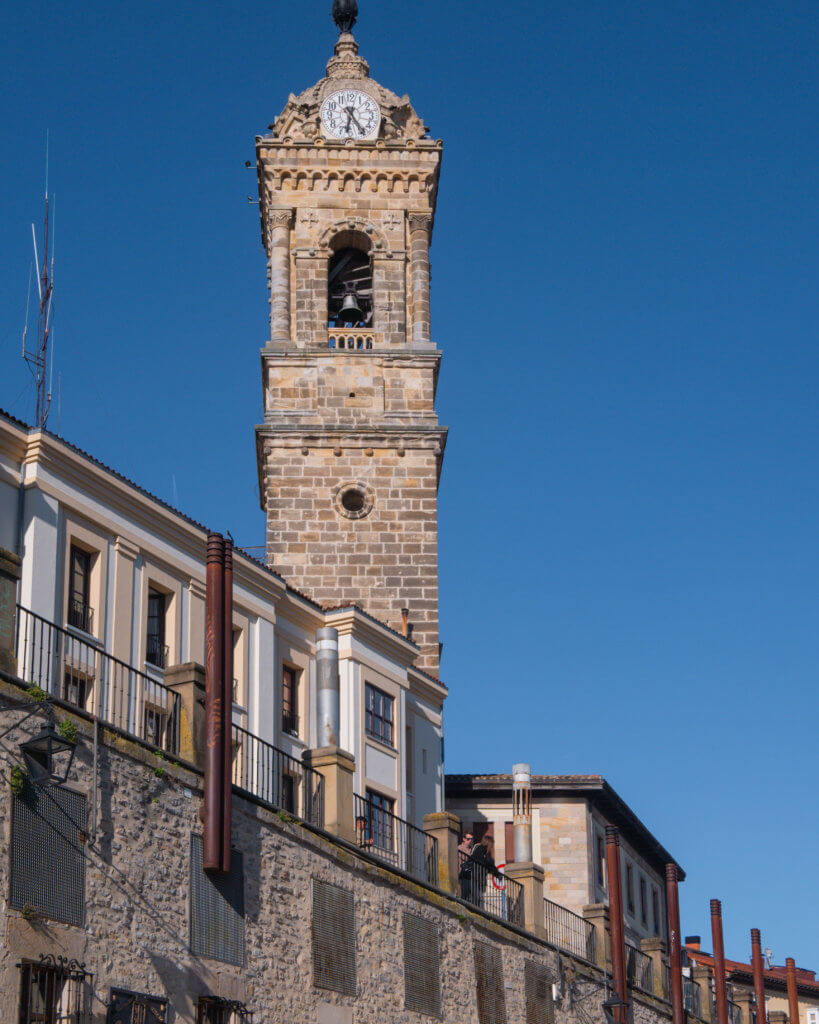
It got its name from the machete that the former city representatives swore on once elected to uphold their positions to the highest standard. You can find a replica of this machete in San Miguel’s outer recess. The square is also known as “La Plazoleta del Juicio” since it was there that the death sentences by garrote were carried out.
Nowadays there are lots of incredible restaurants in the square and it is the perfect place to have a lazy lunch with a glass of wine and just people watch.
Take a Guided Walking Tour of Vitoria-Gasteiz
One of the best ways to fully experience the city is by taking a guided tour. We booked our tour with Kalearte and the best part is that you can customise it to include things that you really want to see. Our tour guide, Olatz, was a local and her passion and pride for her city was incredible to see. She showed us around the Medieval Old Town including the many palaces in the city, the old city wall, beautiful churches and the incredible murals in the city. We can’t recommend her enough.
Check out this guide from Our Spanish Adventures on more amazing things to do in Spain.
What not to miss in Basque Country?
The Basque Country is a region of incredible diversity, and Vitoria-Gasteiz is just one piece of the puzzle. You shouldn’t miss the rugged “Dragonstone” steps of San Juan de Gaztelugatxe, the world-class surfing beaches of Zarautz, or the futuristic architecture of the Guggenheim.
To make the most of your trip, check out our comprehensive guide on the best places to visit in Basque Country, which includes everything from hidden coastal villages to the best Rioja wineries. If you are short on time, we also have a dedicated itinerary for spending one day in Bilbao to help you see the city’s highlights in just 24 hours.
Hidden Gems and Day Trips: Exploring Beyond the City
Salinas de Añana: A Journey to the “White Gold” Valley
Just 30 kilometres from Vitoria-Gasteiz lies the Salinas de Añana Salt Valley, a breathtaking open-air landscape with over 6,500 years of history. This unique site is home to one of the world’s oldest salt factories, where high-quality “white gold” is still produced using traditional artisan methods.
Why It’s a Must-Visit Hidden Gem
• Surreal Architecture: The valley is filled with thousands of terraced evaporation platforms made of stone, wood, and clay, creating a dazzling white landscape that feels like another world.
• Ancient Salt Springs: The brine comes from four natural springs that tap into a 200-million-year-old subterranean sea.
• The Salt Spa: From April to October, visitors can dip their hands and feet into hypersaline waters to experience their therapeutic and beneficial effects.
• Gastronomic Excellence: Añana Salt is a favourite among internationally renowned chefs; you can join a salt tasting to experience varieties infused with everything from wine to Provencal herbs.
How to Get There from Vitoria-Gasteiz
• By Bus: The most convenient public transport is the Line 13 bus operated by Alava Bus, which takes roughly 35 minutes and costs between €2 and €4.
• By Car: It is an easy 29-minute drive via the A-2622.
• Combine Your Visit: Many travellers pair the Salt Valley with a tour of the Varona Family Palace-Tower, a fortress located 10.9 km away that has been inhabited by the same family since the 12th century.
How to visit Vitoria-Gasteiz from Bilbao (The Perfect Day Trip)
Taking a Bilbao to Vitoria-Gasteiz bus is the most popular and affordable way to see the capital. Buses operated by Autobuses La Unión depart from the Bilbao Intermodal station every 30 minutes, with the journey taking approximately 55 minutes and costing around €7.
If you prefer driving from San Sebastián to Vitoria, the trip takes roughly 75 minutes via the AP-1 motorway. Having your own car is the best way to explore the “hidden gems” of the province of Álava, such as the nearby Salinas de Añana (ancient salt pans) or the medieval village of Laguardia in the Rioja Alavesa wine region.
Why Vitoria is a “Hidden Gem” for 2026
As the coastal hubs become increasingly crowded, Vitoria-Gasteiz remains one of the best day trips from Bilbao for those looking to escape the masses. It offers a slower pace, better value for money, and a unique “Green Belt” that you won’t find anywhere else in Spain.
Gastronomy in Vitoria-Gasteiz
The gastronomy in Vitoria-Gasteiz is one of the fundamental reasons for visiting the city. You can enjoy traditional Basque dishes, Pintxos, Rioja Alavesa wines, and txakoli from Álava, a thin white acidic wine that can be naturally fizzy and is traditionally served like cider, theatrically poured from a height into the glass.
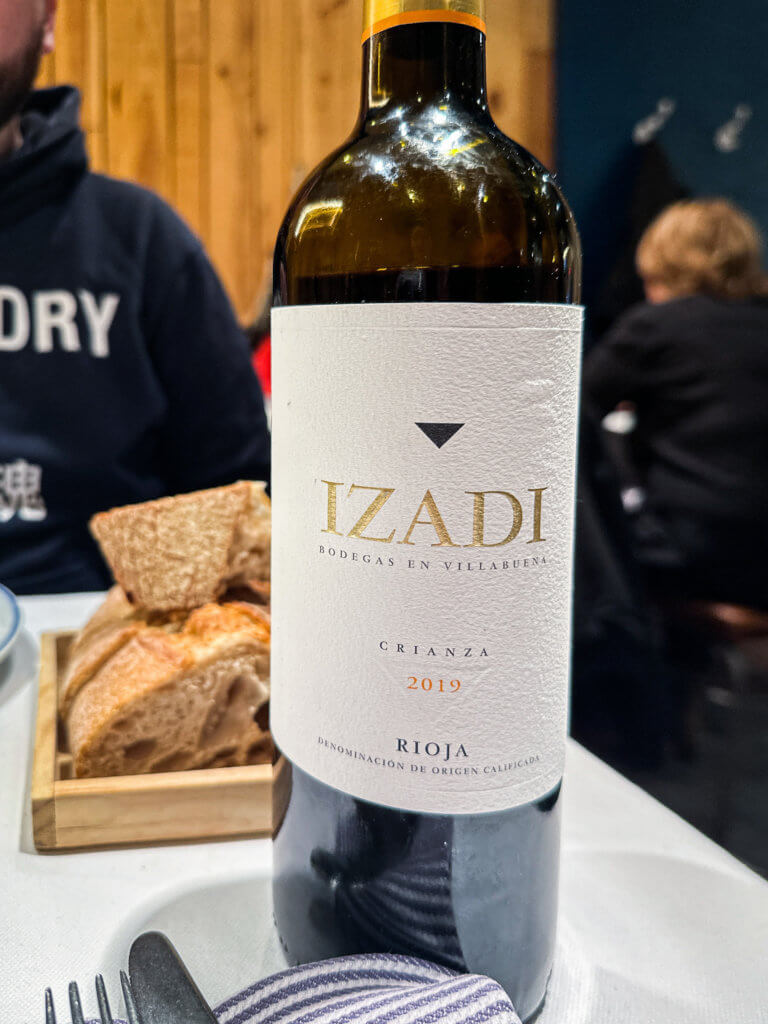
Thanks to its proximity to the Cantabrian ports, its climate halfway between the plateau and the sea, and its proximity to La Rioja, Álava and its capital are a little jewel box full of surprises when it comes to gastronomy. Seasonal products and local natural resources are in the DNA of the culinary culture in Basque Country. Perretxikos mushrooms, snails, Idiazabal cheese, Añana salt, and incredible wines from the region are just some examples of the amazing produce available.
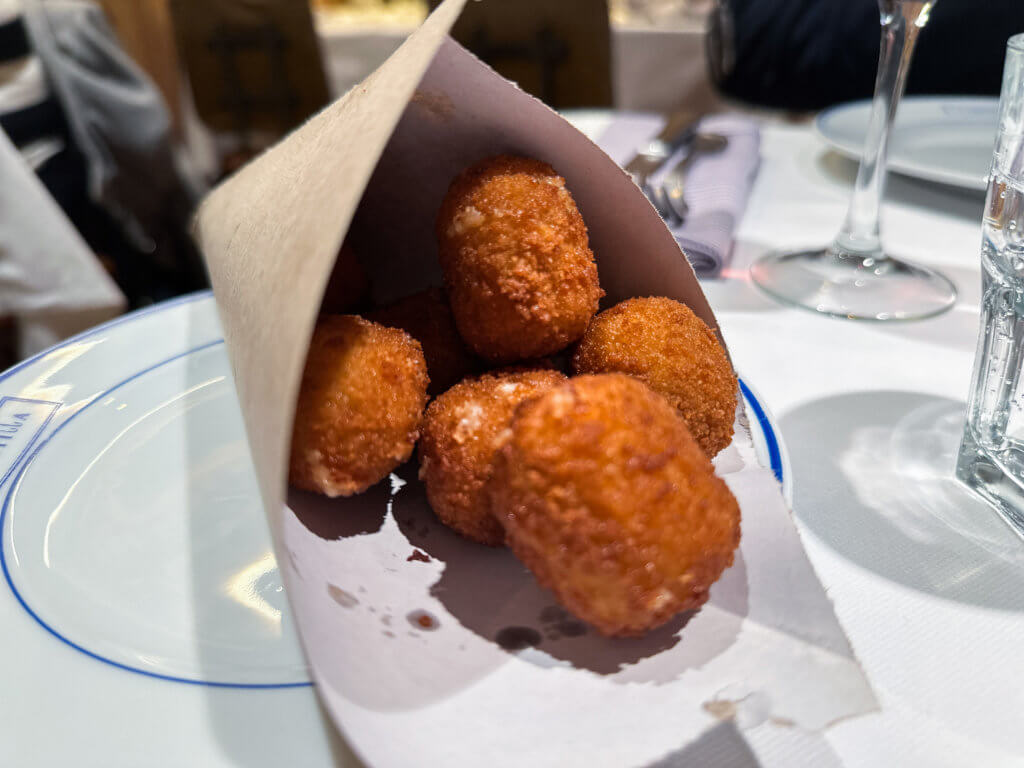
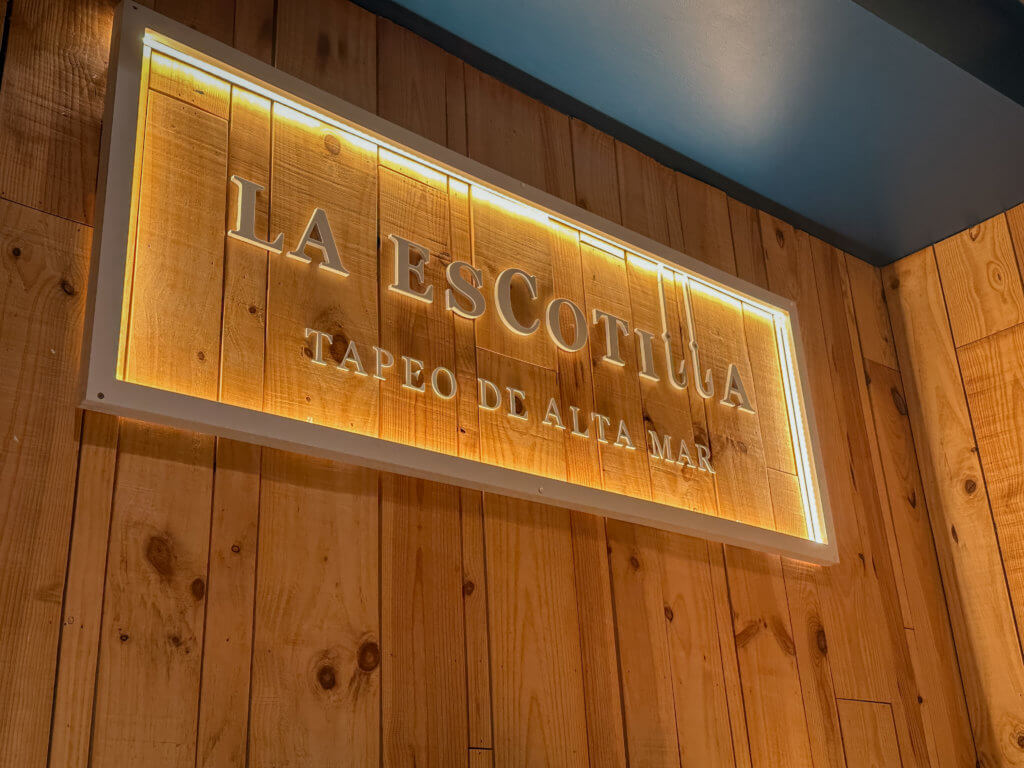
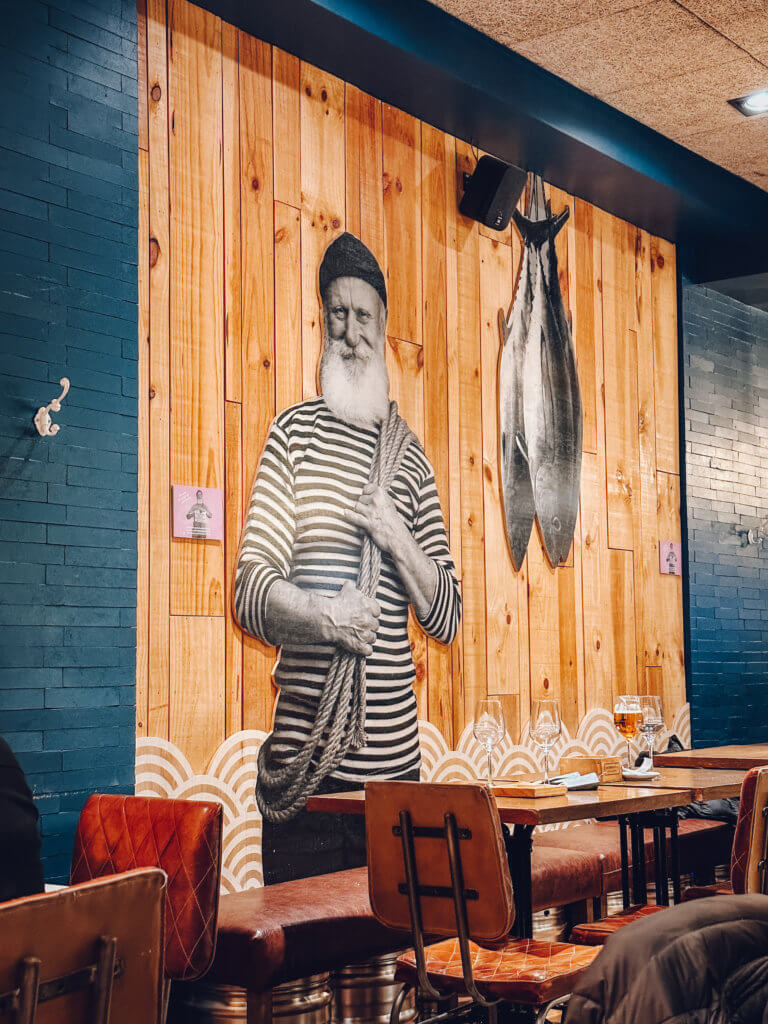
Visit Casa Vieja to learn more about Basque cuisine, which combines nautical and rustic, traditional and trendy food. Meaning Old House, this inn in the city’s medieval area is a feast for both the eyes and the palate. The restaurant La Escotilla, on the other hand, only offers fish and shellfish tapas, reminding us that the Basque Country still alternates between land and sea.
We had lunch at Kaskagorri restaurant, which is located in the Plaza del Machete, very close to the Plaza de la Virgen Blanca. It’s pretty new, with a young and carefree atmosphere, and it resembles a cave or old cellar. Although it is open both mornings and evenings, you can only reserve a table for the evening sitting. This restaurant combines traditional and homemade food with the latest in European cuisine. As well as standard and group menus, it offers diners an “experience” menu to make sure that your visit to this restaurant will be unforgettable. We loved it!
If you are serious about food, you should check out Zaldiaran. It features a seasonal tasting menu with a wine cellar, a grill menu, and a special menu for groups. It is also well-known for hosting gastronomic events.
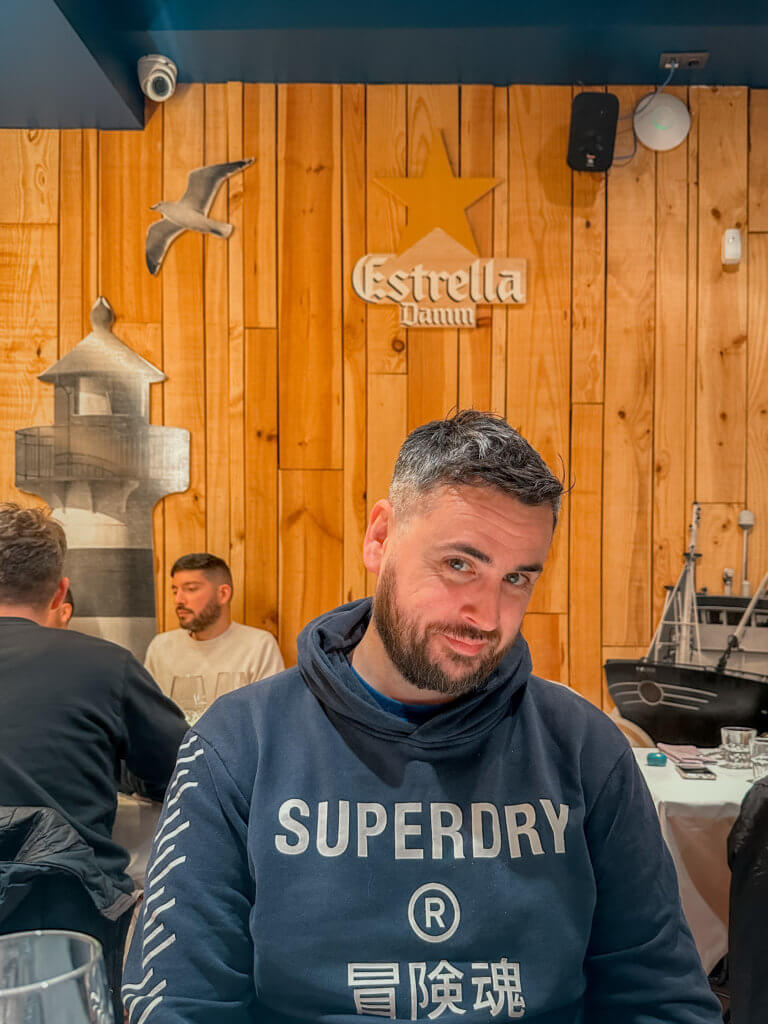
Another incredible restaurant is Ikea, meaning small hill in Basque. The minute you step inside the restaurant, you are immediately transported to a kind of animated forest. Over the tables, lively crabs illuminate and encourage conversations. When it comes to food, it subtly combines traditional Basque cuisine with the most daring avant-garde dishes.
A trip to the Basque capital is as much about the plate as it is the sights. Vitoria-Gasteiz benefits from its inland location, offering a rich bounty of seasonal produce, exceptional beef, and fresh seafood from the nearby coast.
Savoury Specialities
• Perretxikos (Spring Mushrooms): Often called the “jewels” of local cuisine, these forest mushrooms are most famously served in scrambled eggs during the San Prudencio festival.
• Snails (Caracoles): A traditional staple of the city’s enogastronomy, especially popular during local festivities.
• Añana Salt: Used by world-class chefs, this pure mineral salt is harvested from the 6,000-year-old salt flats just outside the city.
• Idiazabal Cheese: A nutty, slightly smoky cheese made from the milk of indigenous latxa sheep.
Sweet Indulgences
• Goxua: The city’s signature dessert. It is a layered delight of whipped cream, airy sponge cake, and silky custard, topped with a crunchy caramelised finish.
• Vasquitos and Nesquitas: You cannot leave without trying these iconic chocolates from Confituras Goya, a legendary local patisserie.
• Basque Cake (Pastel Vasco): A buttery, shortbread-like crust filled with either almond pastry cream or black cherry preserves.
Local Drinks for the Perfect Pairing
• Rioja Alavesa Wine: Vitoria is the gateway to some of the world’s most prestigious red wines produced in the southern part of the province.
• Txakoli of Álava: A refreshing, slightly sparkling white wine with high acidity that perfectly complements fresh pintxos.
• Patxaran: A traditional sloe-flavoured anise liqueur often served as a digestif after a long Basque meal.
Originating in the Basque capital, the Pintxo-Pote is a beloved local institution and the ultimate way to enjoy the city’s world-class gastronomy without breaking the bank. It is essentially the Basque answer to “Happy Hour,” where participating bars offer a specific pintxo paired with a pote (a drink, such as a small beer, wine, or cider) for a small, fixed price.
The Pintxo-Pote Guide to Vitoria-Gasteiz
Unlike a standard night out, the Pintxo-Pote is organised into “routes” across different neighbourhoods, typically running from 7:00 pm to 11:00 pm.
• The Original Night (Thursday): This is the most popular night for locals, students, and tourists alike. The main action is centered around the Medieval Quarter and the University district.
• Other Route Days:
• Wednesday: Routes are often active in the Olaguibel area.
• Friday: Head to the San Martin or Zaramaga neighbourhoods.
• Saturday: Look for the route on “Kutxi” (Calle Cuchillería) in the heart of the old town.
• The Price: Depending on the area, a Pintxo-Pote deal typically costs between €1 and €3. In the city centre, expect to pay around €2, while outlying neighbourhoods like Salburua might be closer to €1.50.
• What to Expect: These aren’t always the award-winning, elaborate pintxos you see behind the glass; they are usually simpler, tasty bites like mini-burgers, croquettes, or traditional tortilla designed for socialising.
Essential Bars for Your Pintxo Trail
To experience the very best of Vitoria’s pintxo culture (whether it’s a Pintxo-Pote night or not), make sure these stops are on your list:
• El Toloño (Plaza de la Virgen Blanca, 2): An award-winning staple famous for its Gilda (anchovy, olive, and pepper) and mushroom risotto.
• Sagartoki (Calle Prado, 18): Known for its “Fried Egg and Potato” pintxo, which has been voted one of the best in Spain.
• PerretxiCo (Calle San Antonio, 3): Famous for modern, innovative creations like octopus carpaccio and truffled vinaigrettes.
• El Rincón de Luis Mari (Calle Rioja, 14): A local favourite for the “Antxopi”, a simple but legendary pintxo of anchovy, egg, and mayonnaise.
To truly eat like a local in Vitoria-Gasteiz, you must track down the city’s two most famous culinary exports: Perretxiko (delicate spring mushrooms) and Goxua (a sponge, cream, and custard dessert).
Use this focused “Food Map” of legendary bars and restaurants to ensure you taste the best versions of these local delicacies.
Where to Eat Perretxiko (Spring Mushrooms) in Vitoria-Gasteiz
These mushrooms are a cornerstone of Vitoria’s identity, best enjoyed in simple, egg-based dishes that highlight their nutty flavour.
• PerretxiCo: As its name suggests, this award-winning bar is a shrine to the local mushroom. It is located on San Antonio Kalea, 3 and is famous for its creative, modern takes on traditional fungi.
• El Toloño: Situated in Plaza de la Virgen Blanca, 2, this chic spot is “obligatory” for foodies. While famous for its Gilda, its mushroom risotto is considered a city institution.
• Zabala: Located at Mateo Moraza, 9, this traditional restaurant is highly recommended by professionals for its mastery of classic Basque ingredients like seasonal mushrooms.
Where to Find the Best Goxua in Vitoria-Gasteiz
Created in the 1970s by a local confectioner, Goxua (Basque for “sweet”) is now the city’s signature dessert.
• Confituras Goya: For the most authentic experience, visit the shop that helped popularise it. The main branch is at Calle Dato, 20, but they have several historic locations throughout the city centre.
• Pastelería Txistu: A local favourite for takeaway treats, located in the heart of Vitoria-Gasteiz, it is often cited for having some of the highest-rated Goxua in the city.
• El Portalón: For a sit-down experience, this restaurant in a 15th-century staging post on Calle Correría, 151 serves traditional Goxua in a stunning, rustic setting.
• Restaurante Kaskagorri: Located in the Plaza del Matxete, this cellar-like restaurant is known for its “experience” menus that often feature homemade versions of local desserts.
The perfect one-day itinerary for Vitoria-Gasteiz
Here is a perfectly balanced one-day itinerary for Vitoria-Gasteiz, designed to cover the city’s historic “Medieval Almond,” its world-class art, and its status as a Green Capital.
Morning: The Medieval Almond & Cathedral
• 9:30 AM | Plaza de la Virgen Blanca: Start at the heart of the city. Snap a photo with the iconic green plant sculpture and admire the Monument to the Battle of Vitoria before heading up the steps to the Church of San Miguel.
• 10:30 AM | Santa Maria Cathedral: Join the famous “Open for Construction” tour. Don a hard hat and explore the 13th-century Gothic masterpiece from its underground crypts to the panoramic views from the bell tower.
• 12:00 PM | BIBAT Museum Complex: Head to this unique two-for-one museum. It houses the Fournier Museum of Playing Cards (one of the world’s best collections) and the Archaeological Museum of Álava in a stunning Renaissance palace.
Lunch: A Traditional Pintxo Crawl
• 1:30 PM | Calle Cuchillería (“The Kutxi”): Wander this bustling street in the Old Town, lined with traditional bars. Stop at local favourites like El Siete or El Portalón for a series of pintxos and a glass of local Alavese wine.
Afternoon: Art, Walls, and Greenery
• 3:00 PM | Medieval Walls & Mural Route: Walk along the remarkably preserved 11th-century city walls. As you explore the narrow lanes of the Casco Viejo, look out for massive, vibrant murals like “The Triumph of Vitoria” or “The Thread of Time”.
• 4:30 PM | Parque de la Florida: Escape the cobblestones for a stroll through the city’s most romantic green space. This lush garden is a highlight of the city’s Green Belt and features dozens of rare tree species.
• Optional | Artium Museum: If you prefer modern art, swap the park for the Basque Museum of Contemporary Art, which showcases a striking collection of modern Spanish and Basque works.
Evening: The “Poteo” Experience
• 6:30 PM | Plaza de España: Conclude your day at this elegant Neoclassical square (also called Plaza Nueva). It’s the perfect spot to join the locals for a final poteo (drink) under the arches as the sun sets over the capital.
Travel Tip: Getting There – Vitoria-Gasteiz is exceptionally well-connected. It is a scenic one-hour drive or bus journey from both Bilbao and San Sebastián, making it one of the easiest and most rewarding day trips in the Basque Country.
Where to stay in Vitoria-Gasteiz
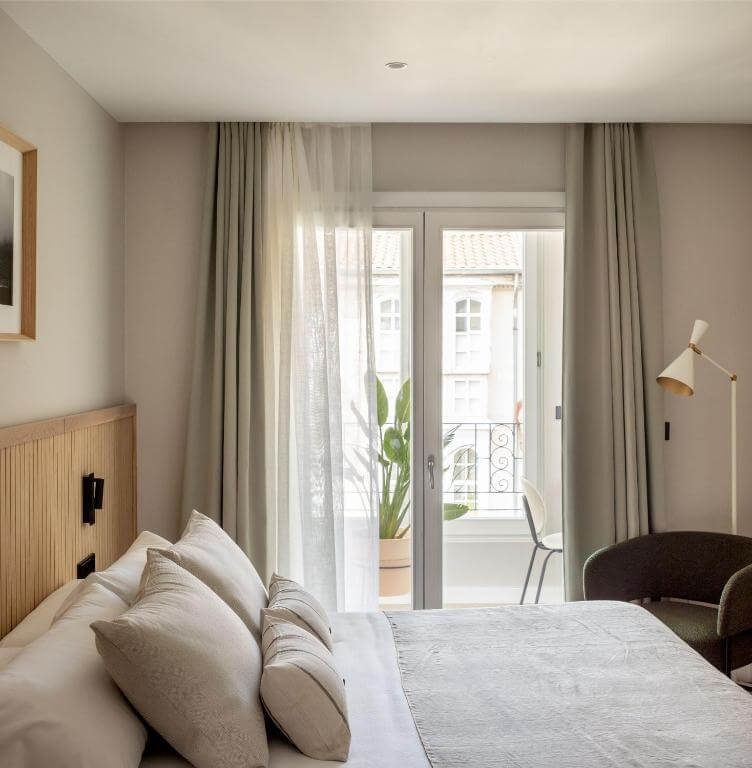
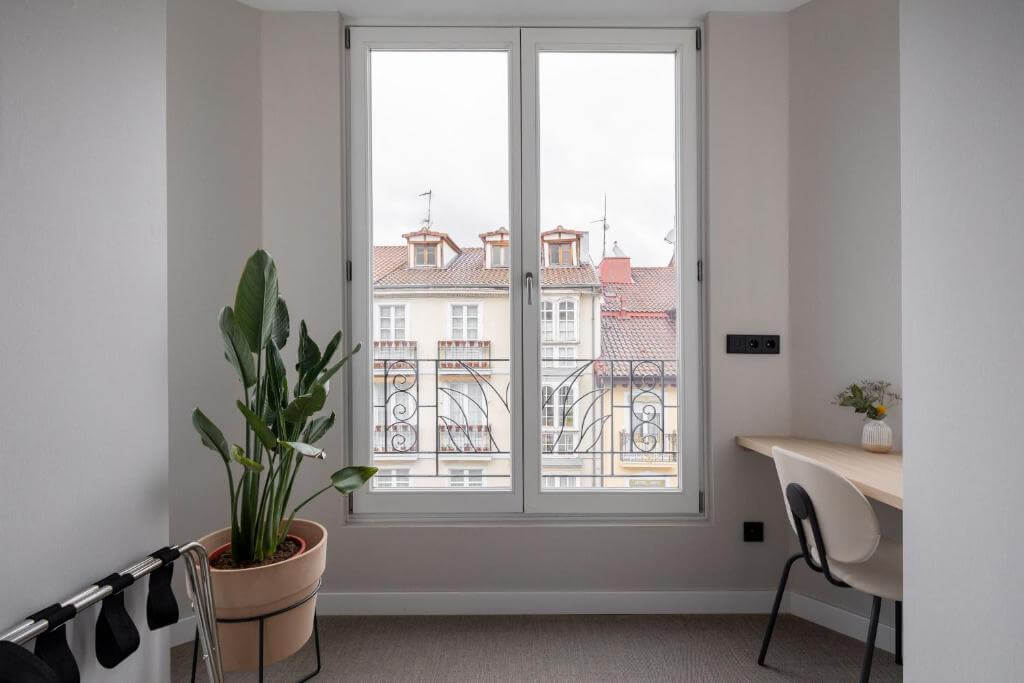
Nirea Hotel is located in a century-old building on one of the main streets of the city centre. It is the perfect base for exploring Vitoria-Gasteiz on foot. The rooms are so relaxing, and you can completely disconnect and rest after a busy day exploring the city.
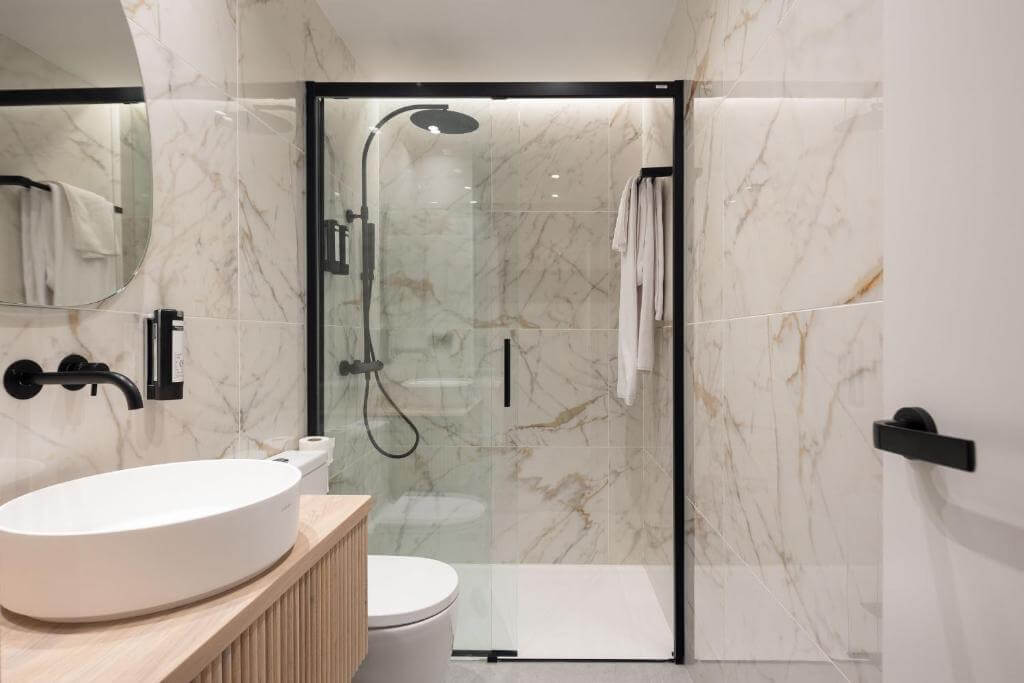
We stayed in a deluxe room that had a queen-sized bed and the most beautiful balcony overlooking the street below. This hotel is adjacent to Florida Park and the Cathedral of Maria Inmaculada and offers roomy, contemporary lodging. Each room has a private bathroom with all the required necessities as well.
Wrapping up your journey through Vitoria-Gasteiz, it becomes clear that the Basque capital is a world unto its own, offering a refreshing, human-scale alternative to its more famous coastal neighbors. Often described as a “hidden gem” that flies under the radar, the city harmoniously blends ancient history with a progressive, sustainable future.
From the medieval charm of the “Almond” and the literary intrigue of the Santa Maria Cathedral to the lush, wild expanses of the Salburua Wetlands, Vitoria-Gasteiz consistently surprises those who make the trip inland. Whether you are wandering through its vibrant street art murals or joining the local crowd for a lively Pintxo-Pote, the city offers an authentic slice of Basque life that feels grounded and exceptionally welcoming.
Ultimately, the true magic of the region lies in its balance: you can explore centuries-old Gothic architecture in the morning and be deep in a nature reserve by the afternoon. No matter how much time you spend here, you will likely leave with a deeper appreciation for Spain’s “Green Heart” and a strong desire to return to its quiet, cultured streets.
Your Basque Adventure Starts Here
• Plan Your Route: Use our one-day itinerary to navigate the city’s highlights, from the historic center to the Green Belt.
• Join the Conversation: Have you visited the Basque capital before? We’d love to hear about your favorite mural or the best pintxo you discovered in the comments below!
• Share the Guide: If you found these local tips helpful, pin this post to your Spain Travel board so you can find it later!
We thoroughly enjoyed our time exploring Vitoria-Gasteiz, and we feel like it is a must-visit city during your time in Basque Country. If you found value in this blog post, we would really appreciate your comments below.
About us
We are Nicola and Ronan Lavin experts in finding unique accommodation all over the world. Voted as the No.1 Travel Bloggers in Ireland by Stellar Magazine and the Top 10 Travel Influencers in Ireland by readers of the Irish Independent, we are dedicated to helping you find authentic and immersive travel experiences to help you plan your perfect vacation.

We’ve spent years exploring Ireland and have a real passion for finding the most unique places to stay — from dreamy luxury cabins tucked away in the woods to boutique hotels with a story to tell. We’re drawn to places that feel personal, thoughtful, and full of character. It’s not just about pretty interiors (although we do love those too), it’s about the feeling a space gives you. Somewhere that lets you switch off, reconnect, and make memories. That’s what we always look for, and it’s what we love sharing with you. We’re currently putting the finishing touches on a brand new guide featuring hundreds of the most unique places to stay and luxury hotels across Ireland. If you’re planning a romantic break, a wellness retreat, or just a cosy weekend away, this guide will be packed with inspiration. Sign up to our email list to be the first to hear when it launches — trust us, you won’t want to miss it.
**Disclaimer: Our trip to Basque Country was hosted by both Brittany Ferries and the Basque Country Tourist Board. We only ever work with brands that we are 100% happy to recommend to you guys and happily pay for ourselves. Staying complimentary allowed us to fully experience the Basque Country, give honest reviews, and create content for you guys to enjoy. All opinions are our own. This post contains affiliate links, meaning that if you book through one of our links, we will receive a small commission at no extra cost to you. This helps us create the wonderful travel guides that we do.**
Are you new here? Join thousands of other happy readers and subscribe to Our Unique Stays via email. The good news is that by signing up via email you will get exclusive travel deals straight to your inbox. The only other place that we publish these deals is on Instagram stories, so be sure to sign up to get the heads up on amazing travel deals to save you money when booking.
We also share everything about ourselves on Instagram with nothing held back, so be sure to follow along there.
If you liked this, then you may also like:
The Best 2 Day Prague Itinerary
The Best Vienna 3 Day Itinerary
The Ultimate 2 Day Dublin Itinerary
The Ultimate Guide to visiting Tallinn in Winter

Sharing is sexy!